


 From Potsdam to Pisa, our images of the week follow a Baroque in motion: Bononcini in the Orangery at Sanssouci, Charpentier heard for the first time in Chicago, Turin opening its festival, Les Talens Lyriques at La Source Vive in Évian, and PassiSparsi following in the footsteps of the Moorish serenades of Renaissance Naples.
  By
By 


In Potsdam, a highly successful Cefalo e Procride by Bononcini
At the Orangery of Sanssouci, the Dutch director and set designer Michiel Dijkema rose to a real challenge: transforming the hall of the Orangerieschloss – 16 metres wide, 103 metres long, with 18 massive columns and windows almost ten metres high – into a rustic and burlesque paradise for Giovanni Bononcini’s Cefalo e Procride. The venue becomes a genuine theatrical setting, ideal for games of hide-and-seek: singers and musicians, dressed in animal costumes, can repeatedly slip into the bushes arranged along the sides. At the centre of the hall, on a square stage covered with real rolled turf, the two protagonists – the Chinese soprano Jiayu Jin (Procride) and the Ukrainian countertenor Yuri Mynenko (Cefalo) – appear, like the New Zealand baritone Jonathan Eyers (Titone, god of the Sun), dressed in animal skins, in keeping with the Baroque fashion for disguises and pastoral idylls of the eighteenth century. From the central pit, the musicians of the Akademie für Alte Musik Berlin also emerge wearing their rabbit bonnets. And Bononcini’s work, composed in 1702 to a libretto by Anastasio Guidi, took on a deliciously topical resonance during the performances at the end of June, in the midst of the 2026 heatwave, when this surtitled line appeared: “What heat! Today the sun seems twice as scorching as usual.”
With Jiayu Jin, Yuri Mynenko, Chloë Morgan, Jonathan Eyers, Anita Rosati, Akademie für Alte Musik Berlin and Bernhard Forck.
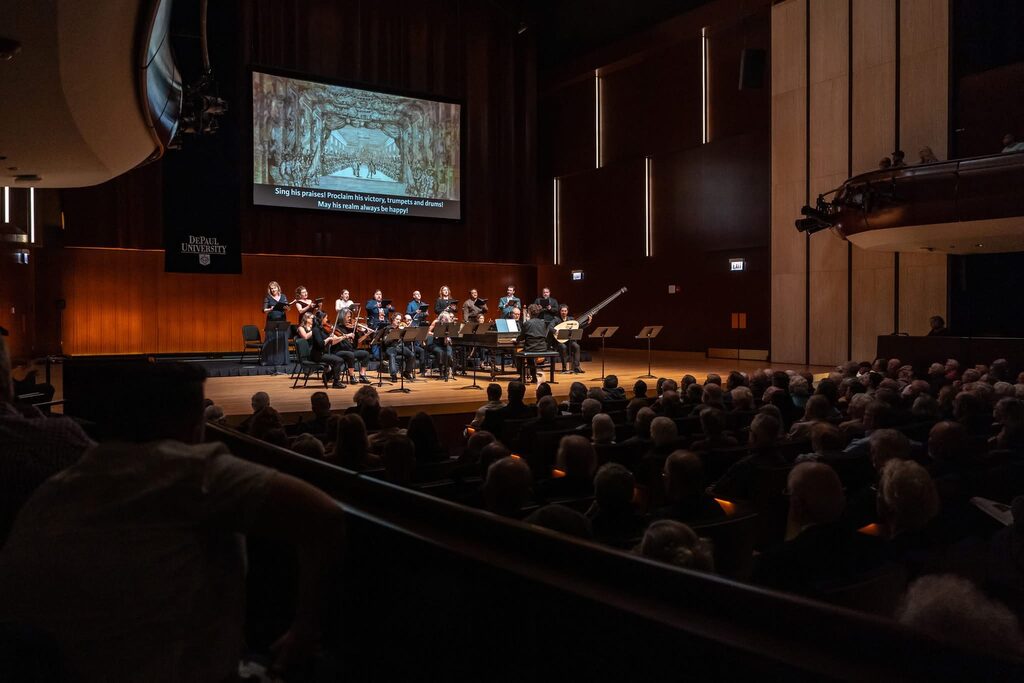
In Chicago, Charpentier’s David et Jonathas by Haymarket Opera Company
In Chicago, Haymarket Opera Company presented Marc-Antoine Charpentier’s David et Jonathas in the city for the very first time. At the Gannon Concert Hall, on DePaul University’s campus, the work was given in a semi-staged version. The conductor and harpsichordist Jory Vinikour brought his expertise in the French repertory to the company’s period-instrument orchestra, with Scott J. Brunscheen as David, Kaitlin Foley as Jonathas and David Govertsen as Saül.
With Scott J. Brunscheen, Kaitlin Foley, David Govertsen, Haymarket Opera Orchestra and Jory Vinikour.
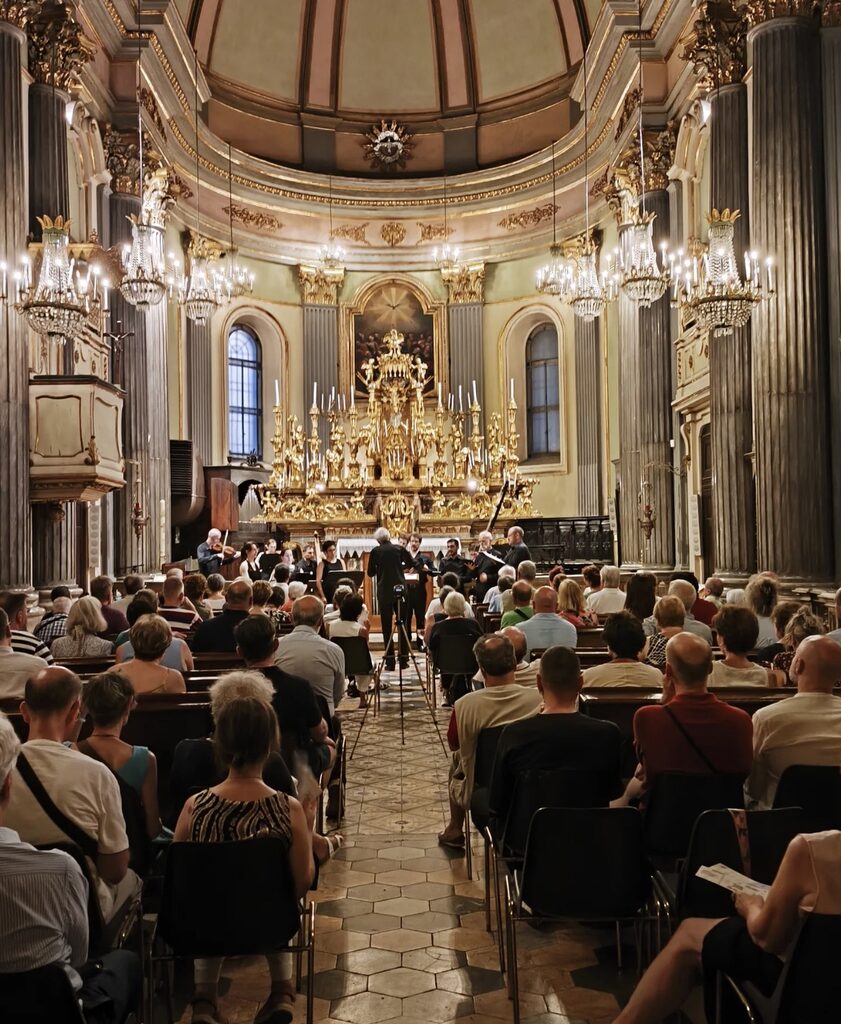
In Turin, the opening of the 5th Turin Baroque Music Festival
The opening of the 5th Turin Baroque Music Festival took place in the Church of the Holy Spirit, with the Consort Maghini conducted by Claudio Chiavazza in a programme devoted to Claudio Monteverdi and Heinrich Schütz. The festival is held in two sessions – June-July and then October-November – with 18 concerts, talks and educational events, presenting the finest Baroque music performed according to historically informed principles and on period instruments. The concerts take place in some of the most evocative sites of seventeenth- and eighteenth-century Turin, including the Palazzo Reale, the Villa della Regina, the Basilica of Superga, the Real Chiesa di San Lorenzo and the Church of the Holy Spirit.
With Noemi Cavallo, Francesca Idini, Federica Leombruni, Davide Galleano, Stefano Gambarino, Consort Maghini and Claudio Chiavazza.
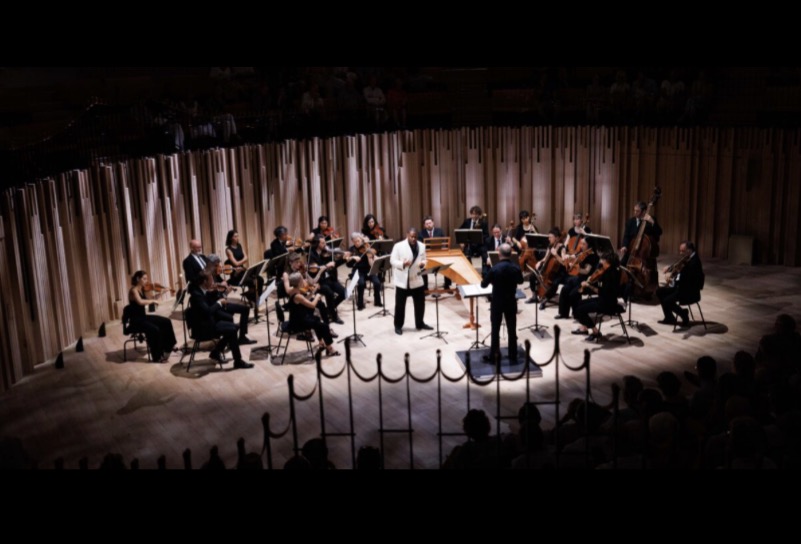
In Évian, Christophe Rousset and Les Talens Lyriques at La Source Vive
A few days after the inauguration of La Source Vive, the new chamber music hall instigated by the patron Aline Foriel-Destezet, Christophe Rousset and Les Talens Lyriques gave a Handel recital there with the American countertenor Key’mon Murrah. The programme included, among other pieces, arias, overtures and interludes from Giulio Cesare, Rodrigo, Serse, Ariodante and Rinaldo. Designed by the architects Patrick Bouchain and Philippe Chiambaretta, La Source Vive forms part of Évian’s new musical development, alongside La Grange au Lac, under the artistic direction of Renaud Capuçon.
With Key’mon Murrah, Les Talens Lyriques and Christophe Rousset.
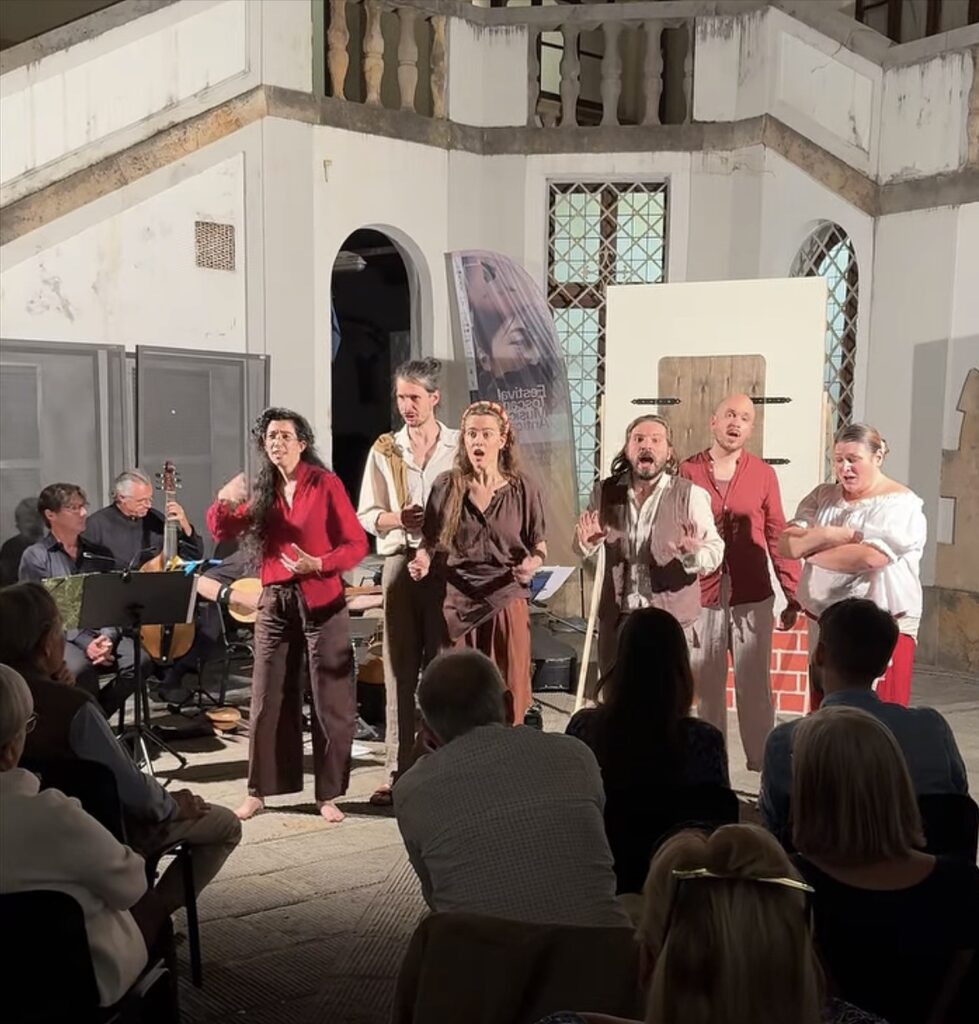
In Pisa, PassiSparsi’s Moorish serenades
In the cloister of the Palazzo della Carovana, the historic seat of the Scuola Normale Superiore in Pisa, the ensemble PassiSparsi paid tribute to Moorish songs with its theatricalised show Apra finestra! Serenate moresche. Long relegated to the status of a marginal phenomenon, these songs have, in recent decades, been the subject of a fascinating rediscovery. They are now seen not only as a reflection of old cultural prejudices, but also as testimony to the African presence in sixteenth-century Naples, through a repertory made up of serenades, theatre, dance and musical cross-pollination.
With Martha Rook, Caterina Chiarcos, Elisabetta Vuocolo, Neri Landi, Roberto Rilievi, Lorenzo Tosi, Martino Noferi, Peppe Frana, Tommaso Tarsi, Francesco Tomei, Lorenzo D’Erasmo and PassiSparsi.

You must be logged in to be able to post comments.
Sign in