


 At 23, the French musician Manon Papasergio is already pursuing a distinctive path between the viola da gamba and early harps, placing them at the service of rarely explored repertoires, from the Renaissance to the threshold of the Baroque. Invited by ensembles such as Les Musiciens de Saint-Julien and Il Caravaggio, and the author of a much-noticed first recording, she moves forward with insatiable musical curiosity and a firmly embraced refusal of boundaries.
  By
By 


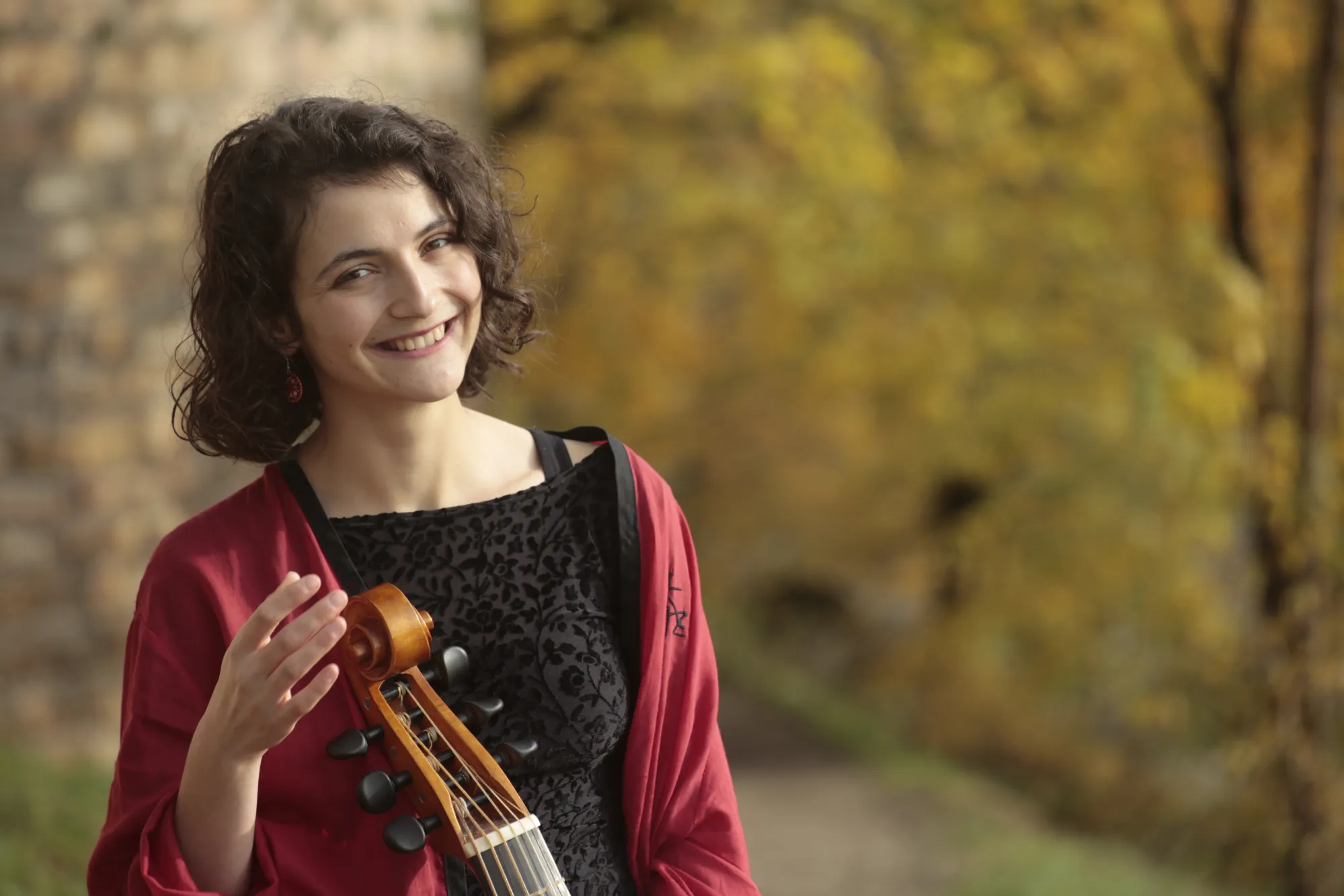
Trained in Caen and then at the Conservatoire national supérieur in Lyon, where she simultaneously studied baroque cello, historical harps and viola da gamba, Manon Papasergio is already establishing herself as a sought-after performer, invited by ensembles such as Les Musiciens de Saint-Julien and Il Caravaggio. A prizewinner in several competitions and co-founder of the ensemble La Capriola, she released a striking first recording, Per la viola bastarda (2025), devoted to the virtuosic practices of the Renaissance. Between her many commitments, her exploration of different repertoires, and her promising recording debut, her career path is shaping the profile of a young musician still finding her voice; take a closer look right now.
A meeting over coffee
We meet Manon Papasergio on the sunlit terrace of a café on Place d’Aligre in Paris. Close to the station, as the young woman has just arrived from the Lyon region, where she has lived since entering the Conservatoire national supérieur. She nevertheless often has to stop over in the capital, where most of the ensembles she works with rehearse: “I’m called upon to play different instruments depending on the projects”, she explains once seated with her café crème. “Two weeks ago, I was in Paris for a recording with Les Musiciens de Saint-Julien, where I was asked to play both harp and viola da gamba.”
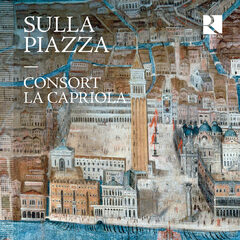
Although she has only just completed her studies, the young musician is already moving from one project to the next. Alongside La Capriola, the ensemble she founded with three other musicians during her time at the conservatoire, she released her first solo album last November, Per la viola Bastarda on the Ricercar label.
Historically informed
With all these opportunities, seemingly more numerous than the hours in her day, the musician almost makes one forget that she was born only in 2002. Despite a certain reserve—she apologizes for the detours her sentences sometimes take as she tries to refine an idea or clarify an example—she speaks about her artistic choices with remarkable clarity: “For this solo album, I wanted to explore the viola bastarda repertoire: at the end of the Renaissance, many performers took well-known vocal pieces and adapted them for their instrument. They created highly ornamented versions, which in the way they highlight a single voice already foreshadow the break that the Baroque period would bring with Renaissance polyphony. In the case of the viola da gamba, these reworkings often play with the different voices of a single piece. You move from very low registers to high ones.” An opportunity, then, to showcase the full extent of her virtuosity on the instrument.
Music runs in the family
This musical culture, Manon Papasergio draws not only from her years of study, but also from the environment in which she grew up. Her parents, Elsa Franck and Jérémie Papasergio—flutist and oboist—have just taken over the direction of the ensemble Doulce Mémoire: “I’ve always played with my parents and with my brothers and sisters”, she confirms.
The viol player and harpist, originally from Normandy, began music strikingly early—so early, in fact, that she has no real memories of her first lessons: “My parents found a teacher in the neighbourhood who agreed to teach me the cello; I was four. At that age, it’s almost babysitting!” she jokes. A few years later, she discovered other instruments through early music education: “And like many little girls, I dreamed of playing the harp”, she recalls. Her parents did not push her in one direction or another, but encouraged her interests, and supported her in learning these two very different instruments: “Starting so young makes having an instrument in your hands feel natural, obvious.”
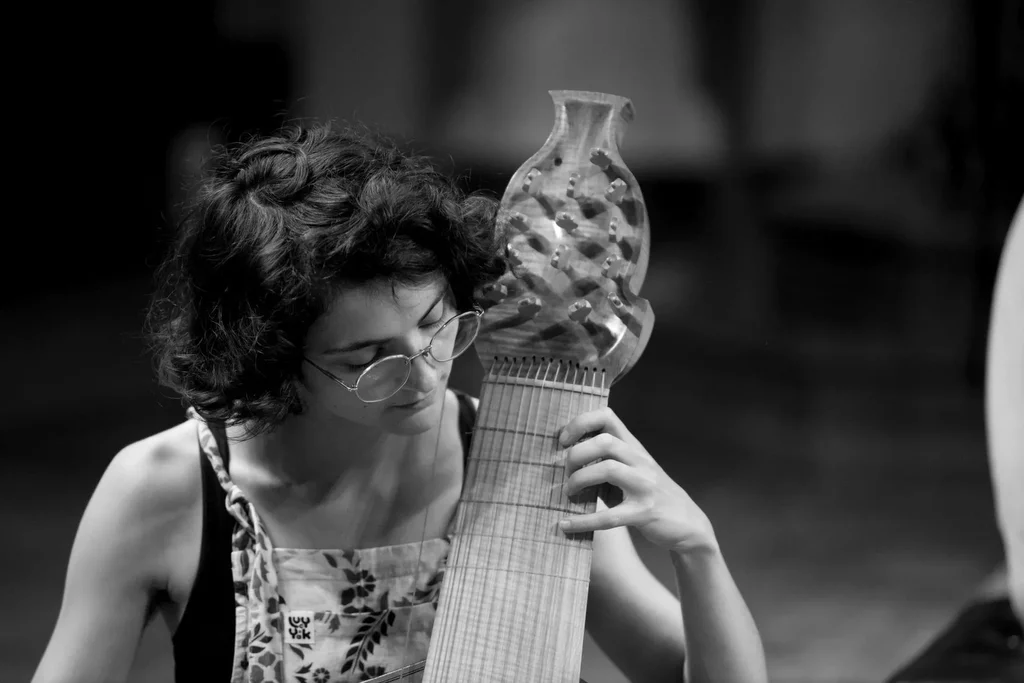
She then took lessons with Angélique Mauillon, whom she met in Tours one weekend a month to learn this new instrument. Mauillon, who followed Manon Papasergio from the age of seven through to the end of her studies in Lyon, is now delighted to count her among her colleagues. She speaks of her path with a certain emotion: “She was a very diligent and deeply committed student”, she recalls. “She had remarkable musical maturity. At eight years old, she already perfectly understood what counterpoint was, which is extremely rare. She didn’t just do what I told her—she was capable of constructing an intellectual understanding on her own. Often, as a teacher, you see young people play very well without having an immediate grasp of the music: she understood from the very beginning.”
Passionate about early music and want to read this subscriber-only article?
If you are not a subscriber, join the international Total Baroque community. Subscribe here from 5.00€.
I subscribe
If you are already a subscriber, sign in.
I sign in 

You must be logged in to be able to post comments.
Sign in