


 In Paris, Italian violinist Giuliano Carmignola led an exceptional masterclass for the prizewinners of the Talents & Violon’celles Foundation: a day devoted to passing on knowledge through Vivaldi’s most famous work. And an unforgettable experience for a new generation of violinists.
  By
By 


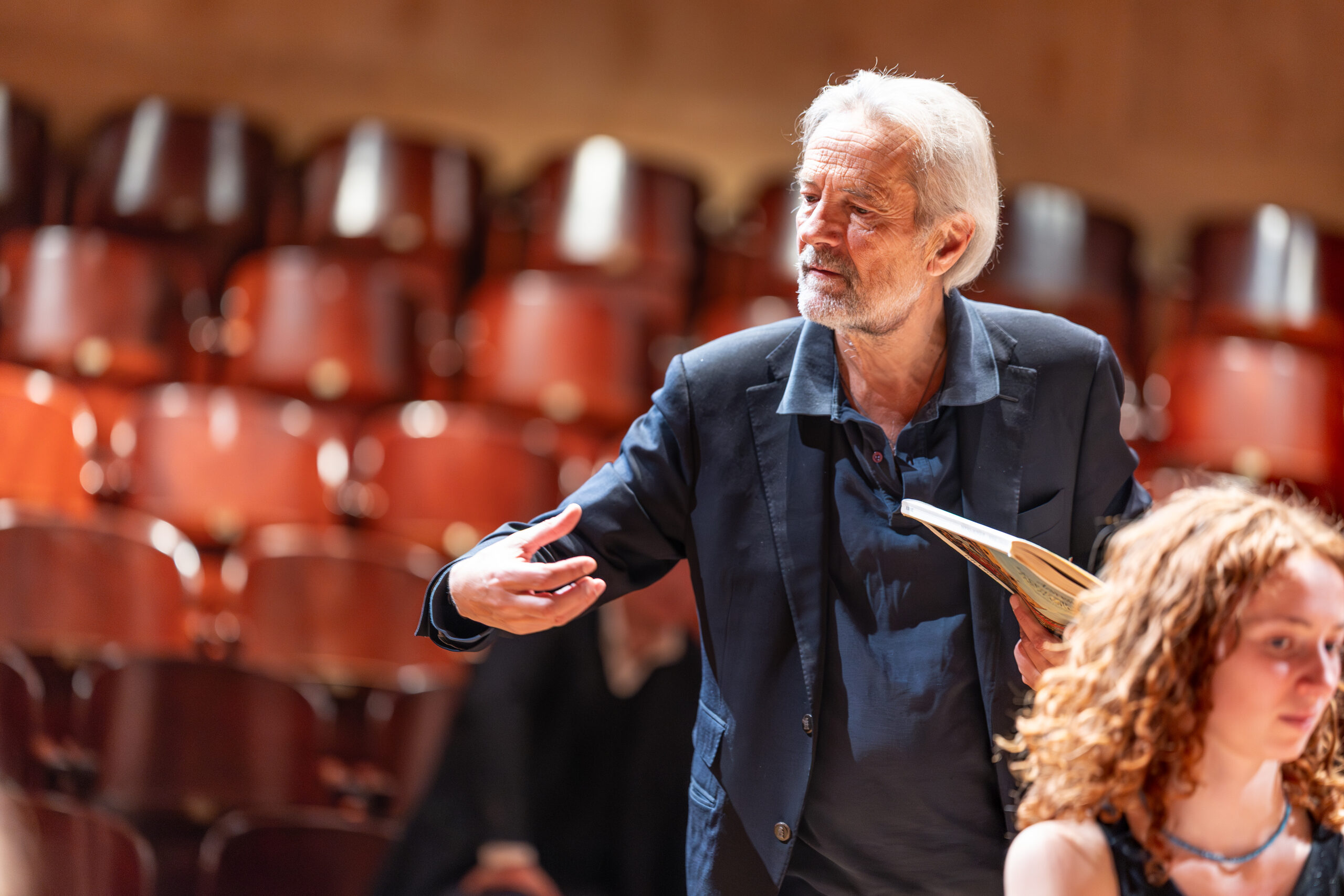
At the Salle Cortot, there are four of them: Nathalie Darst-Xia, Thomas Briant, Arthur Decaris, and Sora Lavorgna. This is their moment. Thanks to the Fonds de dotation Talents & Violon’celles, they are taking advantage of a masterclass with violinist and conductor Giuliano Carmignola. The atmosphere is neither anxious nor torturous, but one of joyful, passionate immersion in Vivaldi’s Four Seasons—a score defined by change, renewal, and the depiction of nature and living things in their concrete details. An intense day in two parts: an afternoon working session reserved exclusively for the participants, followed by an evening session shared with a large audience. Here is an account of the event.
First baroque masterclass for Talents & Violon’celles
Organized by the Talents & Violon’celles endowment fund since 2019, the annual masterclass gives young soloists who are fund prizewinners the opportunity to work on concerto repertoire with orchestra. This practice has largely disappeared from conservatories, and that is a serious shortcoming in the preparation of a solo musician, according to cellist and pedagogue Raphaël Pidoux, co-founder of the fund. A professor at the Paris Conservatoire (CNSMD), he also teaches with the Trio Wanderer as part of the École Normale’s Elite program. This year, this sixth masterclass features two firsts: the choice of a baroque program, and the creation of an orchestra made up almost entirely of fund prizewinners—violinists, violists, and cellists—named the ensemble Premières Scènes.
For this first baroque masterclass, the choice fell on violinist Giuiano Carmignola, to work on Vivaldi’s Four Seasons—a work and a composer he knows intimately, as he explains before the evening session: “I was born with Italian baroque music,” and especially Vivaldi’s. Born in Treviso, some forty kilometers from Venice, he discovered it very early with his father, a passionate amateur violinist, who played it with his own ensemble, before Carmignola recorded it with Andrea Marcon and the Venice Baroque Orchestra in 2000. “The Four Seasons have always been in my pockets” he adds. Raphaël Pidoux adds in turn: “I’m very touched, because last year I asked a young musician from the ensemble whom he would like to invite as maestro for The Four Seasons, and he replied: Carmignola!”

Passionate about early music and want to read this subscriber-only article?
If you are not a subscriber, join the international Total Baroque community. Subscribe here from 5.00€.
I subscribe
If you are already a subscriber, sign in.
I sign in 


You must be logged in to be able to post comments.
Sign in