


 Joined by the musicians of Il Pomo d’Oro, Spanish lutenist Miguel Rincón brings to light a little-known repertoire from the late German Baroque — well worth (re)discovering on record!
  By
By 


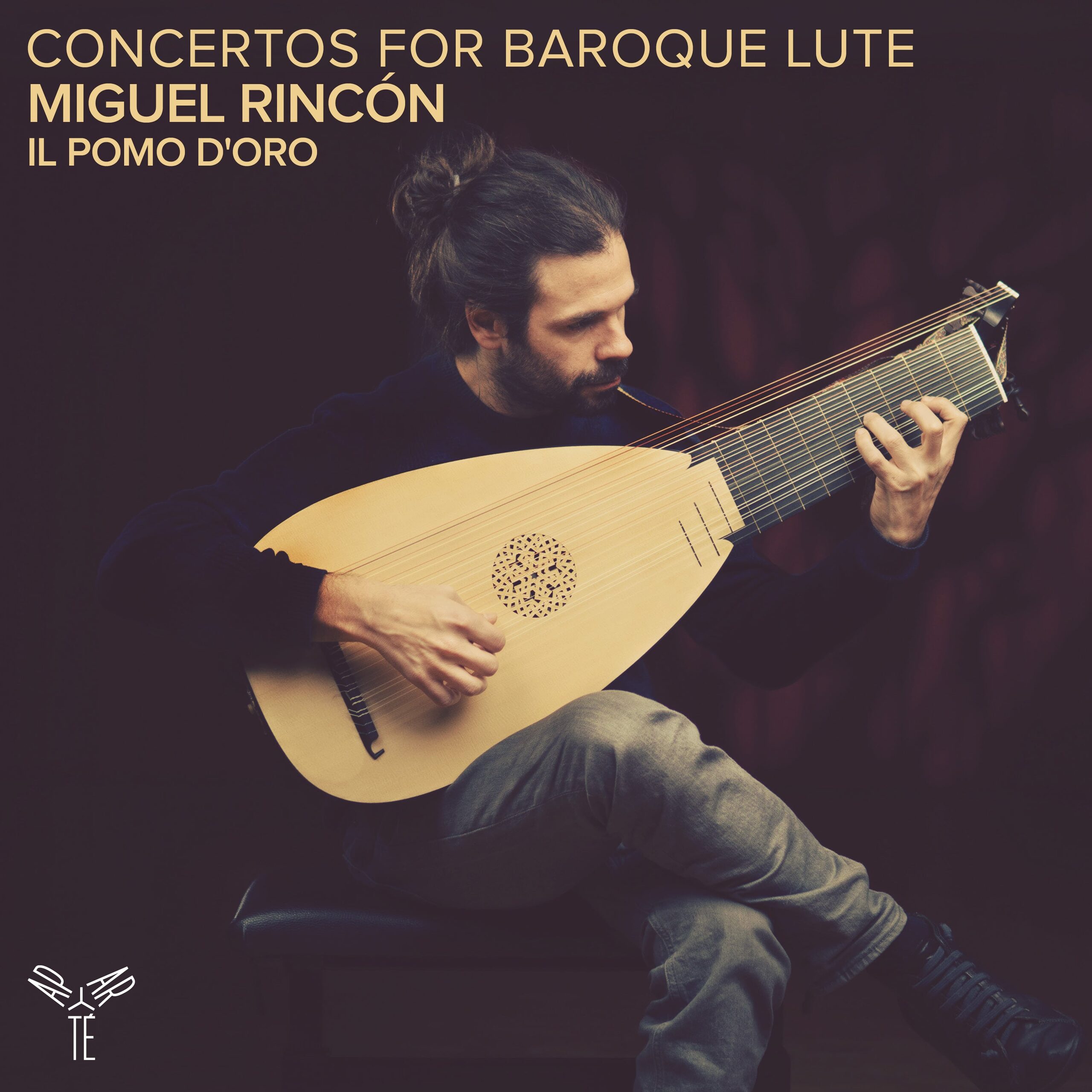
In his new album, accompanied by the musicians of Il Pomo d’Oro, Spanish lutenist Miguel Rincón breathes new life into a repertoire as refined as it is long-forgotten, composed during the final decades of the German Baroque. Through four rarely performed concertos and a previously unrecorded trio, he pays tribute to an instrument long consigned to the margins, bringing out its voice in all its brilliance — virtuosic in execution, profound in expression, and gentle in tone.
This album brings to light forgotten concertos for the baroque lute, some of which you’re recording here for the very first time. What guided your choice of works, and your desire to restore the lute to its rightful place as a solo instrument?
Miguel Rincón: My main motivation in selecting these works was to showcase how the lute, by the second half of the 18th century, had reached an extraordinary level of virtuosity. It had become not only a solo instrument in concertos but also an integral part of intimate and delicate chamber music, seamlessly conversing with other instruments. Some of Hagen’s works, for example, are duos for lute and flute, or trio sonatas with lute and strings. Beyond its technical evolution, I also wanted to highlight how the lute adopted the rhetorical language of the period, incorporating styles such as Sturm und Drang and galant music. Given the scarcity of recordings and general knowledge about this repertoire, we felt from the outset that presenting these works—while adding some new pieces to refresh the program—would be a great way to illustrate the stylistic transition from the Baroque to the Classical era. In terms of style, Fasch’s work is perhaps the most Baroque on this album, while Hagen represents Sturm und Drang, treating the lute as a highly expressive and versatile instrument, exploring scales, arpeggios, triplets, and rapid bass lines. Kohaut embodies the galant style, making full use of the lute’s expressive capabilities. Finally, Kleinknecht, the least known and most recent of these composers (he died in 1790), presents a more complex musical language, with intricate dialogues and dynamic contrasts throughout.
You describe this repertoire as a bridge between the galant style and the polyphonic richness of the Baroque. How do these contrasting influences come through in the pieces featured on the album?
M. R.: As I mentioned earlier, one of my goals was to demonstrate the level of virtuosity that the lute had achieved by the late 18th century. To illustrate this, we curated a selection of pieces that trace a journey from the Baroque language to emerging Classical styles. Before finalizing the repertoire, I spent time studying some newly discovered works by Kleinknecht, including solo sonatas that are exceptionally well written for the lute—demanding, yet idiomatic for the instrument. In fact, his lute concerto is arguably the most ambitious piece on the album, both in terms of technical difficulty and length. Once again, the stylistic diversity is evident: Fasch’s concerto remains deeply rooted in the Baroque tradition, while Hagen’s work embraces Sturm und Drang, treating the lute as a virtuoso instrument with a wide range of expressive possibilities. Kohaut represents the galant aesthetic, making great use of the lute’s unique tonal qualities. Finally, Kleinknecht’s music, being the most modern in this selection, is characterized by intricate contrapuntal textures and constant dynamic contrasts.
You perform here with Il Pomo d’Oro, in a setting that is both intimate and virtuosic. What was this collaboration like for you?
M. R.: It was absolutely fantastic—relaxed, effortless, and exactly the kind of atmosphere a soloist needs during a challenging recording session. I have already worked extensively with Il Pomo d’Oro (and continue to do so!), so we know each other very well. As a result, the entire process felt natural and fluid. I believe we successfully created the contrast between the grandeur of an orchestral moment and the intimate breathing space the lute requires. Although each part was played by a single musician, the result still achieved a rich, full sound. From the beginning, I wanted the presence of the other musicians to be significant-not just as an accompaniment to the lute, but as active participants in the dialogue. We also kept the tempos lively to maintain a sense of excitement!
You must be logged in to be able to post comments.
Sign in