


 From Paris to Antwerp, from Murcia to London and Herne, the major early-music gatherings celebrated creativity, heritage and today’s virtuosos, bringing together emerging artists, international ensembles and fresh perspectives on the Baroque repertoire.
  By
By 


Paris: A Les Siècles Performance at the Théâtre des Champs-Élysées
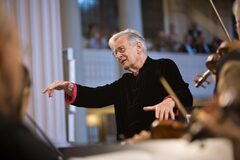
A rare appearance at the Théâtre des Champs-Élysées by Les Siècles under Antonello Manacorda. Their programme was built around three instrumental sound worlds:
- a new work by Aníbal Vidal, winner of the Pisar Prize, performed on modern instruments;
- Beethoven played on Classical-period instruments, featuring violinist Isabelle Faust;
- and finally Berlioz, heard on early-19th-century French instruments.
Once again, the programme showcased Les Siècles’ distinctive identity: revealing works in the instrumental colours for which they were conceived.
With Isabelle Faust, Les Siècles and Antonello Manacorda.

Murcia (Spain): ECOS Festival
Now in its ninth edition, the ECOS Festival of Sierra Espuña – bringing together six municipalities in the Murcia region – has further confirmed its status as one of southern Europe’s most innovative early-music events. Its programming blends heritage, landscape and emerging international talent.
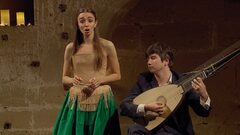
This year’s edition featured the ensemble Cantoría (Barcelona/Murcia), the Coloquio 6 sextet (Madrid/Netherlands) and the Lowe Ensemble (Madrid/UK). The Intesa Duo (Armenia/UK) closed the festival at Santa María la Real in Aledo with a recital spanning the late Baroque and the transition to Classicism.
Running in parallel, the ECOS Labs 2025 gathered young performers, managers and programmers from over ten countries, in an edition focused on training, collaboration and the internationalisation of early music. Strengthening ties between European artists, this platform continues to establish the Sierra Espuña territory as a true laboratory of cultural innovation.
With the ensemble Cantoría, the sextet Coloquio 6, the Lowe Ensemble and the Intesa Duo.

Antwerp: B’Rock Orchestra Celebrates Its 20th Anniversary
To mark its twentieth anniversary, B’Rock orchestra returned to the place where it all began, celebrating at DE SINGEL in Antwerp.
The programme embraced a distinctly regal spirit, featuring Handel’s Water Music—written for a royal barge procession on the Thames—and Music for the Royal Fireworks, composed to celebrate the Treaty of Aachen in 1749. Completing the selection was the famous Arrival of the Queen of Sheba from Solomon.
Guest of honour Jeanine De Bique took her place within this royal narrative, embodying Cleopatra, Venus, the goddess of Love, the powerful Minerva and the fairy-queen Titania, through arias by Handel, Purcell, Rameau and Zelenka.
With Jeanine De Bique and the orchestra B’Rock.

London: Wrocław Baroque Orchestra Closes LIFEM
In Blackheath, the 2025 edition of the London International Festival of Early Music (LIFEM) came to a close after four days of music.
A festive concert by the Wrocław Baroque Orchestra and Dutch recorder virtuoso Erik Bosgraaf brought the festival to a close.
The theme “Notes of Wonder – Child Prodigies of the Eighteenth Century“, the programme celebrated an era filled with youthful geniuses such as Mozart and Vivaldi.
Known for composing concertos for the young women of Venice’s Ospedale della Pietà, Vivaldi joined Mozart in shaping an evening defined by rhythmic vitality and boundless inventiveness.
With the Wrocław Baroque Orchestra and Erik Bosgraaf.

Herne (Germany): Legrenzi at the 49th Early-Music Days
Over four days, the 49th Early-Music Days in Herne, northern Germany, explored the theme of “cultural appropriation”. The event shed light on power dynamics, cultural identities and colonial legacies in music history.
Among the fifteen or so ensembles invited by artistic director Richard Lorber—his twentieth and final edition—were Anima Shirvani, Ensemble Dialogos, Al Ayre Español and The Gesualdo Six.
Harpsichordist and conductor Luca Quintavalle led his ensemble Nuovo Aspetto (pictured) in Il Totila by Giovanni Legrenzi (1626–1690). The opera probes war, power and cultural identity through the conflict between the Ostrogoths and the Roman Empire.
With the ensemble Anima Shirvani, the Ensemble Dialogos, the ensemble Al Ayre Español, The Gesualdo Six, the ensemble Nuovo Aspetto and Luca Quintavalle.


You must be logged in to be able to post comments.
Sign in