


 A Norwegian conductor with close ties to France, Martin Wåhlberg divides his time between his ensemble Orkester Nord, his French projects, and a repertoire that takes him from the Baroque to Romanticism. This November, he conducts Giuseppe Porsile’s (1680–1750) rarely performed Spartaco at the Theater an der Wien. The choice is characteristic of a conductor who prefers the less-traveled paths to the main highways of the repertoire, seeking out forgotten works that offer fresh perspectives on those we think we know.
 By
 11 minutes


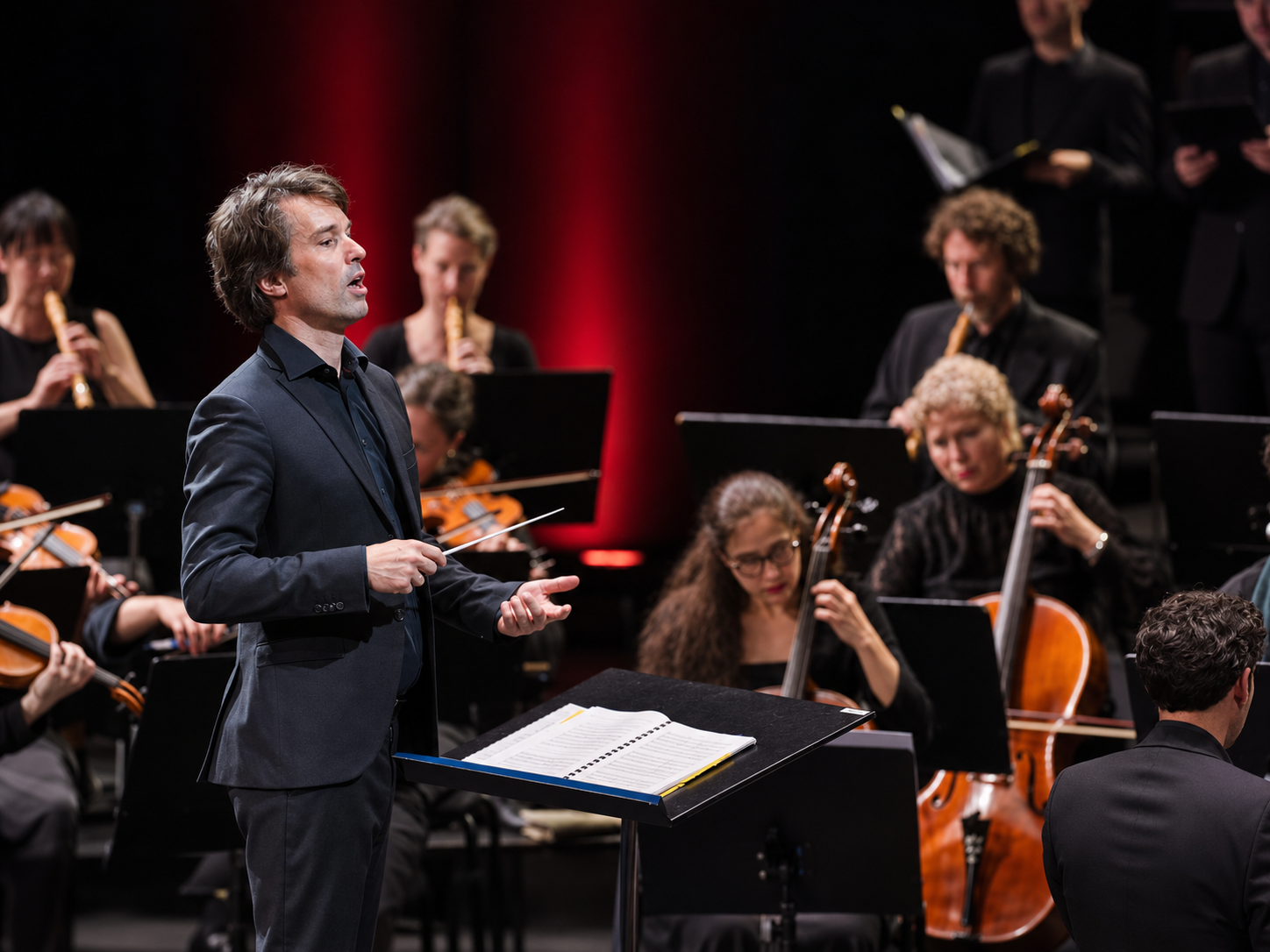
A Norwegian conductor with a deep affinity for France, a trained cellist, and a former literature student at the Sorbonne, Martin Wåhlberg refuses to be confined by boundaries—whether between countries or between the Baroque, Classical, and Romantic periods, as traditionally defined by music history. With Orkester Nord, founded in Trondheim some ten years ago, he revives forgotten operas, explores French opéra-comique, and builds musical bridges between Scandinavia and the rest of Europe. In November, he returns to the Theater an der Wien with Giuseppe Porsile’s Spartaco, a work whose themes of war, rebellion, espionage, and political manipulation strike him as remarkably contemporary. His work also takes him to France, where he has helped found the Orchestre Concordance and a new festival in Auvergne. Meanwhile, projects devoted to Étienne-Nicolas Méhul (1763–1817), Carlo Francesco Pollarolo (1653–1723), and nineteenth-century music are already in the works. We meet a conductor who combines the insights of historically informed performance with the Finnish tradition of conducting and, above all, is determined to make classical music an integral part of everyday life once again.
If you had to introduce yourself in three sentences?
Martin Wåhlberg: I am a Norwegian conductor, but I have a particular affinity for France and the French repertoire. Above all, I enjoy bringing to light works that unite us, that belong to a shared cultural heritage, even when they have been forgotten. They help us better understand our own history. I have several areas of training and many different interests, but conducting is precisely where all of these can come together. It is where research, literature, history, and music ultimately merge into a single narrative.
This November, you will be conducting Giuseppe Porsile’s (1680–1750) Spartaco at the Theater an der Wien. What drew you to this opera?
M. W.: The subject was what first caught my attention. Everyone thinks they know the story of Spartacus, particularly from the movies: the slave who rose up against the Roman Empire. While exploring early works with the people around me, we came across this opera and were intrigued both by the music and by the way the story was treated. We tend to think of Venice when discussing seventeenth-century opera, but Vienna also had an extraordinarily rich operatic output. And I wondered: how could the story of a man rebelling against an empire be presented within the political context of the imperial court? The answer is very clever. The libretto no longer really portrays Spartacus as the hero of the rebellion. He has captured a city and become something of a tyrant himself. Roman spies then arrive to win his trust, manipulate him, stir up intrigue, and ultimately bring about his downfall. The result feels remarkably contemporary: a story of war, power, espionage, and manipulation, but also with plenty of humour. Some of the supporting characters are genuinely funny. It is this combination of a very serious subject and an almost comic dimension that makes the work so lively.
So the story itself is just as important to you as the score?
M. W.: Absolutely. In fact, I don’t really consider myself a musicologist. I studied literature, and I remain convinced that there is a very deep connection between literature and music. A work that moves us is one that tells us something. This is obviously particularly true of opera. We all know operas with magnificent music but rather poor librettos. The real joy comes when the two work together. Our musical heritage is immense. The handful of works we perform over and over again did not necessarily establish themselves because they were inherently the only ones deserving of that status. History offers plenty of examples: Vivaldi had to be rediscovered, and even composers we now regard as central to the repertoire have not always enjoyed the recognition we take for granted today. So there are still masterpieces waiting to be discovered. But with thousands of scores out there, choices have to be made. Personally, I enjoy uncovering works that still resonate with us today.
Passionate about early music and want to read this subscriber-only article?
If you are not a subscriber, join the international Total Baroque community. Subscribe here from 5.00€.
I subscribe
If you are already a subscriber, sign in.
I sign in 


You must be logged in to be able to post comments.
Sign in