


 Two voices, no instruments: French duo Les Trouveurs have made this sparseness a defining principle. In Paris or Utrecht, from Navarre to Poland, Mathias Lunghi and Camile Macinenti show that medieval troubadour songs need little more than a story to recover their power to fascinate.
  By
By 


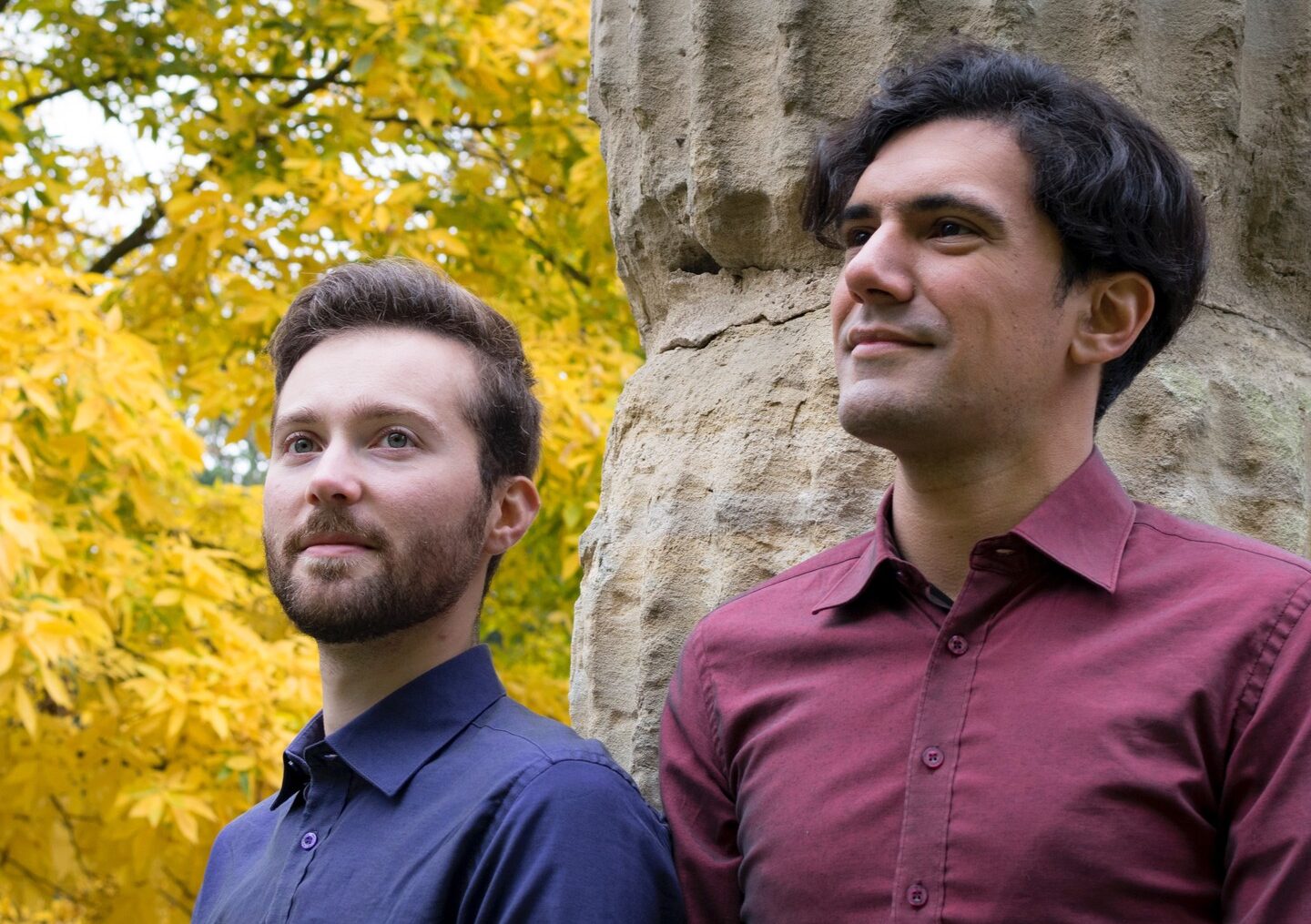
Performing the songs of Adam de la Halle and other medieval troubadours a cappella: the path chosen by Les Trouveurs, Mathias Lunghi and Camile Macinenti, is a rather unusual one. Founded in 2023 by two musicians who met at the Schola de la Sainte-Chapelle in Paris and trained in Medieval Music Performance at Paris-Sorbonne, the duo soon drew attention at the IYAP in Antwerp and the Utrecht Early Music Festival, before going on to win two competitions in Spain and record their debut album, Vidimus Stellam. Following a tour in Poland, they now regularly collaborate as a trio with Marc Mauillon. For Total Baroque Magazine, they explain how they have turned the simplicity of medieval song into a musical adventure.
How did you meet and decide to form a duo?
Mathias Lunghi: We both come from the Paris region. We grew up there and met while studying in Paris, where we began singing in various ensembles.
How did you decide to focus on medieval music, and particularly on the repertoire of the trouvères and troubadours?
Camile Macinenti: In my case, I was lucky enough to have a teacher in high school who specialized, among other things, in this repertoire, which is quite rare. That was how I discovered Guillaume de Machaut. I then went on to study musicology at university, where I was able to delve more deeply into the history of medieval music. That’s where I heard about the Sorbonne’s Master’s program in Medieval Music Performance. I thought: why not specialize? I was drawn to it, although I did not yet know whether I would like this repertoire enough to make it my profession. I took the plunge, and I have no regrets.
M. L.: I came to medieval music later. I first had a professional career as a scientist, although I had been singing for a long time and had taken classical voice lessons at the conservatory. I had always been drawn to the medieval imagination. My mother is a storyteller, and I love stories connected with that world. One day, I simply wondered what the music of this period that fascinated me might have sounded like. I then approached the Centre de musique médiévale de Paris, where I took an introductory course. After that, I joined the Schola de la Sainte-Chapelle, where I still sing. That was where I met Camile and heard about the Sorbonne Master’s program, which he had joined a year before me. The discovery was a real revelation: I realized that I wanted to do something professionally in this field.
A real revelation?

Passionate about early music and want to read this subscriber-only article?
If you are not a subscriber, join the international Total Baroque community. Subscribe here from 5.00€.
I subscribe
If you are already a subscriber, sign in.
I sign in 

You must be logged in to be able to post comments.
Sign in