


 Between harpsichord and piano, sources and reinvention, Baroque music has never been so limber. From the reinterpretations of French pianist Alexandre Tharaud to the hybridizations of works by Bach and Lully with hip-hop or electronic music, practices are multiplying across Europe. What, then, remains of the notion of the “historically informed”?
  By Flore Caron


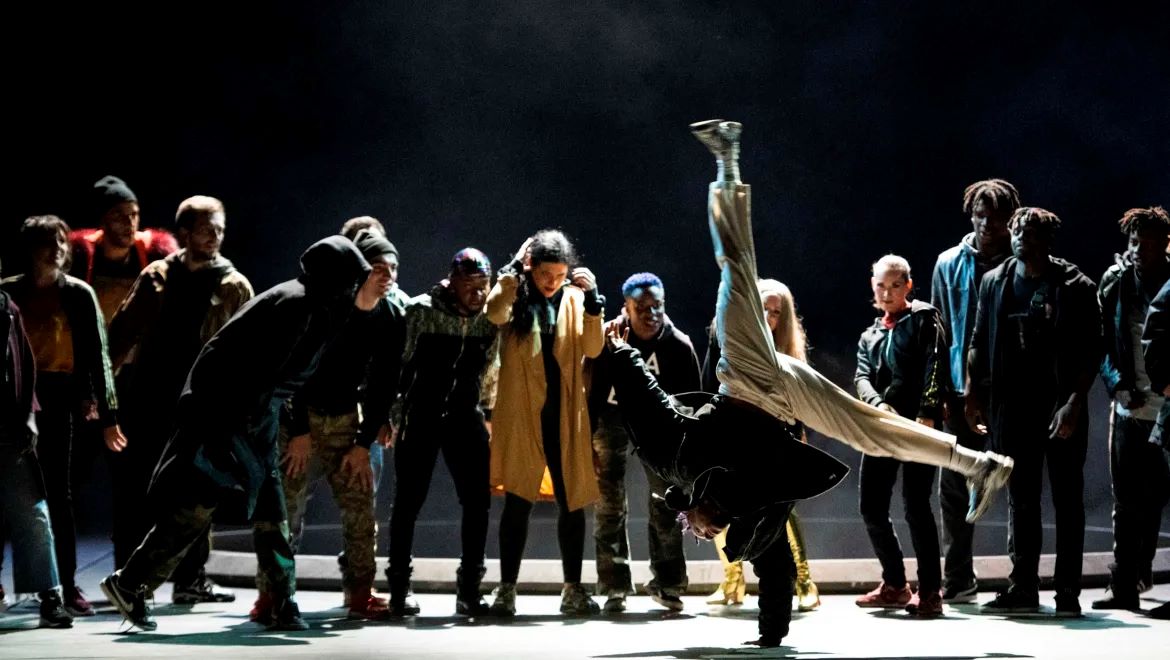
For a long time, in early and Baroque music, so-called “historically informed” performance—structured between the 1950s and 1980s—reshaped the way repertoire was heard, durably shifting practices and interpretative legitimacy. Yet once this framework was established, it never ceased to evolve. From the 1990s onward, and especially in the 2000s and 2010s, boundaries loosened and approaches became more fluid. From French pianist Alexandre Tharaud’s Rameau recording (2001) to projects blending Baroque with electronic music or hip-hop—such as Bach on the Beat by Franck-Emmanuel Comte, Rameau meets ABBA by Lautten Compagney BERLIN, or Les Indes galantes revisited, between contemporary art and cinema, by director Clément Cogitore in 2019 at the Paris Opera—artists are exploring new modes of presence. Between fidelity to sources, practical constraints, and openly embraced hybridizations, the notion of authenticity becomes more flexible, opening a space in which early music enters into dialogue with its own time. What remains to be understood is what this notion of “historically informed” performance encompasses today, between inherited frameworks and now plural, and claimed, practices.
Historically informed?
“How does one end up committing such a crime against the baroque faithful?” It is to Alexandre Tharaud that a journalist from the French magazine Télérama addressed this mock-indignant question in 2009, after the musician had recorded major harpsichord works on the piano. A Baroque odyssey he had begun a few years earlier with Rameau’s Nouvelles suites, recorded—no less—on the Harmonia Mundi label, emblematic of early music. By that time, historically informed performance had been permeating the early music world for some forty years, and almost no one doubted the aesthetic richness of performing on period instruments. Vivaldi was played on gut strings. And Rameau, on the harpsichord. Pianists had thus largely abandoned this part of the repertoire. “It’s true that with the arrival of Baroque specialists, pianists felt completely out of place. They told themselves, ‘we’re playing this music in a totally erroneous style and we don’t understand it,’ and they fell silent”, recalls Alexandre Tharaud. With a few exceptions, however, as the music of Bach, for instance, never left the pianistic repertoire.
But captivated by Marcelle Meyer’s recordings of Rameau and because he “never wanted to play the same repertoire as everyone else”, the pianist recorded this album—the “first convincing ‘post-Baroque’ piano disc”, according to journalist Renaud Machart, author of Les baroqueux, un demi-siècle de musique, 1949–2001 (Fugue, 2024), who devoted a full page to it in Le Monde. While Machart recalls receiving “indignant letters” from the Baroque establishment, Tharaud himself did not encounter disapproval from his peers—not even from Marc Minkowski: “No Baroque musician told me, ‘Don’t do that.’” Moreover, he was not alone at the time in following this path. “The rediscovery of Baroque music, period instruments, and a whole series of historically informed practices created, for a while, a kind of complex. All modern musicians abandoned early repertoire”, analyzes Benoît Dratwicki, researcher and artistic director of the Centre de musique baroque de Versailles (CMBV). “But in the 2000s and 2010s, people shed their inhibitions and de-specialized. You can see this among singers: someone internationally renowned like Sabine Devieilhe can sing Lakmé on Monday, Les Indes galantes on Tuesday, and some Offenbach operetta on Wednesday. She sings all repertoires with stylistic awareness and obvious ease—she is not confined to a single category.”
Passionate about early music and want to read this subscriber-only article?
If you are not a subscriber, join the international Total Baroque community. Subscribe here from 5.00€.
I subscribe
If you are already a subscriber, sign in.
I sign in 
You must be logged in to be able to post comments.
Sign in