


 When collectors and musicians buy unknown historical harpsichords, it is sometimes a risky bet: is it really a valuable instrument—or just expensive firewood?
  By Michael Günther


After the harpsichordist, fortepianist and instrument collector and researcher Michael Günther bought an old harpsichord relatively spontaneously at an auction in Belgium, he spent years researching the origin of this instrument: was it really a valuable instrument—or rather firewood? Here he tells the story of how various coincidences and encounters finally led him to the surprising solution to the mystery.
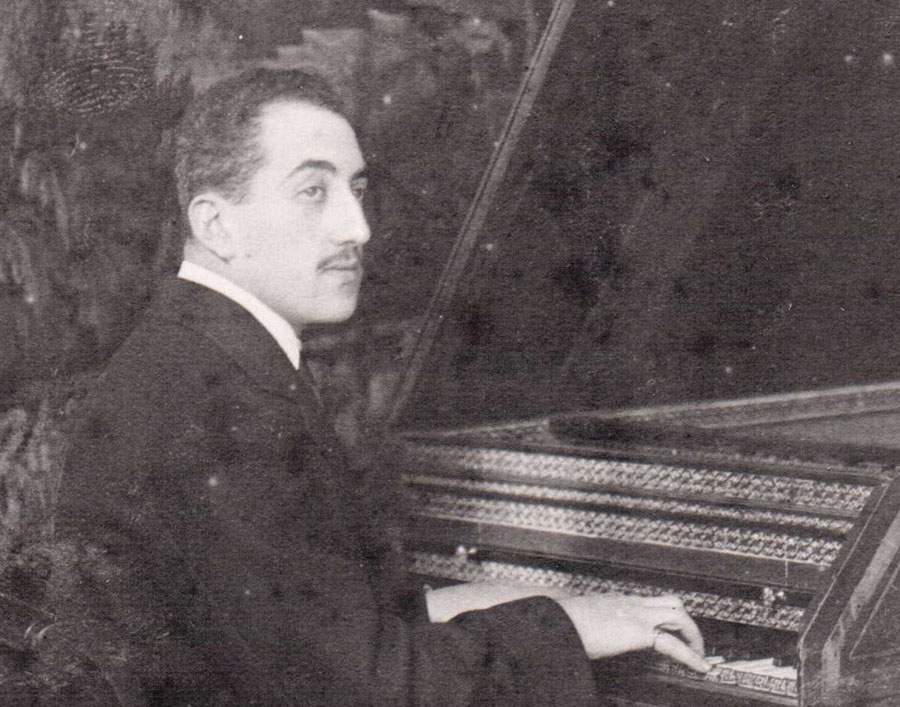
So, my harpsichord had once been part of Marcel Salomon’s collection of instruments—that much I now knew. But it was only now that I realized how important this man had been for the revival of harpsichord playing and the emergence of historical performance practice in the 20th century.
A key figure in the revival of historical instruments
As a musician and later as an antiques dealer, Marcel Salomon (1888-1973) played a role in the revival of the harpsichord, the significance of which I had not been aware of until then: between 1912 and 1969, he and his brother Albert built up a collection that included the most famous harpsichords and fortepianos.
In an interview in the magazine “Panorama Instrumentale” in December 1971, Marcel Salomon himself gave an insight into his life: At the age of 15, he could not resist a harmonium from the Empire in an antique store; it became the first instrument in his collection for fifty francs, his entire savings. The collection grew rapidly, and “the room I occupied in my parents’ house became a museum for me,” he says, and continues: “In 1911, I took over a store in Saint-Germain-en-Laye that an antique dealer who had given up his business had sold to one of my uncles. This store (quite large) had the sign: “Au Berceau Royal” [“At the Royal Cradle”]. I had the idea of displaying all my instruments in one of the rooms of my store and turning it into a music room. Given the success I quickly achieved, I sold all my musical discoveries; this encouraged me to look for and discover old, often interesting musical instruments with keys or strings.”
Passionate about early music and want to read this subscriber-only article?
If you are not a subscriber, join the international Total Baroque community. Subscribe here from 5.00€.
I subscribe
If you are already a subscriber, sign in.
I sign in 
You must be logged in to be able to post comments.
Sign in