


 This week, L’Homme Armé revives the musical exchanges between Florence and Mantua around 1600; Jordi Savall brings the Ambronay Festival to a close with the “Llibre Vermell de Montserrat”; Cappella Mariana combines Machaut’s poetry and music in Valtice; Micrologus gives fresh voice to the “Canticle of the Creatures” in Assisi; while in Dijon Les Traversées Baroques revive Stefano Landi’s rarely performed “La Morte d’Orfeo”.
  By
By 


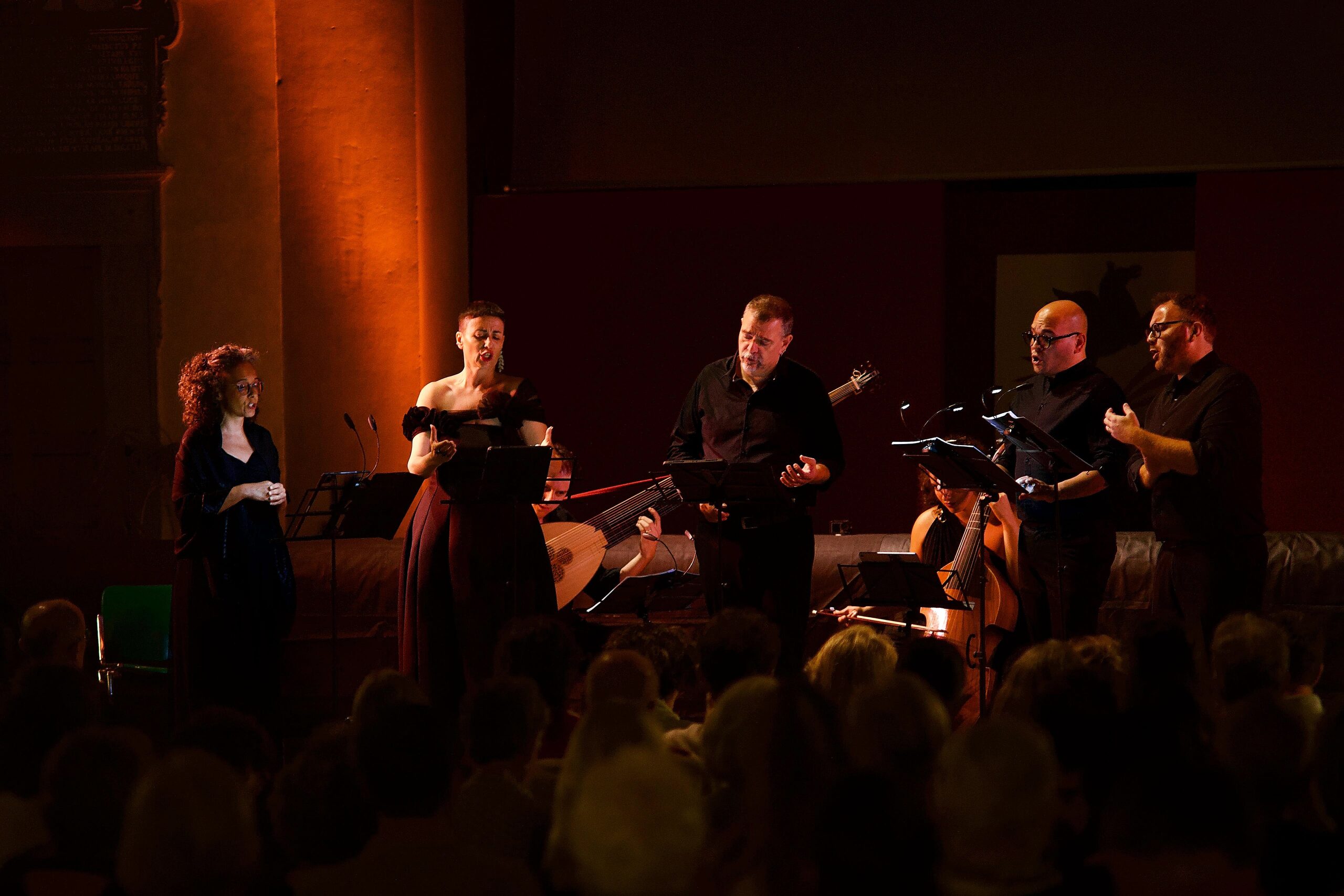
Florence – Between the Arno and the Mincio with L’Homme Armé
For its tenth edition, the Florentine FloReMus Festival entrusted L’Homme Armé, the ensemble behind the festival, with an especially well-conceived programme: Tra l’Arno e il Mincio, exploring the musical exchanges between the courts of Florence and Mantua around the turn of the seventeenth century. The two cities — and the two dynasties that ruled them, the Medici and the Gonzaga — were brought particularly close by the 1584 marriage of Vincenzo Gonzaga and Eleonora de’ Medici, which encouraged musicians and musical styles to circulate between the two courts.
The connection was established from the very opening work, Giaches de Wert’s Cantiam del Mincio, written for the wedding itself and performed at Florence’s Auditorium di Sant’Apollonia. The programme then brought together two musical worlds that coexisted around 1600: the great tradition of the polyphonic madrigal and the emerging Florentine recitar cantando. From Salomone Rossi to Alessandro Striggio, and from Giulio Caccini to Marco da Gagliano and Claudio Monteverdi, the journey between the Arno and the Mincio traced the wider transition from the Renaissance to the early Baroque.
With Sonia Tedla Chebreab, Marta Fumagalli, Andrés Montilla Acurero, Riccardo Pisani, Gabriele Lombardi, Giovanni Bellini and Bianca Cucini
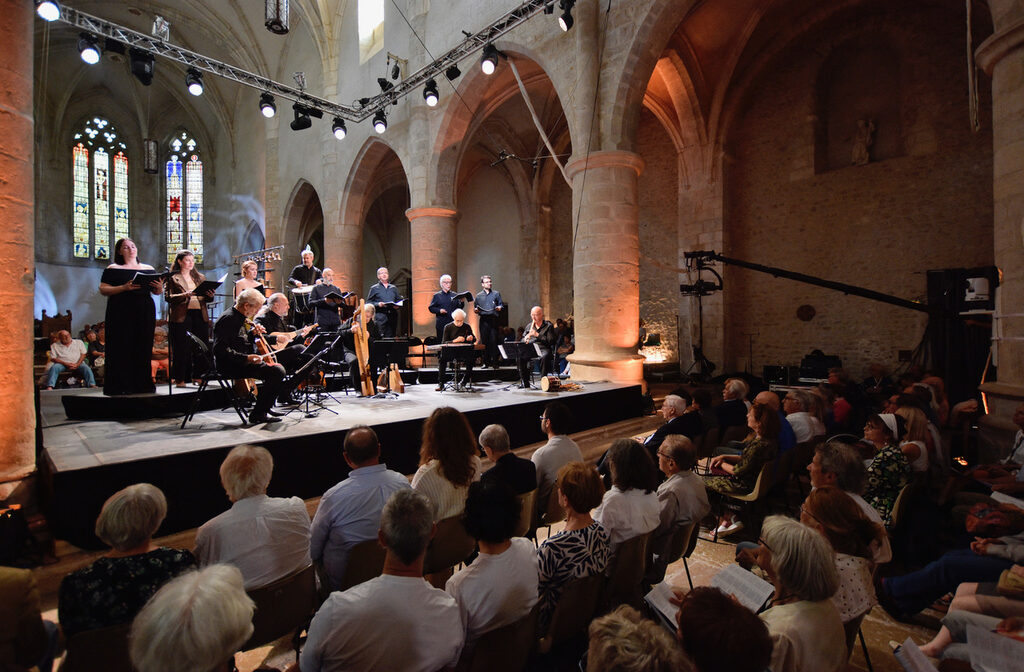
Ambronay – Jordi Savall brings the Festival to a close
Jordi Savall, La Capella Reial de Catalunya and Hespèrion XXI brought the 47th Ambronay Festival to a close in a packed abbey church with the ten songs and dances of the Llibre Vermell de Montserrat. It is a repertoire the Catalan musician has been exploring for almost half a century: his first recording of the celebrated medieval manuscript dates back to 1979.
The third and final weekend had already brought other ‘Baroque Latitudes’ — the theme of this year’s festival — to life. Camille Delaforge and Il Caravaggio had unfolded the spatial splendours of Musica Regalis, centred in particular on Charpentier’s Messe à quatre chœurs and Lotti’s Crucifixus à 8, while Lambert Colson and InAlto turned to Monteverdi’s monumental Vespro della Beata Vergine. From Charpentier’s France to Monteverdi’s Italy and medieval Catalonia, it was a fitting conclusion to a festival shaped by the idea of musical travel.
With Jordi Savall, La Capella Reial de Catalunya and Hespèrion XXI
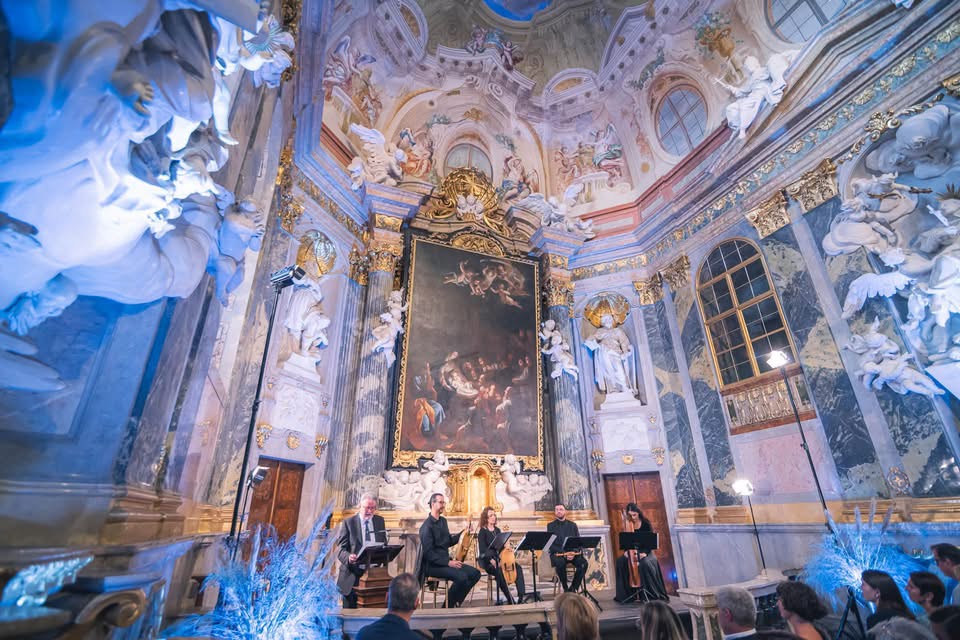
Valtice – Guillaume de Machaut between storytelling and music
For its eleventh edition, the Lednice-Valtice Music Festival welcomed Cappella Mariana to the chapel of Valtice Castle in South Moravia for a programme devoted to Guillaume de Machaut. Rather than presenting a continuous musical work by the composer, the ensemble staged his Judgement of the King of Bohemia, interweaving the narrative with ballades, virelais and motets.
In this narrative poem, a lady who has lost her lover and a knight betrayed by his beloved attempt to decide which of them is suffering more. Unable to reach a verdict, they submit their dispute to the King of Bohemia. Around the narration of Czech actor Jaromír Meduna, Cappella Mariana thus revealed the many sides of Machaut as both poet and composer, at the heart of fourteenth-century courtly culture.
With Jaromír Meduna, narrator; Vojtěch Semerád, tenor, medieval fiddle and artistic direction; Hana Blažíková, soprano and Gothic harp; Mélusine de Pas, fiddle; Jakub Kydlíček, flutes
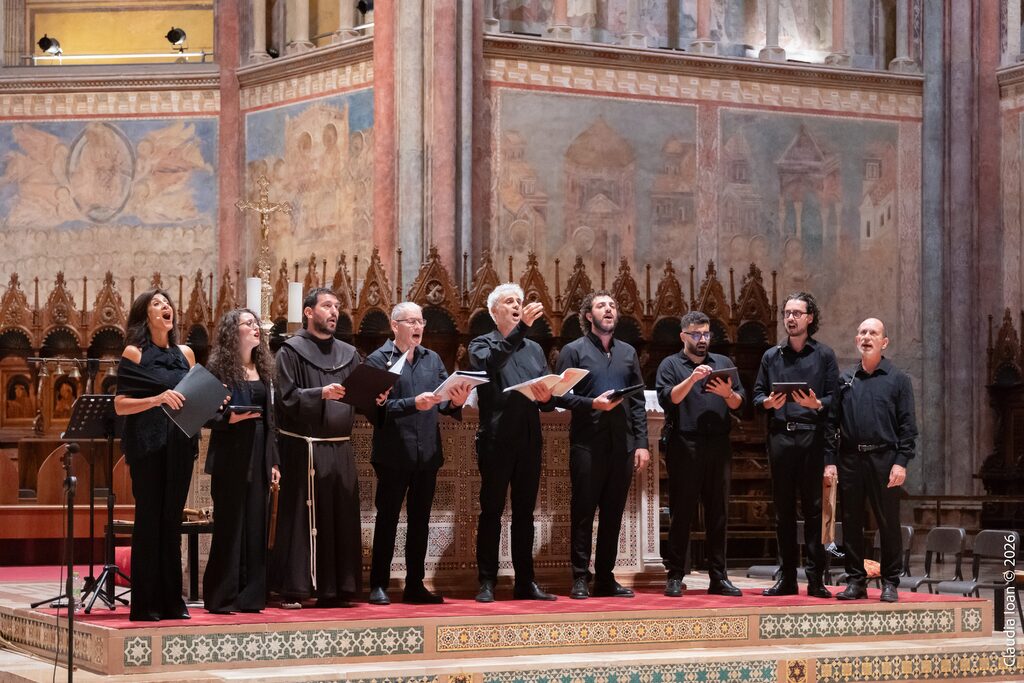
Assisi – The Canticle of the Creatures finds its voice again
For the 81st Sagra Musicale Umbra, Micrologus presented Giullari di Dio in the Upper Church of the Basilica of St Francis in Assisi. The programme draws in particular on a philological reconstruction of the Canticle of the Creatures — a religious song composed by St Francis of Assisi in the early thirteenth century, whose music has been lost — based on the earliest surviving sources, thereby reaching back to the origins of the Italian lauda.
For Micrologus, an ensemble founded in Assisi more than forty years ago, the return carried particular resonance: the words of St Francis were heard once again in his own city, surrounded by the basilica frescoes depicting his life. The production forms part of the celebrations marking the eighth centenary of the saint’s death and is also due to be recorded.
With Micrologus
Dijon – The death of Orpheus according to Stefano Landi
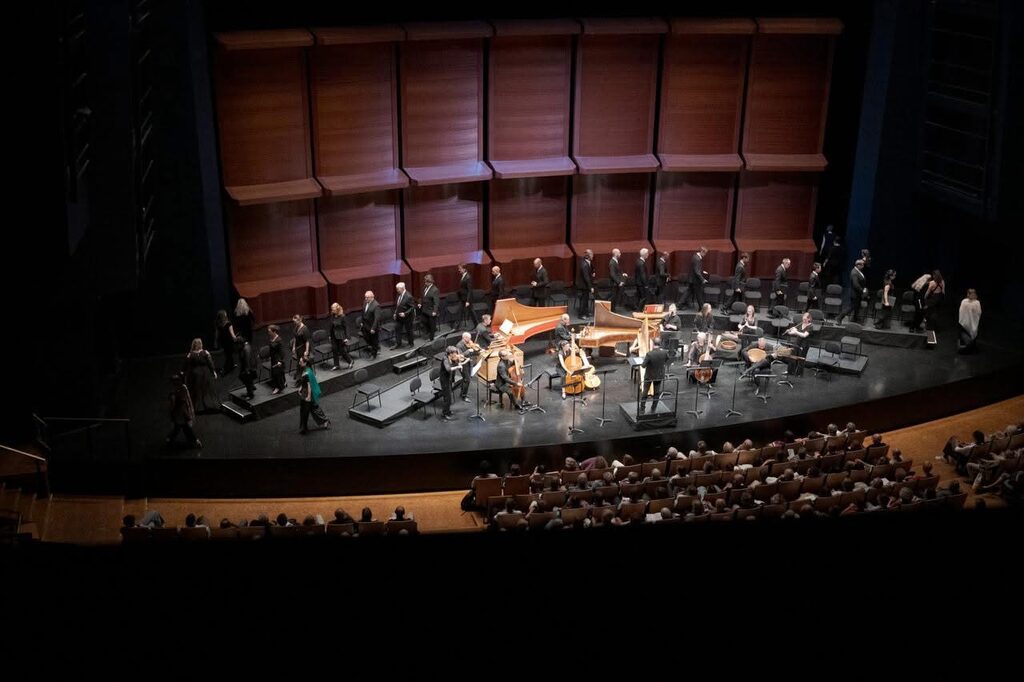
At the Opéra de Dijon, Les Traversées Baroques and the Opéra de Dijon Chorus presented a concert performance of La Morte d’Orfeo, composed by Stefano Landi in 1619. Twelve years after Monteverdi’s celebrated Orfeo, Landi picks up the myth where his predecessor had left it: with Eurydice lost for ever, Orpheus turns away from earthly pleasures, before the wrath of Bacchus leads him to his own death.
At the dawn of opera, the myth had already inspired Peri, Caccini and Monteverdi. With Landi, it acquires a new, dark and spectacular conclusion, played out by eighteen characters and steeped in the chiaroscuro of the early Italian Baroque. The result is a plunge into a work far less familiar than Sant’Alessio, the other major title now associated with the Roman composer.
With Les Traversées Baroques, Chœur de l’Opéra de Dijon and Étienne Meyer

You must be logged in to be able to post comments.
Sign in