


 With “The Four Nations”, Matthias Maute and Ensemble Caprice offer an inventive tribute to Vivaldi: a project of composition and recreation that blends scholarship, imagination, and baroque energy.
  By
By 


What if we were to rediscover Vivaldi through imagination? With The Four Nations, Matthias Maute and his Ensemble Caprice revive three lost concertos by the “Red Priest”: La Francia, L’Inghilterra and La Spagna, alongside the only surviving one, Il Gran Mogol. Drawing on 18th-century sources and his intimate knowledge of the Vivaldian style, Maute delivers a reconstruction that is as erudite as it is inspired. Between invention, virtuosity, and a sense of theatre, the Montréal-based ensemble turns this exploration into a genuine musical journey across baroque Europe.
Three of Vivaldi’s “national” concertos had been lost, and you reconstructed them. What inspired you to take on such a challenge, and how does one approach recomposing lost works while staying true to the spirit of the “Red Priest”?
Matthias Maute: The loss of three “national” concertos by Vivaldi is a tragedy for recorder players, especially within an 18th-century repertoire that lacks flamboyant works. My desire to reconstruct them was irresistible! The pandemic actually opened the door to bold projects like this one. This is not my first foray into the world of recomposition: in 2013, I had already brought back to life the lost arias of the opera Motezuma. That experience allowed me to immerse myself in Vivaldi’s style before delving into the universe of his concertos.
Knowing his other recorder works by heart, I was able to rely on that familiarity to “speak the language” of the Red Priest. For me, in the context of this project, Vivaldi represents a style more than a single person. Every note I recreate is a conversation with his genius—a way of paying tribute to his musical legacy. So, taking on this challenge was not only a matter of reconstruction, but a celebration of the Vivaldian spirit!
Each concerto is preceded by a prelude setting the national atmosphere, from Charpentier to Playford. Why did you choose to introduce these pieces, and what do they reveal about your reading of The Four Nations?
M. M.: Introducing preludes before each concerto is, for me, a way of establishing an atmosphere—like appetizers before a meal. These opening pages awaken the senses and prepare the listener for the major works that follow. Each prelude establishes a national tone, whether inspired by Charpentier, Playford, or others, and by adding this national colour, the preludes enrich the context of the following concerto, allowing for deeper understanding and appreciation of the work.
You added a contemporary piece, La primavera (which you wrote)for solo recorder, which converses with Vivaldi’s famous Spring. What did you want to bring through this modern surprise in a cycle so deeply rooted in the 18th-century imagination?
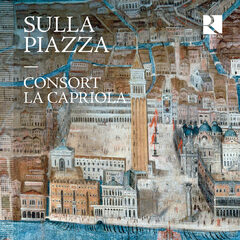
M. M.: Adding a contemporary piece—La Primavera for solo recorder—into a cycle so marked by the 18th-century imagination is a way of establishing a living dialogue between past and present. The album cover, with its Venetian mask, symbolizes this mystery: we don’t know who is hiding behind it. In La Primavera, the mask falls, and the dialogue with Vivaldi changes colour. Although the piece clearly echoes his famous concerto, my personal contribution comes through more distinctly in the harmonic realm and in the development of ideas. That said, it’s important to emphasize that without Vivaldi, this piece would never have been born. It’s a true dialogue across time and space, where modernity and tradition meet to create something new and exciting.
Finally, among the pieces on this album, which would you recommend listening to first to best grasp the connection between faithfulness to Vivaldi’s style and your own creative perspective?
M. M.: Start listening to the album right from the very beginning. Let’s meet in France!
 Press review
Maute’s reconstructions are executed with care and expertise. […] His compositional choices are clearly thoughtful. With humour and ease, he manages to slip into the skin of the Italian master.
Heather Weinreb, Myscena
Alongside the genuine Vivaldi concerto rediscovered in 2010 (Il Gran Mogol), Matthias Maute’s true-false versions hold their own and let us dream of an imaginary concert somewhere in 1730s Venice.
Frédéric Cardin, Panm360
The playing from Ensemble Caprice is better than solid; it’s full of energy, bursting with virtuosic technique. It speaks to Maute’s gifts not only as a soloist, but as a composer, especially so in a given, historic style.
Biberfan

You must be logged in to be able to post comments.
Sign in