


 At the head of Le Concert d’Astrée for a quarter of a century, Emmanuelle Haïm remains one of the major figures on the international baroque scene. This year, in addition to a busy European season, she has taken on the artistic direction of the first Handel Project Festival, the fruit of a long collaboration with the LA Phil, while also being involved in educational initiatives in northern of France.
  By
By 


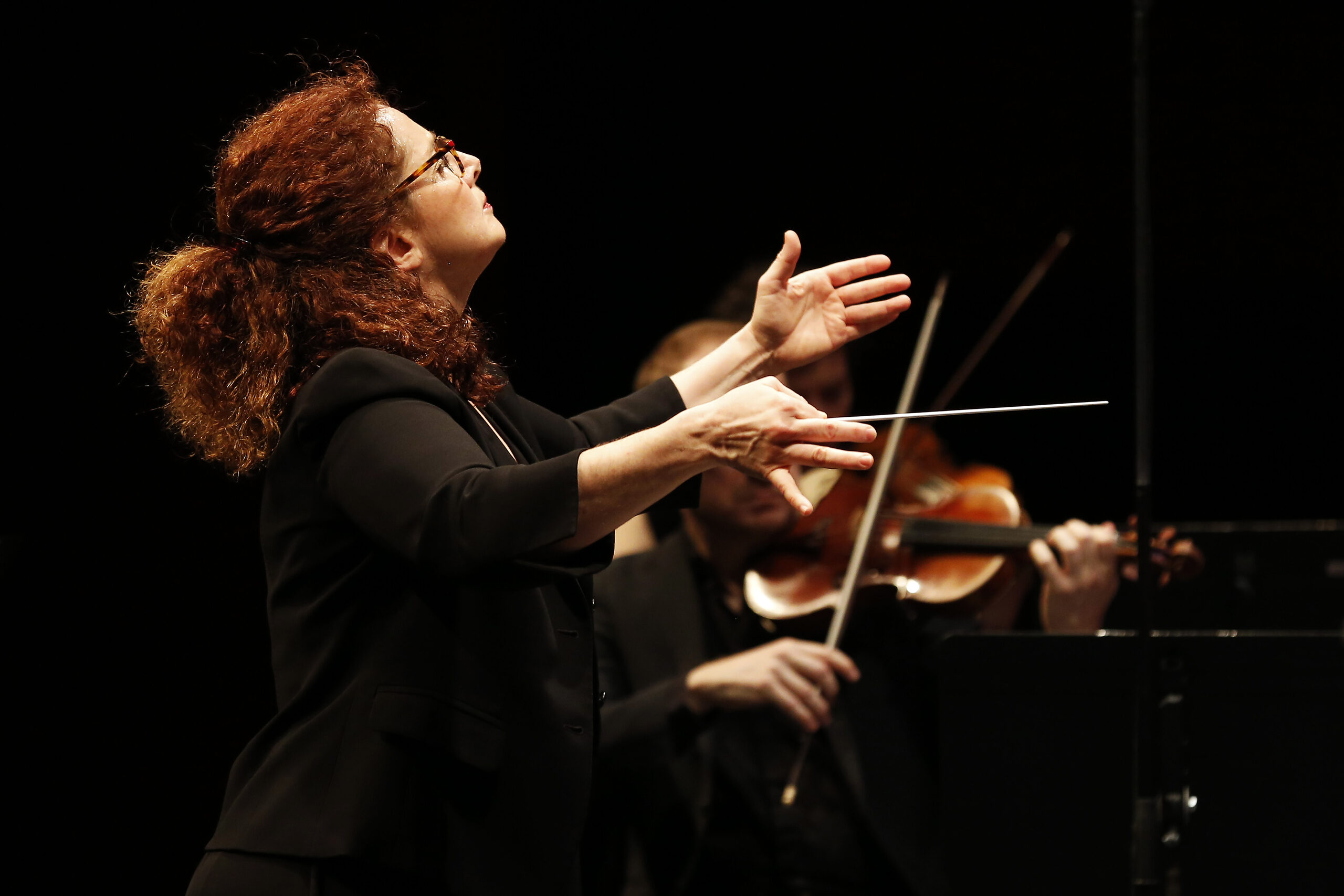
This season marks the twenty-fifth anniversary of Le Concert d’Astrée, one of the world’s leading interpreters of baroque music. Among the standout events, Emmanuelle Haïm at the head of her ensemble presents Handel’s Semele at Dutch National Opera in Amsterdam and Scylla & Glaucus by Jean-Marie Leclair at the Opernhaus Zürich, staged by Claus Guth. She is also invited to appear with her ensemble in numerous prestigious venues on concert tours in France and Spain. Without in any way giving up her on-the-ground engagement, however, Emmanuelle Haïm is launching educational projects in schools across Hauts-de-France [northern French region], driven by a cross-border conviction: to open music up to everyone. Interview.
Twenty-five years after the founding of Le Concert d’Astrée, how do you feel when you look back?
Emmanuelle Haïm: In reality, I mostly look ahead, because the challenges remain very significant. Despite a lifespan that now stretches over a quarter of a century, music—and in particular independent ensembles like ours are confronted, in their very existence, with constant challenges, often economic ones. I would say that twenty-five years ago, we did not necessarily grasp all the entrepreneurial implications. If we had realized beforehand, we wouldn’t have done it! (laughs) Things happened very fast for us. We were invited to prestigious venues very early on, with very high stakes from the outset, without really having the means—our team was very small at the beginning. But I think it was a good thing to have had these concerns. Things gain in value when you know everything that is involved, for example, in programming a large French tragédie lyrique at an opera house!
Take, for instance, the two Iphigénie operas by Gluck given at the Aix-en-Provence Festival: this is work that is planned four years in advance! There is a whole cast, a chorus, an orchestra, a staging team… Not to mention those who design the sets and costumes (and wardrobe assistants), those who handle the lighting, and then the festival staff, who are also very numerous. It is a colossal parallel world, and you are not allowed to get it wrong! The path is a long one, that of a musician and particularly that of the music director of an ensemble like this.
Passionate about early music and want to read this subscriber-only article?
If you are not a subscriber, join the international Total Baroque community. Subscribe here from 5.00€.
I subscribe
If you are already a subscriber, sign in.
I sign in 


You must be logged in to be able to post comments.
Sign in