


 How might an eighteenth-century cellist have played Carl Philipp Emanuel Bach’s concertos? For Elinor Frey, the answer does not lie in the score alone. Ornamentation, varied repeats, cadenzas and the freedom afforded to the soloist shape a reading of the three concertos in which the performer recovers some of the inventiveness then expected of a virtuoso.
  By
By 


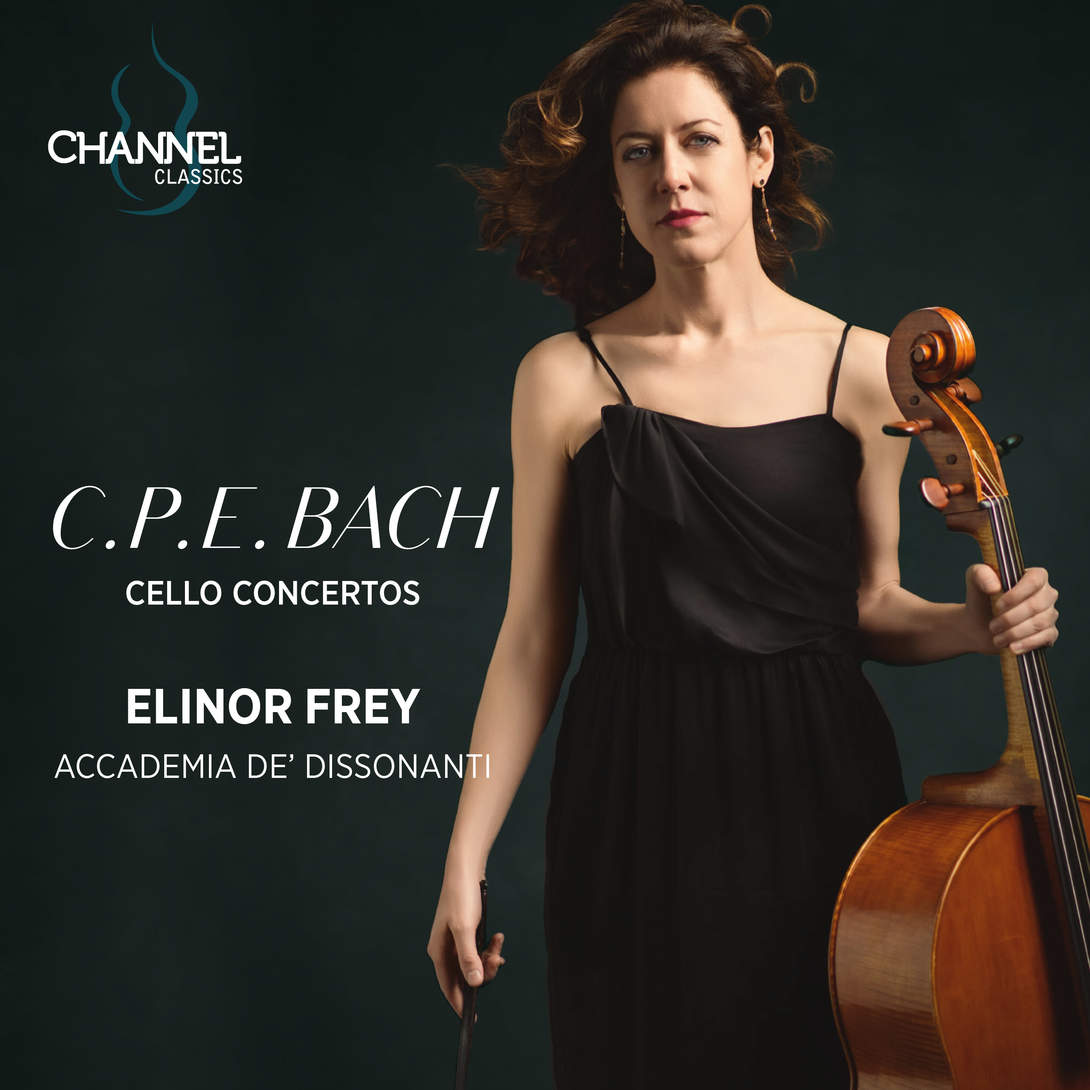
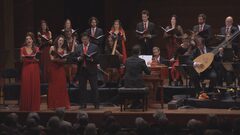
With C. P. E. Bach: Cello Concertos, released on 4 September 2026 by Channel Classics and warmly recommended by the French magazine Diapason, Canadian-American cellist Elinor Frey brings together Carl Philipp Emanuel Bach’s three cello concertos, Wq 170, 171 and 172. At the head of the Accademia de’ Dissonanti, which she founded in 2020, she performs the solo part while also directing the ensemble. Recorded in October 2025 at the Isabel Bader Theatre in Kingston, Canada, the album features a 1770 cello by Nicolas Augustin Chappuy, surrounded by six violins, six violins, one viola, one cello, one double bass and harpsichord.
Berlin, a laboratory for the cello
Carl Philipp Emanuel Bach spent nearly thirty years in Berlin as harpsichordist in the service of Frederick II, in a city that brought together some of the finest instrumentalists of the age. While the flute, violin, viola da gamba and keyboard instruments still dominated musical life, the cello was rapidly gaining ground. It was in this context that, between 1750 and 1753, he composed his three concertos, probably intended for Berlin’s private academies and musical societies.
These works stand at the meeting point of the galant style and the Empfindsamer Stil (“sensitive style”), of which C. P. E. Bach was one of the leading exponents. Melodic elegance, sudden shifts in dynamics and contrasts of character fuel a highly mobile dialogue between soloist and orchestra, at times approaching a duel.
Playing what the score does not say
For Elinor Frey, the aim is less to reproduce exactly what is written than to recover the latitude available to an eighteenth-century virtuoso. The Cello Concerto in A major may, for instance, have been intended for Ignaz Mara, cellist in the royal Kammermusik, renowned for the power and expressiveness of his playing. Frey takes this hypothesis as a starting point for imagining how a musician who was both performer and composer might have made these works his own.
She draws her ornamental vocabulary from Bach, but also from Franz Benda, Johann Joachim Quantz and other musicians in his circle, while also making use of historical solmisation and models of varied repeats. The cadenzas are likewise her own: rather than serving as mere virtuoso displays, they extend the rhetorical logic of the movement and allow the soloist’s individual voice to emerge.
Three concertos, three characters
Each of the three concertos has its own character. The Cello Concerto in A minor, written in 1750, is the most tense, marked by sudden oppositions between soloist and orchestra; the B-flat major Concerto belongs more clearly to the galant style, with its melodic clarity and lighter bearing. The A major Concerto, composed in 1753, pushes virtuoso demands and expressive instability even further.
At the head of the Accademia de’ Dissonanti, Elinor Frey favours a taut, highly articulated reading in which the small ensemble lacks neither weight nor impact. The fast movements move forward with lightness and precision, while the slow movements retain a tension that avoids any sense of languor. Frey also embraces a highly personal way of shaping the line, including certain slides and inflections that heighten the rhetorical character of her playing. The result brings out what makes these concertos so distinctive: less decorative virtuosity than a constantly shifting dialogue between cello and orchestra, capable of moving within a few bars from galant elegance to impetuousness.

You must be logged in to be able to post comments.
Sign in