


 A forgotten tragédie lyrique, a Norwegian heroine, and music with proto-Romantic fire: Philidor’s Ernelinde returns in blazing form!
  By
By 


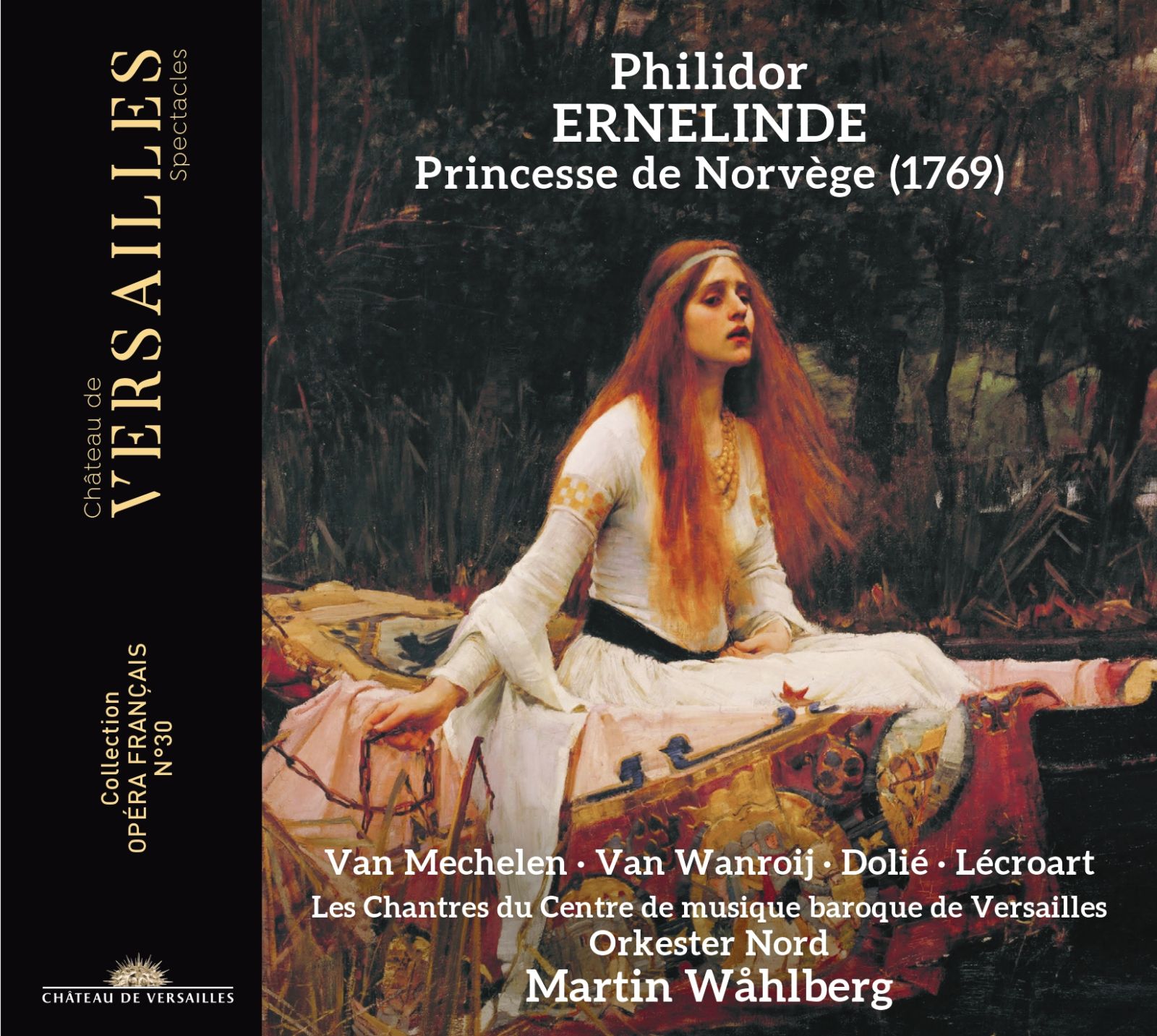
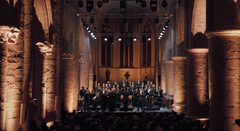
After more than two centuries of oblivion, Ernelinde, princesse de Norvège by François-André Danican Philidor is back on stage and on disc, thanks to Orkester Nord and its conductor Martin Wåhlberg, in partnership with the Centre de musique baroque de Versailles. This three-act tragédie lyrique, praised in its time for its modernity, fuses Italian influence with French tradition, heralding the Gluckist reforms. A major rediscovery of the 18th-century French lyrical repertoire.
Ernelinde returns to disc after more than two centuries of neglect, newly staged and recorded in spring 2024 in Oslo. Why did you choose this particular opera? Was it a question of chance in the research?
Martin Wåhlberg: Chance, yes and no. It was a very deliberate choice, and at the same time really the result of life’s circumstances. The work is important in itself. Specialists have called Ernelinde the first “modern” opera, in the sense that it foreshadows Gluck’s reform in Paris. But all that has remained very confidential, discussed only among experts. At the same time, coming from a family of Scandinavian musicians, I remember colleagues around my father speaking of an opera that would be about Norway… Much later, thanks to Pierre Frantz, a great specialist of eighteenth-century theatre, I became very interested in the birth of French opéra-comique, and thus in Philidor. It’s truly a brilliant repertoire. It’s already Mozart’s style. It may well be the moment in musical heritage when French music had its greatest impact around the world. It’s a real musical revolution, and also very beautiful music, highly theatrical. Mozart said he preferred the French music of the opéra-comique to Italian music, because it was where he learned real dramatic writing. For me, that’s the true secret of Mozart’s opera writing. Everything is already there in this new French music, which remains far too little known even today. With Orkester Nord, we’ve done several projects to bring this music back to life, including recording the very first piece marking the birth of the new genre of opéra-comique: Le Peintre by Duni. Also, Barbe-Bleue by Grétry. In short, all this led me to a real passion for this music. So when we talked with Benoît Dratwicki [researcher at the CMBV] about potential projects, we said, almost at the same time: “Ernelinde!” It’s one of Philidor’s greatest titles.
Your ensemble, Orkester Nord, and the Centre de musique baroque de Versailles collaborated closely on this project. What surprises or challenges did you encounter in tackling Ernelinde’s score—both in terms of musical direction and stylistic rendition?
M. W.: I think one of the great interests, but also one of the great challenges, of eighteenth-century opéra-comique is that there’s really no modern tradition. And where there is one (as with Grétry, for example), it doesn’t do the music justice. This repertoire has sometimes been seen as something a bit fluffy, very light, like the dresses and ribbons in Fragonard’s paintings. But it’s quite the opposite. Period accounts describe a powerful music, rhythmical, full of contrasts. All of that becomes even more evident in Ernelinde, because this piece marks the entry of the new opéra-comique style onto the grand stage of the Paris Opéra. When Ernelinde was commissioned, the directors actually called upon the stars of their competitors—namely the opéra-comique—who, it must be said, had stolen a large part of their audience, especially the younger public. Philidor and Poinsinet had just done Tom Jones, a great success. With Ernelinde, we get an improbable and brilliant aesthetic confrontation: a librettist and composer coming from the opéra-comique, from a world of total aesthetic freedom (their own invention, in fact) are suddenly required to work within the format of grand opera, that is, tragédie lyrique. Obviously, they aren’t going to respect the rules, even if they pretend to. That clash is where the true beauty of the work emerges, as was recognised at the time even by Diderot, who praised the bloothirsty choruses and the mad scene of Ernelinde. So, it was necessary to find a balance between these two aesthetic worlds: freedom on one side, strict constraints on the other. That’s the whole difficulty of performing this work today—and I think it was already the case back then too. With the CMBV, we chose a rich continuo for the Italian-style recitatives, as was done across Europe. We also had to navigate Philidor’s melodic line, which uses some very specific ornaments. Then we had to decide which version to use. There are at least five versions of this work, some among the most lavish productions of the time, in terms of costumes and sets, with many soldiers on stage and apparently even horses! We chose one of the earliest versions, from before Gluck arrived in Paris, where you really feel the rupture with the older French operatic tradition.
What moved or surprised you most when you first read through the score? And why do you think it should be heard today?
M. W.: What struck me most is the almost pre-Wagnerian side of the work, and also Philidor’s cosmopolitanism. People have linked him to Italian music, but he actually draws on a wide variety of elements to form something strong and coherent. It’s a bit like Mozart in The Magic Flute, mixing the inspiration of opéra-comique with the sacred writing of Bach and Handel. Who would have expected something like that? It might be surprising, but with Ernelinde, it’s already happening. You sense the French tradition in the dances, the German symphonic style in the major numbers, but above all, you find Handelian choral writing—and like with Mozart, it’s in the grand sacred scenes. So it’s not the Handel of the operas, but the Handel of the Messiah and the Coronation Anthems. Indeed, Philidor had travelled across Europe, from the German states to London. He absorbed everything, and like Mozart, digested it all into a new kind of musical expression—his own, striking, and full of contrasts. What also really surprised me reading the score was the extremely violent, even bloody, vision of Northern European myths. Turning away from the Greek and Roman mythology of earlier tragédies lyriques, Poinsinet and Philidor move towards the mythology of the North, which was just beginning to come into fashion. We are in a fully medieval Nordic world. It’s almost a Game of Thrones atmosphere, and that has a real impact on the music, in terms of drama and the extraordinary. Between Odin and Frøy, the sacrificial rites to great gods, the war scenes, it’s already a bit like Wagner.
 Press review
The soloists earn nothing but praise […] The score is consistently captivating and offers a fascinating bridge between Rameau and Gluck. The artistic and musicological strengths of the performance firmly establish this release as a major event.
ForumOpéra
But this darkly glowing, grippingly intense music is a real delight — all the more so thanks to the vivid and compelling performance by Trondheim’s Orkester Nord under Martin Wåhlberg, a French-trained conductor.
Rondo
Reviving this nearly forgotten work and bringing it to a wider audience is an achievement in itself. This superb recording offers a real chance to rescue it from oblivion.
Klassik begeistert

You must be logged in to be able to post comments.
Sign in