


 What exactly is baroque music? In a thought-provoking new book, Frédérick Haas explores the roots, performance practices and contemporary relevance of this ever-evolving repertoire.


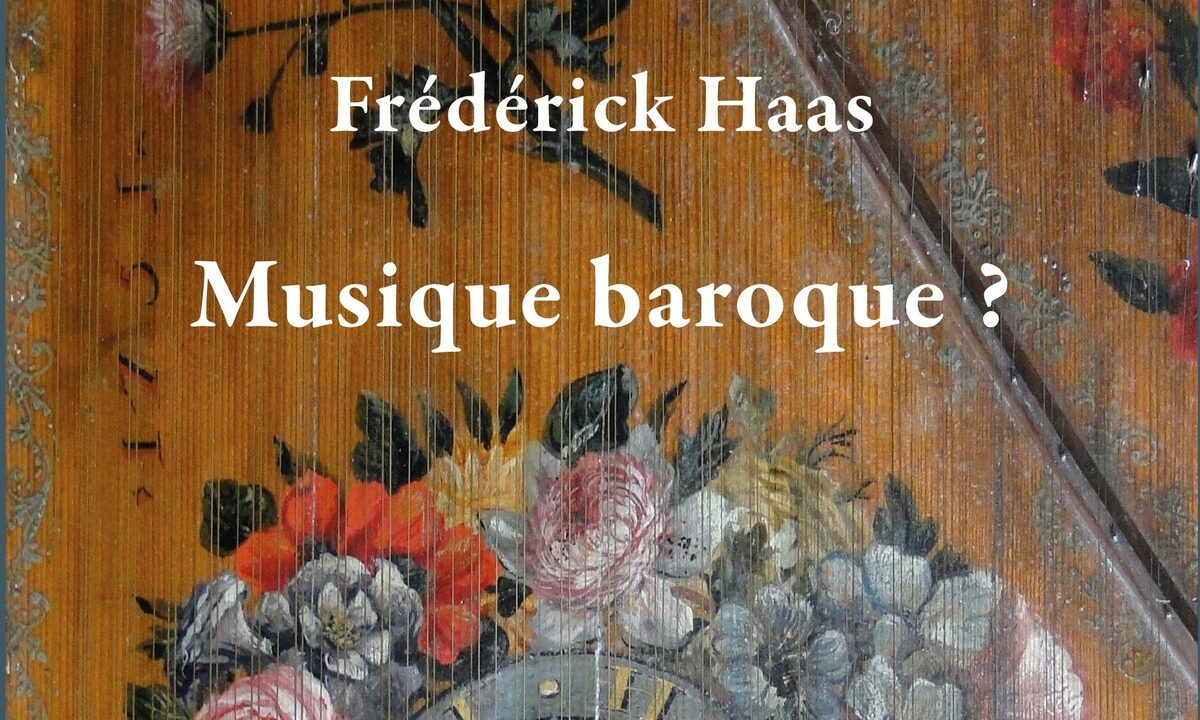
Considering the enthusiasm currently surrounding the so-called ‘Baroque’ repertoire, Frédérick Haas takes stock in a book simply titled Baroque Music? What exactly defines Baroque music? Why perform it today? What is the base of the renewal of practices that will continue to fascinate musicians and listeners alike? Total Baroque Magazine invites you to discover this book through a few selected excerpts.
Frédérick Haas is a harpsichordist who lives in Avignon and teaches harpsichord at the Royal Conservatory of Brussels. His discography includes works by F. Couperin, J.S. Bach, D. Scarlatti, J.-H. d’Anglebert, J.J. Froberger, and J.-Ph. Rameau.
Excerpts from Baroque Music? Coll. Essais, Les Belles Lettres, 396 pages, French, release date March 5, 2025.
“
The so-called Baroque music revival movement of the 1960s–1980s assumed the delightfully subversive role of cracking the suffocating accumulation of obligatory layers of Tradition, upheld by the Musical Institution—as Tradition had become utterly paralyzing. It’s almost as if history took a breath that brought a generative impulse, just when classical music was at risk of asphyxiation, subjected to the weary repetition of blunted principles, under the precept of masters whose credibility became diminished because of their lack of creativity. l What could no longer be said or done in the presence of composers and works mummified beneath the coffin of irreproachable practices, cemented under the arbitrary weight of overly entrenched successions, became possible: starting from something else, a new life, a new repertoire had to arise…
(…)
This movement, so enamoured with objectivity, brought some remarkable contributions, including restoring our perception of musical structures, which had been diluted by a generation of performers who were no longer composers. This awakening occurred at the very time when structuralism—overused or contested, dismissed or brandished haphazardly as a rallying cry or an insult—was at its peak across various movements in art and thought. The Baroque music revival coincided with the ferment that was unsettling and regenerating post-Romantic and bourgeois academic traditions, in a vast historical movement that was engulfing our societies and our culture. This alignment, in direct connection with the living energy erupting from that moment, helps explain the spontaneous and lasting success of the movement: for while it was unexpected because revolutionary—that is, ablaze with vital energy—it was also, a priori, doomed because revolutionary—that is, permanently marginal. And yet, from time to time, there are revolutions that succeed simply because the time is right, the time has come, and that’s all.
The avant-garde of Western arts was then united in a strict opposition to the stereotypical formulas of artistic output from the second half of the nineteenth century, where expressiveness—so desperately sought—had been confined to an increasingly excessive grandiloquence. The aim was to move beyond what had become paralyzed by its constant reference to duly catalogued styles, belonging to the realm of décor or ornament, (Renaissance, Antique, Classical in the eighteenth-century manner, Gothic, Romanesque, Oriental…), without any understanding of their inner workings. Historicism had arbitrarily blended the then-known repertoire of eras and cultures, ultimately leading to a terrifying void in terms of inventiveness and creativity. As a natural reaction to a long period of regression, a search began for purified and bare forms that would reveal the enjoyment of their structures—often reduced to their structures alone, stripped of ornament, affect, and expression.
(…)
This inevitably raises a few very simple yet essential questions: what is an artist? What is their purpose? What is their role? What is style? What is expression? What does modernism mean? The pioneers of early music vehemently rejected the Promethean idea of the artist—an idea they labeled romantic—which they sought to wipe clean, refusing the itch for expression, even while performing with the greatest intensity. Yet they claimed to be practicing an efficient form of craftsmanship, under the guise of historicist objectivity, and focused exclusively on performing the works of the greatest early musicians: those whose creative spirit had fertilized, transcended—and also unsettled—the forms and authorities of their own time: Cl. Monteverdi, J.S. Bach, J.Ph. Rameau… Great witnesses whose works stand out so clearly from the immense mass of musical ornamentation of their era; those great artists, who invariably strike us as astonishing precursors, appear to be in constant dissonance with their time.
(…)
It is now time to pause and reflect. A powerful fashion trend has opened the door to commercial success for the playing styles stemming from what has been called the Baroque music revival movement—bringing, as all fashion trends do, a broader audience in search of an easily recognizable product. Major musicological research has become more refined, building on what are rightly considered solid, time-tested bases. These bases are no longer questioned—their stability and validity are no longer challenged, for two reasons: first, research is largely focused elsewhere, and one cannot spend all their time checking and rechecking what is already known; second, research yields little to no commercial results, or very slow-moving ones, since it introduces the new—whereas the downward slopes of fashion, deftly skilled at feeding the half-conscious expectations of its audience, know how to inflate their dividends. Hence the characteristic perverse effect of a movement’s decline: the amplification of research is fragmented into the pursuit of countless peripheral questions, increasingly numerous and increasingly distant from the core, while the finally well-informed crowd applauds novelties that are not novel.
Today, we seek to bring warmth to effective structures by adorning them, hiding them, playing at blurring the lines: improvisation in style, abundant ornamentation, happenings, explosive encounters between cultures and genres are trendy. If, in doing so, we manage to retain an awareness of these structures while resisting their rigidity, perhaps it is a sign that we may soon be able to give truer meaning—stronger, more moving—to the embodied engagement we wish to have with Baroque arts: for in this we are touching on their very essence. However, if our way of bringing warmth and liveliness only works externally, if we are unable to discern the life-forces beneath the imperfect trappings of slogans, we are simply missing what an artist’s approach truly is. It is time to stop trying to embellish our music in the vain hope that it might please the masses and earn their approval and money. We must abandon the anxious bookkeeping mentality that leads us diametrically away from our calling—the one every young artist has dreamed of, reality be damned. Above all else, we must cultivate discernment, so as not to lose ourselves in producing musical furniture that may satisfy vague external expectations but in no way addresses the burning problem of art and creation. Powerful notions of style come into play here, because the spontaneity of true invention can only unfold once the structuring potential of a style has been fully assimilated. Until we reach that stage, it’s all smoke and mirrors—something a well-calibrated machine could do better than us: and that is still not creativity.
You must be logged in to be able to post comments.
Sign in