


 In 1582, Pomponio Nenna (1556–1608) was 26 years old, and his first book of madrigals continued to celebrate the light, the festivals, and the landscapes of Puglia. Long before the dissonances that would link his name to that of Gesualdo, the composer displayed a lively and refined polyphony in these works. With his ensemble Comet Musicke, Francisco Javier Mañalich Raffo now presents the first complete recording of this work.
  By
By 


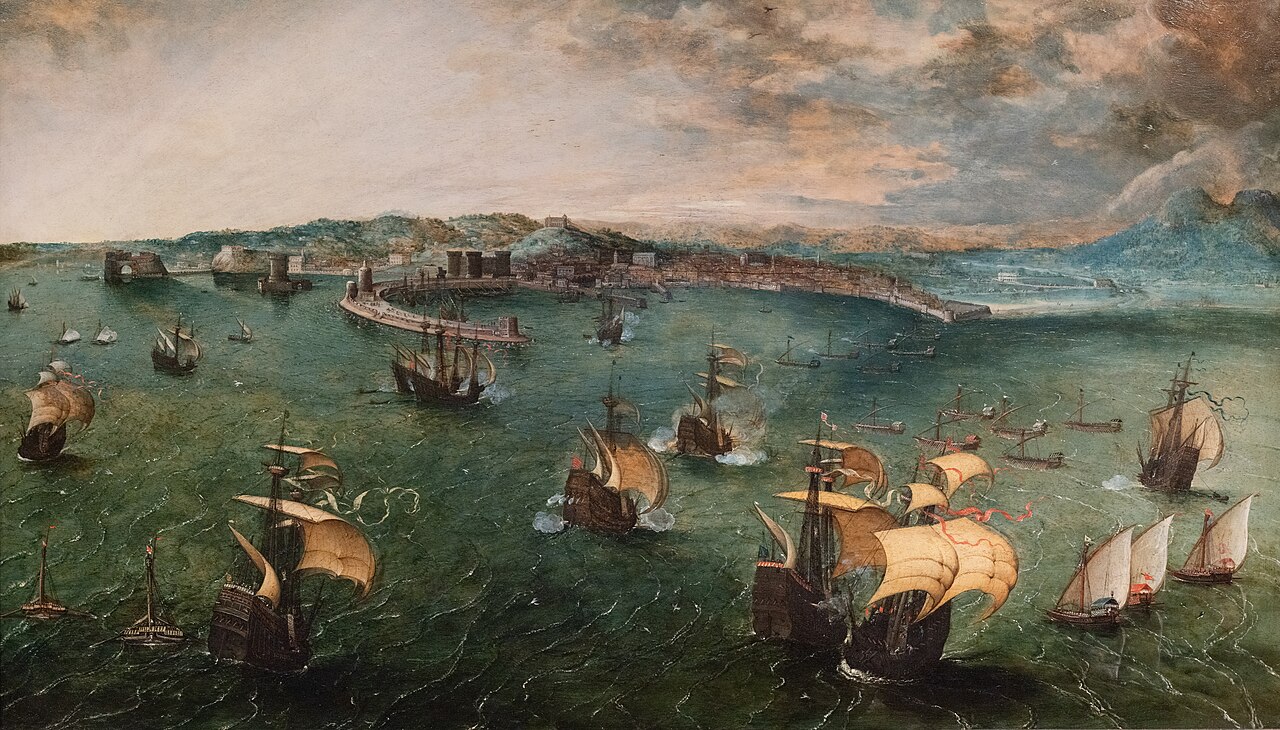
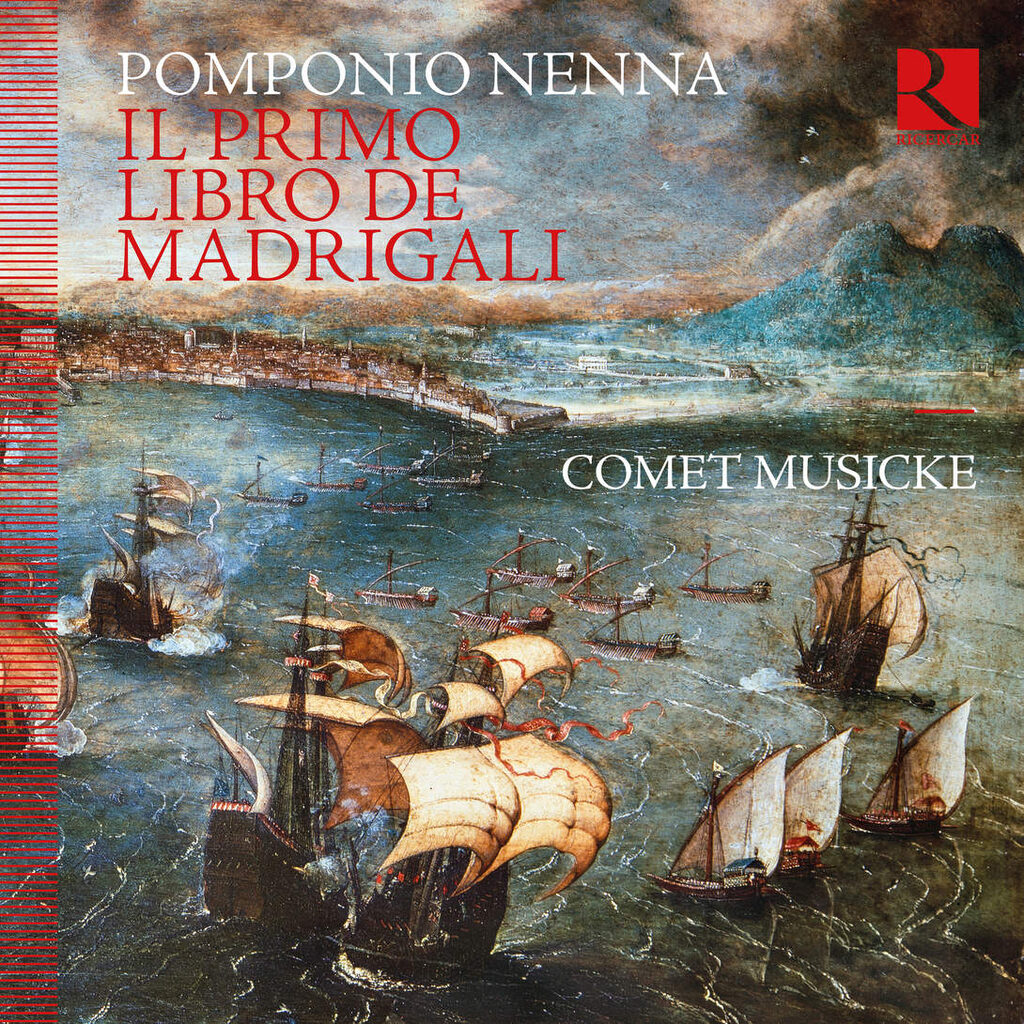
Released on Ricercar, Il primo libro de’ madrigali a cinque voci presents Pomponio Nenna’s very first opus, published in Venice in 1582. At the helm of Comet Musicke, Francisco Javier Mañalich Raffo brings together six singers and a consort combining viols, vihuelas de arco, recorders, and cornetts. Nenna’s madrigals are interspersed with several instrumental pieces by Giovanni de Macque and Giovanni Maria Trabaci, transposed from keyboard to strings. Recorded in January 2025 at the Chapelle Saint-Louis of the Pitié-Salpêtrière Hospital in Paris, the album recreates an entire Neapolitan soundscape from the late Renaissance.
Nenna belonged to that generation of gentleman composers for whom music was still closely bound up with aristocratic social life. In 1582, having recently entered the government of Andria, he dedicated his collection to Fabrizio Carafa, Duke of Andria and Count of Ruvo, while also celebrating the birth of his son Antonio. The expansive madrigal that opens the book transforms the event into a veritable sonic tableau: drums and bells resound, windows light up, and fires turn night into day.
This brightness still largely dominates the collection. Nenna readily embraces the lighter vein popularized by Luca Marenzio (1553–1599), filling his music with flowers, foliage, and pastoral landscapes, and favoring a style conceived for the pleasure of listening. Yet a few shadows are already beginning to appear. In the years that followed, the composer would develop a much darker mode of expression, before entering the service of Carlo Gesualdo between 1594 and 1599, with whom he would soon share a taste for chromaticism and the most expressive dissonances. It is precisely this pre-Gesualdo Nenna, still luminous yet already alive with other possibilities, that Comet Musicke has chosen to bring to our ears.
In approaching this Primo libro of 1582, what particularly struck you about this highly distinctive music, and what did you want to reveal to listeners today?
Francisco Mañalich: The first thing that struck me about this book of madrigals was its beauty: the counterpoint is extremely refined, with a highly stylized use of polyphonic imitation; at the same time, the music is extremely varied and never becomes tiresome. It is also a genuine pleasure to sing, with a very harmonious sound. In other words, I was deeply impressed by the quality of this repertoire—and all the more so by the fact that it had never received a complete recording. It therefore seemed essential to me to make one, in order to bring this forgotten music back to light. At times, it reminds me of the music of Carlo Gesualdo, but in reality, the writing has very different characteristics. In Pomponio Nenna’s music, there is a particular luminosity of timbre, as though the sun of southern Italy were revealing itself through his music. Nothing is superfluous; everything is perfectly constructed within the musical discourse. The use of “madrigalisms,” figures, and expressive gestures is particularly successful. As a singer, performing this repertoire is truly a blessing.
You chose an ensemble combining voices, viols, and the lesser-known vihuelas de arco. Why does this palette of sounds seem particularly well suited to this repertoire?
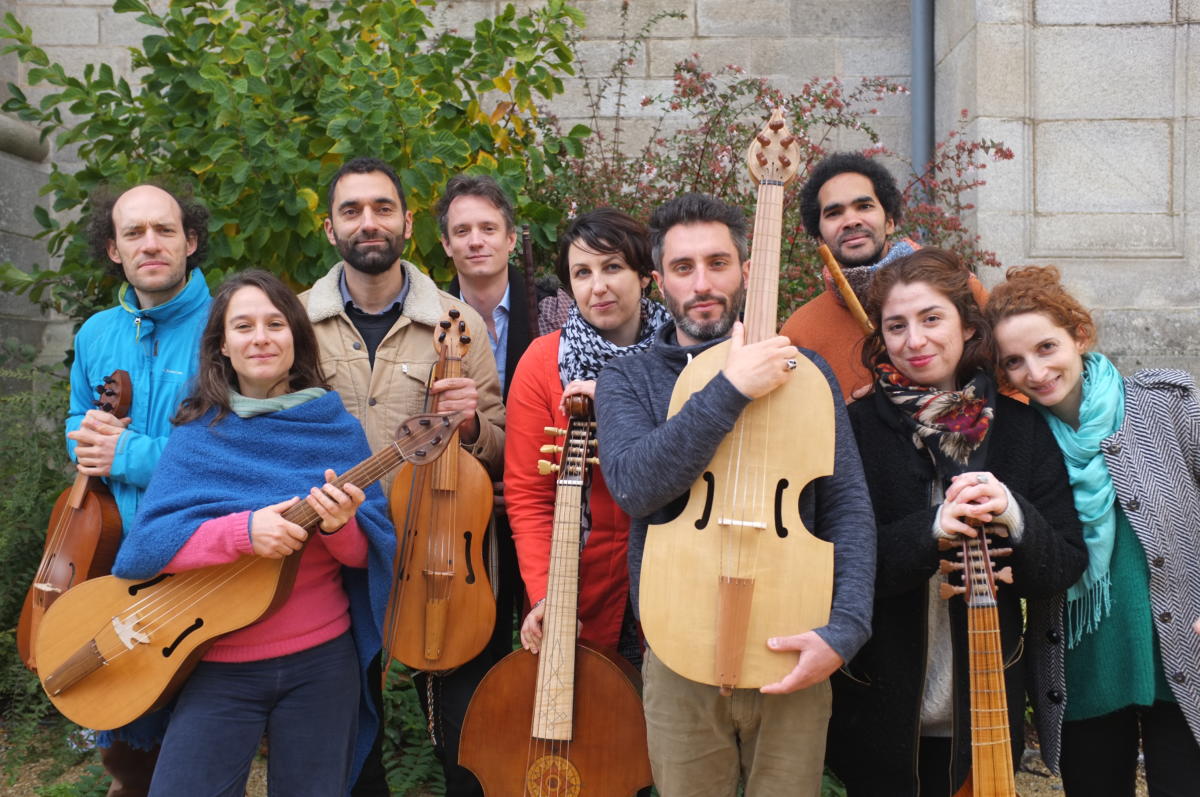
F. M.: The madrigal was originally conceived to be performed by a “consort of singers.” With this in mind, we wanted to highlight the sound of the string consort as a mirror of the singing. The viola da gamba, in particular, has always been renowned for its ability to imitate the human voice. The use of Renaissance-style instruments therefore plays an essential role in this project, particularly the vihuelas de arco and viols. The fact that these instruments can also be played pizzicato indirectly evokes the lute consort, another emblematic ensemble of the Renaissance. Finally, the use of recorders and the cornett in certain madrigals allows the colours to evolve throughout the album, thereby avoiding any sense of homogeneity.
The album is structured around Nenna’s Primo libro, interspersed with pieces by Giovanni de Macque (1548–1614) and Giovanni Maria Trabaci (1575–1647). What role do you give these insertions in the listening journey: illuminating the Neapolitan context, providing musical breathing space, or extending the madrigal’s aesthetic world?
F. M.: Organ repertoire in Naples played a major role in the second half of the 16th century. Composers such as Giovanni de Macque and Giovanni Maria Trabaci brought the use of chromaticism and Neapolitan polyphony into the instrumental realm, in parallel with what Carlo Gesualdo and Pomponio Nenna, among other major figures, were doing in vocal music. Incorporating this repertoire allows us, in a way, to complete the sonic picture of the polyphony of this period and region. Finally, we realize that by changing instruments—adapting organ repertoire for bowed strings—the language and timbre are profoundly transformed, bringing genuine variety to our album.
These two styles, although highly contrasting, remain closely connected, as they evolved in dialogue during the final decades of the Renaissance. We wanted to adapt this organ repertoire for our bowed instruments, in order to give it a new identity, while highlighting each individual voice, as is the case in the madrigal repertoire.
To guide listeners, and if they were to take a non-linear approach to the album, which piece or pieces would you recommend listening to first and, for each of you, is there one piece that particularly moves you?
F. M.: I think the most representative piece on the album is the first madrigal, written in six parts. Its construction is truly remarkable, with each of the six parts offering a strong contrast. Moreover, it is the madrigal that opens the collection dedicated to Fabrizio Carafa, his patron, and notably celebrates the birth of his son Antonio. One can therefore sense particular care in the writing, as well as a form of deep affection that comes through in the counterpoint. Another emblematic piece on the album is Giovanni de Macque’s Consonanze stravaganti, a classic of the organ repertoire, which nevertheless takes on a new dimension when performed by four instrumental voices. The counterpoint is sinuous, and the modulations particularly daring. Likewise, the same composer’s Capriccio sopra re, fa, mi, sol stands out for its great virtuosity. Consort repertoire does not generally reach such a level of technical difficulty. That is precisely what makes it interesting to push the string consort towards a higher level of technical demand, with the different voices confronted with passages of great difficulty. The consort then sounds both like a quartet of soloists and like a single instrument.
Dolce mio foco ardente is one of our favourite pieces, particularly for the profound melancholy that emanates from the voices. We should also mention D’ogni ben casso e privo, in which Aude-Marie Piloz wrote a diminution for viola da gamba to embellish the madrigal performed by the singers. Finally, Filli dolce ben mio is a madrigal we particularly enjoy performing, largely because of its final section, where time seems to stand still and the musical drama reaches its climax.

Upcoming
- October 4, 2026 – “Orfeo, il canoro semi deo,” Festival Via Aeterna, Mont-Saint-Michel (France)
- October 10, 2026 – “Nicolas de Grigny, génie de l’orgue français,” Cahors Organ Festival, Cahors Cathedral (France)

You must be logged in to be able to post comments.
Sign in