


 Giovanni Acciai and Nova Ars Cantandi bring Antonio Domenico Nola’s “Motetti pastorali per la solennità del Santo Natale” back into the light: an expansive Neapolitan fresco for four voices and basso continuo that had remained in obscurity for almost four centuries. Combining sacred narrative, expressive polyphony and echoes of popular Christmas traditions, this recording reveals a still little-known figure in Neapolitan music at the turn of the eighteenth century.
  By
By 


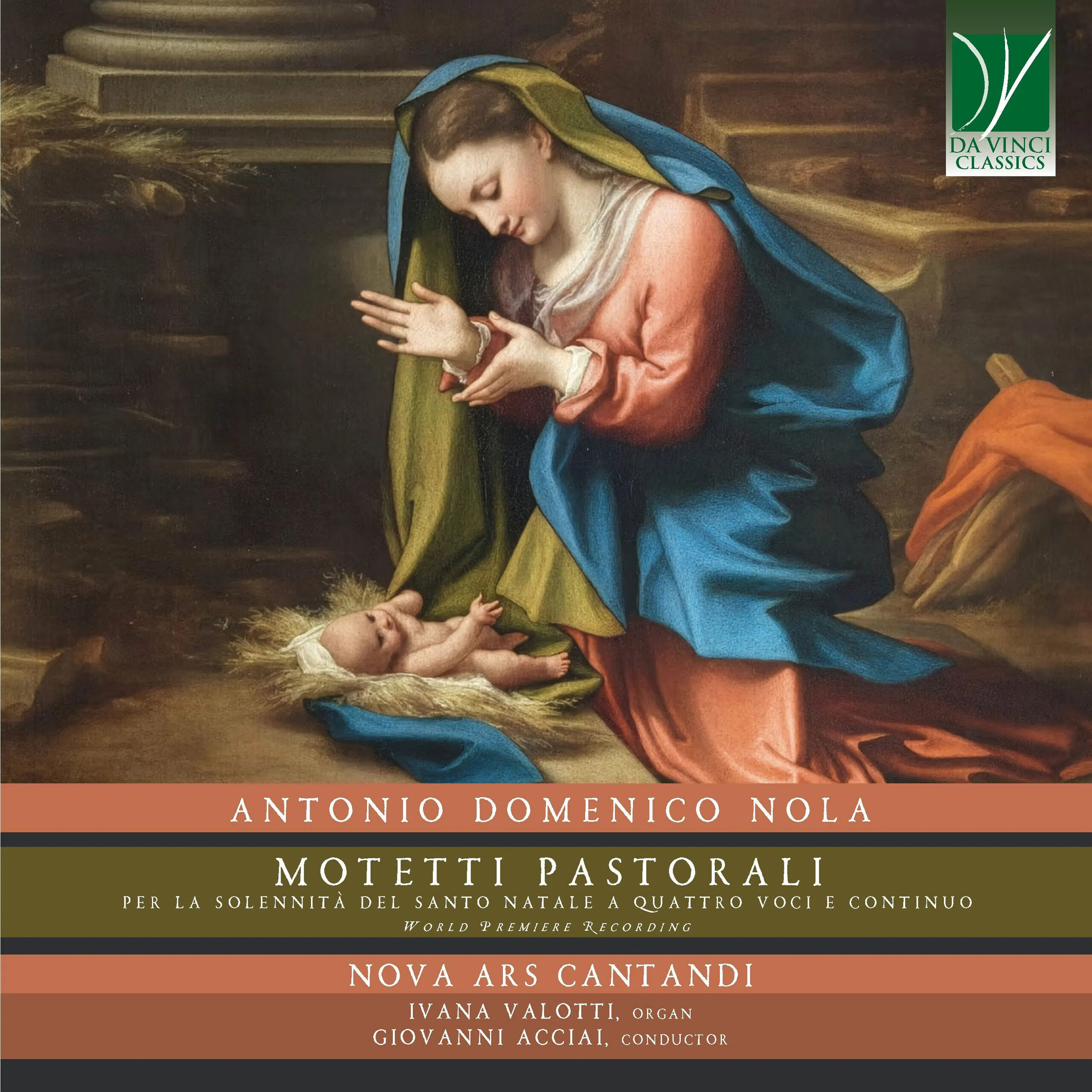
Born in Nola in 1642, Antonio Domenico Nola remains an elusive composer, as documentary evidence about his life is scarce. He entered the Conservatorio della Pietà dei Turchini at the age of ten, where he studied with Giovanni Salvatore, and in 1670 became organist at Naples Cathedral, while also working at the Oratory of the Girolamini. Around six hundred works are now attributed to him, written for forces ranging from two voices to four choirs with instruments and basso continuo. It was in the musical archives of the Girolamini that Giovanni Acciai rediscovered these Motetti pastorali, performed here by Nova Ars Cantandi with Ivana Valotti at the organ for the Da Vinci Classics label.
Intended for the celebrations of Christmas Eve and Christmas Day, the cycle comprises some thirty pieces arranged in seven sections. The Latin texts are drawn mainly from the Bible, the Gospel according to St Luke and the Christmas liturgy, alongside several anonymous passages. Their arrangement creates a genuine dramatic narrative: brief solo interventions, close to recitative, alternate with trios and quartets, sometimes homorhythmic and sometimes polyphonic. Through this sense of narrative continuity, the work approaches the Latin oratorio as it was practised within the Oratorian congregations of Rome and Naples.
The work’s originality also lies in the meeting of contrapuntal sophistication with the sound world of a Neapolitan Christmas. Nola evokes the timbre of bagpipes and allows melodies from popular tradition to emerge within writing consistently attentive to conveying the meaning and emotion of the sacred text. The voices come together, answer one another or stand alone according to the needs of the narrative, in music whose contrapuntal virtuosity always remains at the service of expression.
This first performance in modern times is therefore more than the mere recovery of an archival curiosity. It returns to circulation a work conceived as an expansive fresco of the Nativity, poised between liturgy, narrative and the familiar sounds of Naples. The recording brings together the four singers Alessandro Carmignani, Andrea Arrivabene, Gian Luca Ferrarini and Marcello Vargetto.

You must be logged in to be able to post comments.
Sign in