


 Founded in the former East Germany in the 1980s, lautten compagney BERLIN recently celebrated its 40th anniversary. Today, it continues to multiply original projects, this year with countertenor Reginald Mobley, as well as a new roundtable format centered on the songbooks of John Dowland. Not to mention the KALIT Festival at the end of August, bringing together music and literature. Wolfgang Katschner, 65, the ensemble’s founder, tells us its story, which is also, in part, the story of his own life.
  By
By 


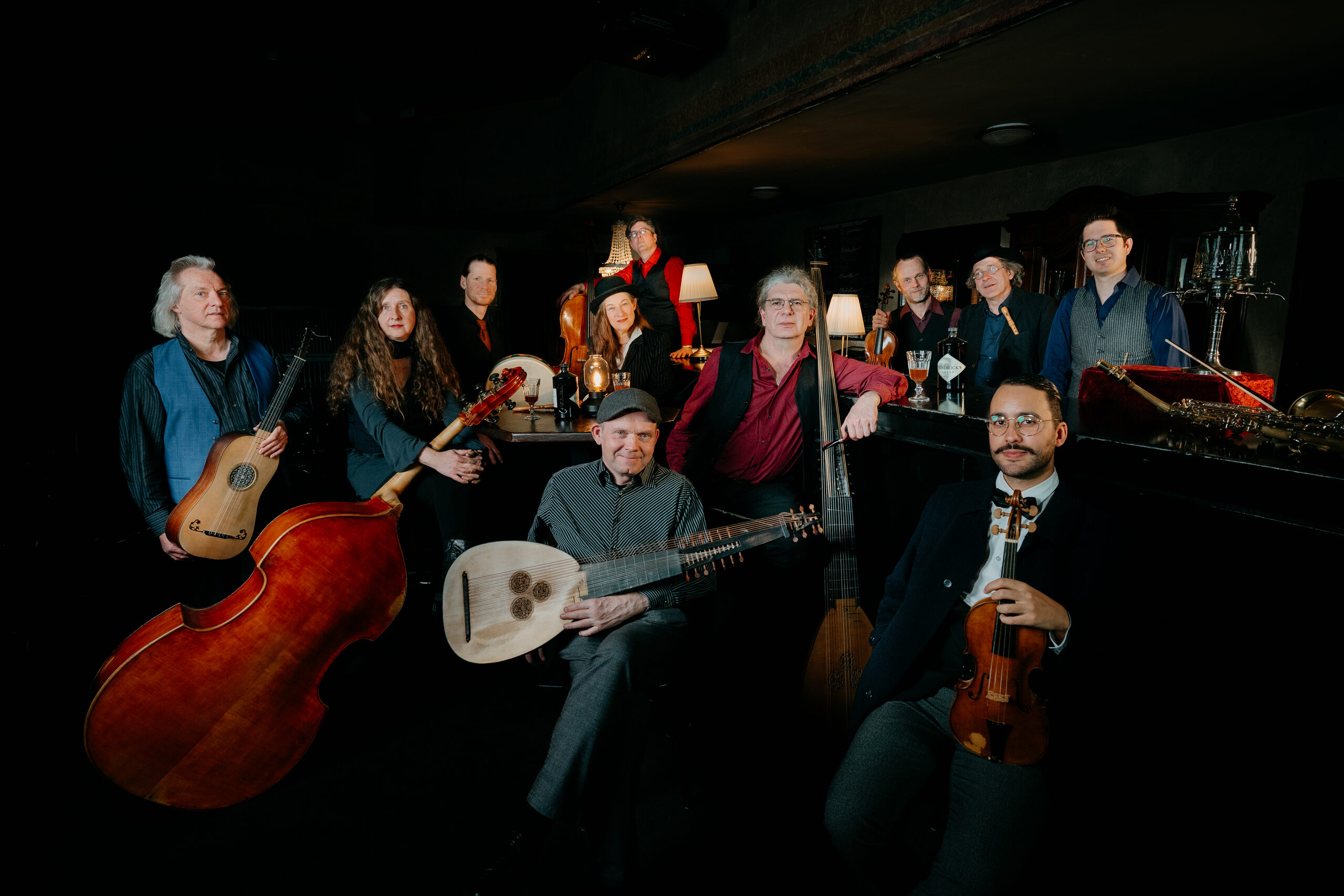
Wolfgang Katschner is one of the leading figures on the German early music scene. With lautten compagney BERLIN, which has just celebrated forty years of existence, he embarked as early as the beginning of the 1980s on a path that combined historical awareness with artistic curiosity. Born in the German Democratic Republic (GDR), and shaped by the upheavals that accompanied the fall of the Berlin Wall in 1989, the ensemble gradually broadened its profile: from Renaissance lute music to vocal programs and musical theatre, including unexpected intersections with minimalist music, pop, and literature. At the heart of this approach lies not a search for effect for its own sake, but always the same question: how can early music be made living, relevant, and emotionally resonant today? Throughout the interview, Katschner reflects on the early years in East Berlin, the fresh start after the fall of the Wall, Dowland, Johann Sebastian Bach, ABBA, and Reginald Mobley—as well as his conviction that musical tradition has a future only if it opens itself to the present.
When you think back to your student years in the German Democratic Republic (GDR), particularly at the Hochschule für Musik Hanns Eisler in Berlin, what did the early music landscape look like at the time, before the major upheavals of 1989–1990?
Wolfgang Katschner: Early music certainly existed in the GDR, and not merely on the margins. Many places were especially conducive to it. In Dresden, Heinrich Schütz occupied an important place; in Leipzig, of course, Johann Sebastian Bach; and in Berlin as well, there were ensembles devoted to early repertoire. I am thinking, for example, of Musica Mensurata, which focused on medieval music. There were also Renaissance music ensembles; then, beginning in 1982, the Akademie für Alte Musik Berlin came into being. Even at that time, it was something of a niche, as it still is in certain respects today, but Baroque music was very much part of the musical landscape. What did not exist, however, was the large independent scene as we know it today.
What did the upheaval of 1989 mean in concrete terms for you and for lautten compagney?
W. K.: For us, it was a period of complete transition. At the time, there were still only two of us, Hans-Werner Apel and myself. We had just begun to expand the duo a little—with a singer here, a viola da gamba there—moving cautiously, feeling our way forward. The Compagney had in fact begun as a lute duo. There is actually a very beautiful recording from our early days, a CD that wonderfully reflects that period: Amor e grazioso. One can still listen to it today, and it says a great deal about those first years. After 1990, our usual market initially collapsed. The entire state-organized cultural landscape, all the organizational structures, disappeared within a matter of weeks. We then had to create something new. We turned our ears toward West Berlin, established contacts with musicians, and tried to build new commercial foundations while maintaining what still remained. We got in touch with record labels; for us, that first meant Capriccio, in Vienna. Then the two of us resumed our studies. We went to Frankfurt am Main and studied lute for two or three years at the Musikhochschule. And it was in the mid-1990s that what today constitutes the very essence of lautten compagney truly began: with the musicians—some of whom still play with us today—with the expansion of the ensemble, and with musical theatre projects. Since 1994–1995, all of this has continued to develop.

Passionate about early music and want to read this subscriber-only article?
If you are not a subscriber, join the international Total Baroque community. Subscribe here from 5.00€.
I subscribe
If you are already a subscriber, sign in.
I sign in 

You must be logged in to be able to post comments.
Sign in