


 Since 1989, Hans-Georg Kaiser has accompanied the Freiburger Barockorchester on its rise to international recognition. Today, at the age of 64, the orchestra’s manager and general director for the past 37 years has decided to step down on July 1 and entrust the ensemble’s continued development to a new leadership team: Selma Brauns, artistic director, and Paul Enke, commercial director. Together, they are tasked with shaping the future of an ensemble that is now counted among the world’s leading orchestras performing on historical instruments. Hans-Georg Kaiser reflects on his career and on the orchestra’s new prospects.
  By
By 


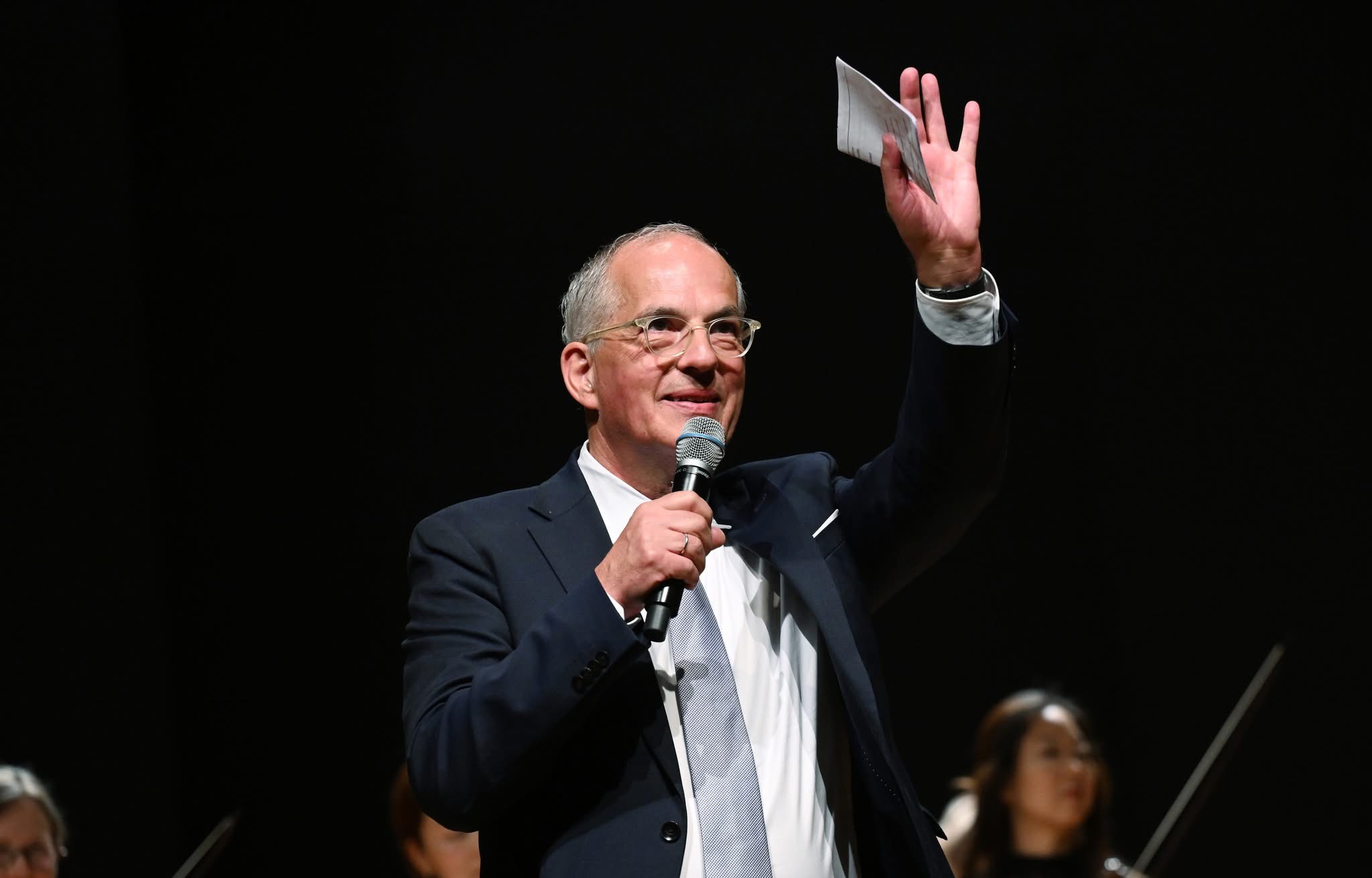
When Hans-Georg Kaiser joined the Freiburger Barockorchester in 1989, he encountered a young ensemble driven by the energy of a handful of passionate musicians, but one that was in urgent need of organizational support. Thirty-seven years later, the FBO is regarded as one of the world’s most renowned ensembles in the field of historically informed performance. It appears in the major international concert halls, has its own building, the Ensemblehaus, in Freiburg im Breisgau in southwestern Germany, and has developed an artistic identity rooted in musicological research, stylistic curiosity, and a distinctive sonic vision. A few days before passing the torch to a new generation, Hans-Georg Kaiser chats with Total Baroque Magazine and looks back on the pioneering years of early music in Germany, the international rise of historically informed performance since the 1990s, the evolution of the cultural management profession, and the challenges of the future: renewing the ensemble, the importance of private funding, and passing on an ensemble spirit that, despite its success, has remained faithful to its original collective ideal.
You are stepping down from your positions as intendant and general director on July 1, two years earlier than planned. What prompted you to take this step?
Hans-Georg Kaiser: I am convinced that every institution needs new perspectives at some point, including at the leadership level. Younger people bring a different view of the present and fresh ideas about how to position an ensemble in today’s market. We are now ready for that. That is why I decided to step aside a little earlier. At the same time, I remain committed to the orchestra, particularly in the area of private funding. I firmly believe that the future of culture will increasingly depend on private engagement. Public funding is coming under greater pressure, and we can already see this in many areas today. Professional and personal networks play a decisive role here. Such connections are built over decades; they are a central part of our work. I see it as my duty to pass this network on to the next generation and help them establish their own structures.
You have worked with the Freiburger Barockorchester for almost four decades. How did it all begin?
H.-G. K.: I did indeed start very young, at the age of 27, just after completing my studies in Freiburg. I had studied music and violin, but even during my studies it was clear to me that I did not want to follow the traditional path of teaching. What interested me more was what happens behind the scenes: how is a concert created? What organizational, logistical, and artistic processes fit together? Those questions fascinated me. As early as the 1980s, I began systematically building a network of contacts. Back then, I had—which was rather unusual—a personal computer, and I would have people send me the contact information for festivals, concert promoters, and institutions from all over the world. I wanted to understand how programmes were put together and how the musical scene was evolving. Looking back, it was a kind of preparatory work for what was to come.

Passionate about early music and want to read this subscriber-only article?
If you are not a subscriber, join the international Total Baroque community. Subscribe here from 5.00€.
I subscribe
If you are already a subscriber, sign in.
I sign in 


You must be logged in to be able to post comments.
Sign in