


 From Spain’s Golden Age to China’s Forbidden City, El clave del Emperador retraces the singular destiny of Diego de Pantoja, a Jesuit, musician, and mediator between two worlds. With Íliber Ensemble and Todos los Tonos y Ayres, the recording brings together harpsichord, Chinese instruments, and learned traditions to transform historical inquiry into a true sonic journey.
  By
By 


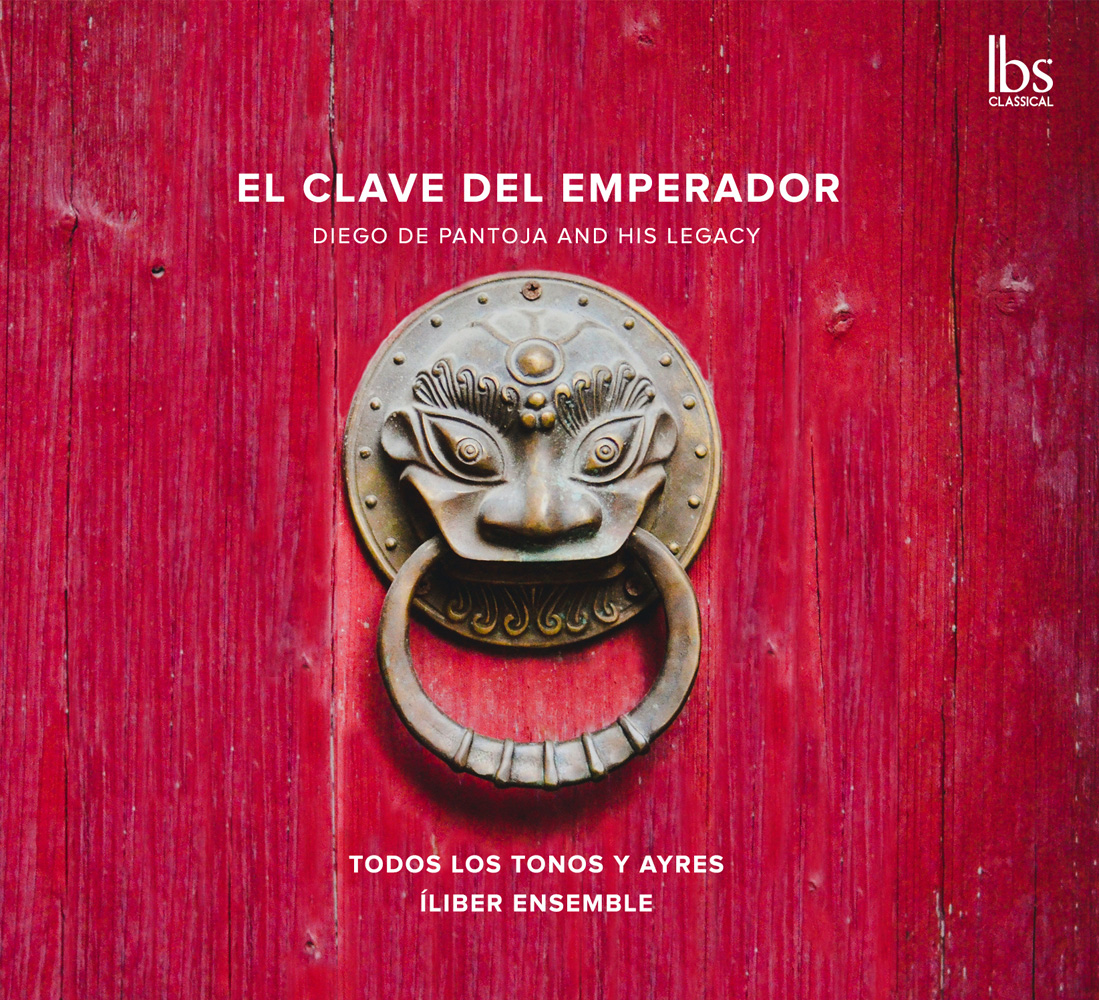
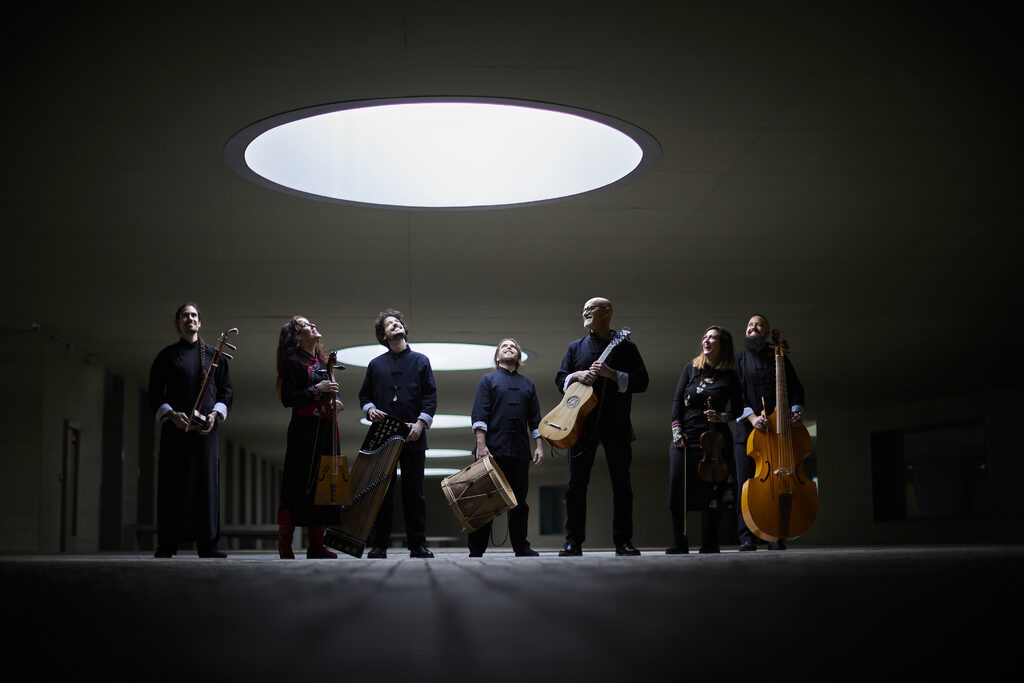
Around Spanish harpsichordist Darío Tamayo, director of Íliber Ensemble, and Spanish musicologist and multi-instrumentalist Rubén García-Benito, founder of Todos los Tonos y Ayres, two complementary approaches meet: on the one hand, the musical realization and the sonic embodiment of the programme; on the other, the historical and musicological research that forms its backbone. Together, they retrace the destiny of Diego de Pantoja (1571–1618), a Jesuit musician at the Chinese imperial court. Conceived as a true sonic journey, El clave del Emperador (The Emperor’s Harpsichord) combines European, Chinese, and Mongolian instruments around the harpsichord, a diplomatic gift presented to the Forbidden City. From the development of the program to the circulation of repertoires, from the narrative continuity of the album to the question of dialogue between cultures, the interview offers a behind-the-scenes look at a project that is as scholarly as it is sensitive.
Your programme centers on Diego de Pantoja, a musician and missionary who lived in China’s Forbidden City. How did you design this album to tell the story of this encounter between Europe and China and turn it into a true journey for the listener?
Darío Tamayo: Evoking in the listener this sense of an auditory journey is one of the guiding principles behind the Íliber Ensemble’s approach to project design, and, as one might expect, it was one of our primary objectives in this work. To meet this challenge successfully, it was essential to build a repertoire that could accurately reflect the life, work, and legacy of Diego de Pantoja, while highlighting the artistic and cultural exchanges made possible by his arrival at the Forbidden City. From this perspective, the image of the harpsichord struck us as particularly powerful: Pantoja was a harpsichordist and used the instrument as a diplomatic gift to gain access to the Chinese imperial court. We also structured the program so that the Eastern instruments appear gradually throughout the album, allowing them to engage in a dialogue with the European instruments and create interplay between them. All these elements allowed us to construct a sonic discourse that carries the listener across time and space, from Golden Age Spain to mid-18th-century China.
Rubén García-Benito: The idea of a sonic journey lies at the very heart of this project and forms part of a line of work that we have been developing for years within Todos los Tonos y Ayres, where we create programmes as historically structured narratives articulated through music. In the case of Diego de Pantoja, this approach necessarily relied on extensive preliminary research conducted within the ensemble itself, which enabled us to establish a solid narrative framework before its artistic realization. The starting point was precisely the reconstruction of this “sound space” around Pantoja: not only the music of his time or of the places he passed through, but also that which developed within his sphere of influence over nearly two centuries. From there, the task was to translate this historical interweaving into a coherent musical experience, in which the harpsichord—an instrument that Diego de Pantoja himself played and used as a diplomatic gift to gain access to the Chinese imperial court—becomes the structural axis of the programme. The gradual integration of Eastern instruments is not merely a question of timbre, but a way of making audible this historical process of encounter, adaptation, and cultural dialogue that defines Pantoja’s trajectory.
The album showcases a wide range of musical styles, reflecting nearly two centuries of cultural exchange at the Chinese imperial court. What criteria guided the selection of works to highlight this richness and the interplay of styles?
R. G.-B.: The choice of works is part of a research process carried out within Todos los Tonos y Ayres, which, for this project, led to a specific academic extension. Part of these results has already been published in the form of book chapters and specialized articles, and we are continuing this work with new publications planned for 2026. From a musical perspective, beyond stylistic representation, we sought to define a set of “coordinates” centered on the figure of Pantoja: institutional contexts, networks of circulation, documented practices, and spaces for exchange. This allowed us to work with different degrees of proximity—temporal, geographical, or cultural—and thus to build a programme which, without being limited to a strictly documentary reconstruction, retains a strong historical coherence.
D. T.: In the early stages of the project’s development, Rubén García-Benito gathered nearly four hours of music linked, in one way or another, to the world of Diego de Pantoja. From this vast corpus, we undertook a meticulous selection process that enabled us to shape the recording, guided by three fundamental criteria: first, how well each work aligns with the historical events we wanted to highlight; second, its artistic quality; and finally, its ability to fit organically into the program’s overall narrative. As for the interpretation, we chose, for a large part of the repertoire, to combine European, Chinese, and Mongolian instruments, thus recreating practices attested at the Qing court from the mid-17th century onwards.
The pieces follow one another without interruption, in an almost narrative form. Why did you choose this continuity, and how does it change the way the programme is listened to and understood?
D. T.: When conceiving the programme, we chose this uninterrupted continuity in order to reinforce its dimension as a single narrative, as is often the case in Íliber Ensemble projects: our aim was that the listener should not perceive the recording as a collection of fragments, but should enter into a continuous sonic flow that reinforces this idea of a journey we mentioned. This decision profoundly transforms the listening experience, as it encourages a global understanding of the musical discourse, clarifies its structure, and strengthens its conception as a sonic pathway, where meaning lies less in the individuality of each piece than in the way they follow one another and interact.
R. G.-B.: The continuity between the pieces responds to a structural conception of the programme which, once again, relates to our way of thinking of the concert as a narrative—an approach we have been developing for years within Todos los Tonos y Ayres. Rather than presenting the works as independent units, we seek to organize them into thematic blocks that function like the chapters of a single story. This approach allows for the development of broader soundscapes within each section and fosters an immersive listening experience, in which the listener is not constantly pulled out of the musical flow. In the context of the concert, this continuity proves particularly effective in preserving this feeling of “journey,” which audiences perceive very clearly and often report back to us. On the recording, even if the experience is necessarily different, we wanted to retain this same logic, respecting the original programme structure. Thus, meaning lies not so much in each isolated piece as in the relationships woven between them and in their capacity to build a continuous historical-musical discourse.
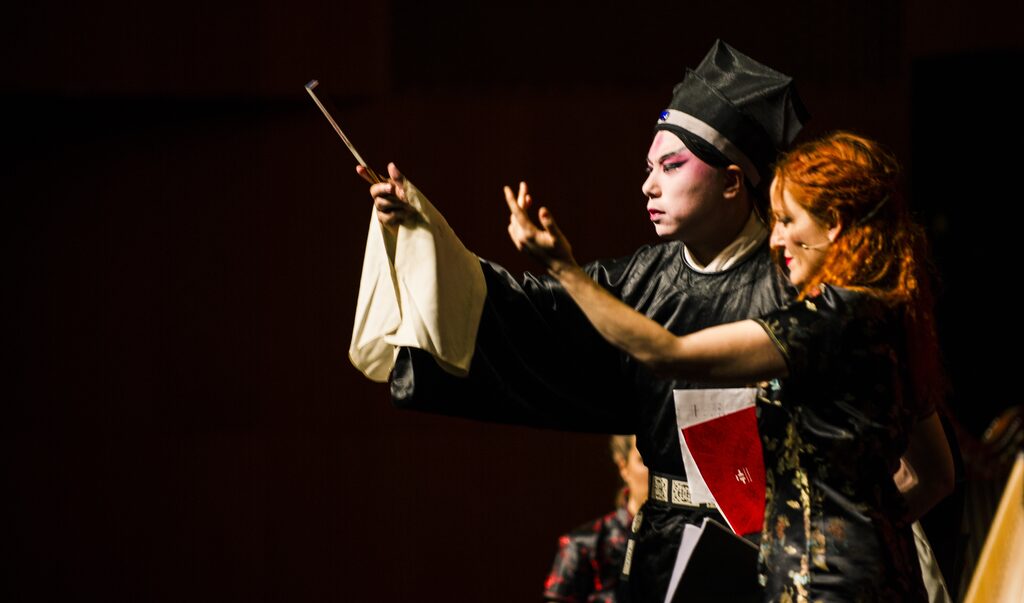
Through this project, you pay tribute to a historical figure, but you also offer a very vivid and sensitive experience. If you had to recommend a piece to enter this universe, which would you choose? And is there a moment or a work that particularly moves you, personally, within the programme?
R. G.-B.: Rather than a specific work, I would highlight certain moments when the dialogue between traditions becomes particularly evident in the sound. These are moments where the historical research carried out within the project, its musical translation, and the interpretation converge in a particularly meaningful way. This is where the full scope of the cultural exchange that the program seeks to highlight becomes most apparent, as well as the role of cultural mediator that defines Pantoja. These are the moments that most closely align with our way of understanding music: as a living bridge between eras and cultures.
D. T.: To immerse oneself fully in the aesthetic and musical imagination suggested by this recording, the most appropriate pieces would no doubt be the Divertissements chinois, a collection of Chinese entertainment music assembled by the French Jesuit Joseph-Marie Amiot and sent to Europe for publication in 1779. However, if I had to choose a piece that is particularly meaningful to us on a personal level, I would pick the Tono hypodorio (Hypodorian tone) by the German scholar Athanasius Kircher, composed in an ancient ecclesiastical mode with a solemn and contemplative character. Enjoy listening!

Upcoming
- Íliber Ensemble:
- June 30 – Hero revealed, Early music festival of Gijón, Centro de Cultura Antiguo Instituto Jovellanos, Gijón (Spain)
- July 7 – Hero revealed, ASISA music festival of Villaviciosa de Odón, Villaviciosa de Odón, Madrid (Spain)
- July 20 – Hero revealed, Summer music festival of Ciutadella, Claustre del Seminari, Ciutadella, Minorca, Balearic Islands (Spain)
- October 23 – Ardientes, Sacred music festival of Granada, Granada (Spain)
- Todos los Tonos y Ayres:
- July 4 – Silk daughter, 7th early music festival « El Corazón del Cancionero », Teatro Liceo, Baena (Spain)
- July 18 – Silk daughter, Music and Heritage festival « EnClaves », Iglesia San Jorge de la Alcalá, Alcalá de los Gazules (Spain)
- September 13 – Infinite jades, 3rd early music festival of Villanueva de Huerva, Iglesia de Nuestra Señora de los Ángeles, Zaragoza (Spain)



You must be logged in to be able to post comments.
Sign in