


 A Franco-American harpsichordist born in Berkeley and based in Paris since adolescence, Lillian Gordis has established herself as a leading figure of her generation on the international stage. Acclaimed for the expressive power of her playing and her intellectual engagement, the “Martha Argerich of the harpsichord” is regularly invited to major festivals across Europe and the United States, while also pursuing a highly regarded recording career.
  By
By 


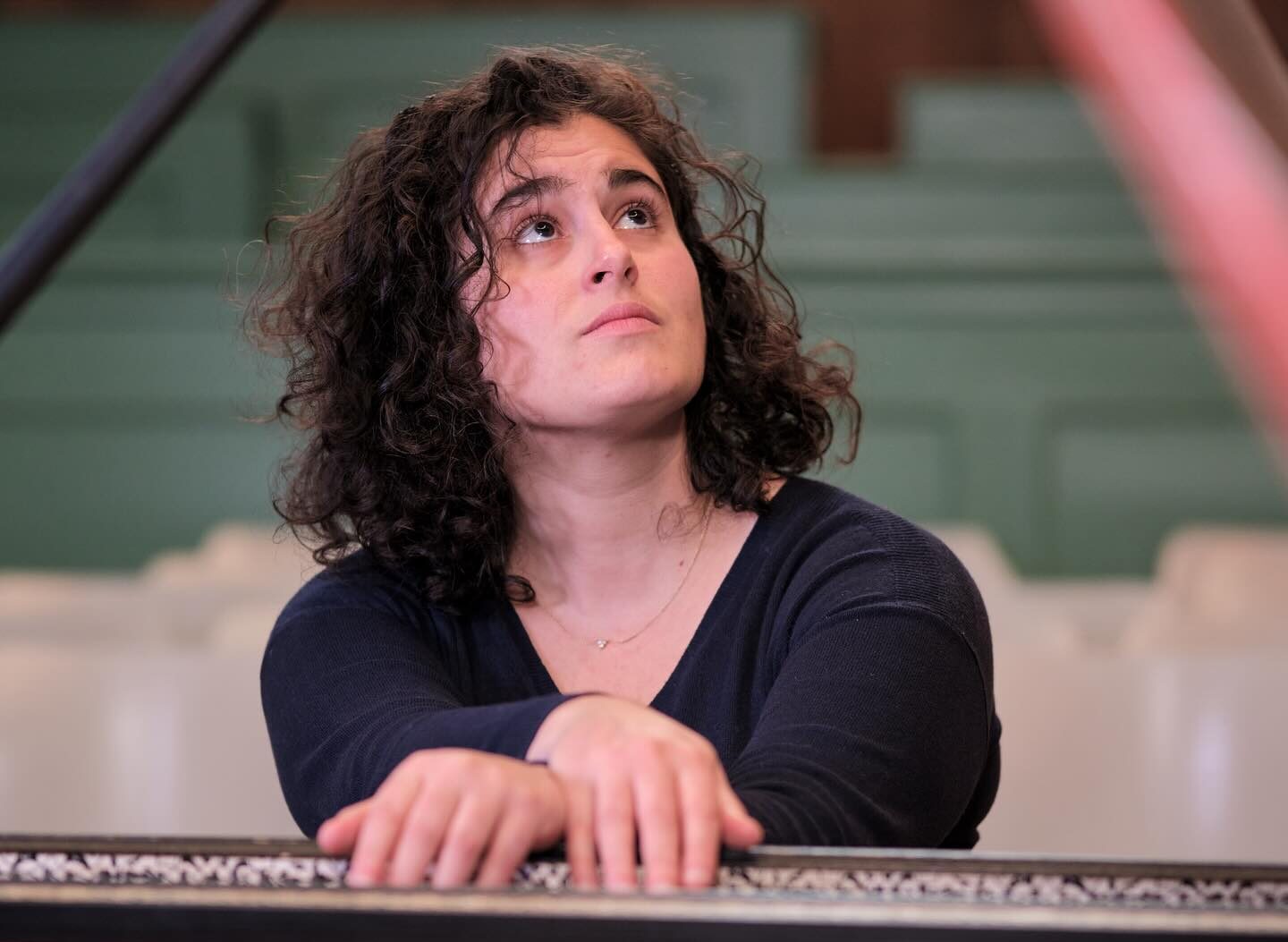
Trained by major figures of the French harpsichord school, such as Pierre Hantaï and Bertrand Cuiller, Lillian Gordis left her native California at sixteen to refine her art in France, deliberately aligning herself with the European tradition of early music. She earned a master’s degree in performance at Sorbonne University, deepening an approach to the repertoire that is both scholarly and intensely embodied. Her first recording, Zones, devoted to Domenico Scarlatti, immediately made an impression with the freedom of its architecture and the clarity of its discourse. Her double album dedicated to Johann Sebastian Bach, awarded a Diapason d’Or, confirmed a profoundly personal vision of the Leipzig cantor, in which stylistic rigour is combined with sovereign eloquence. As a second Bach volume was released by Artalinna in January 2026, Gordis continues to pursue an artistic path of rare coherence. Among her upcoming projects is an extensive cycle around the In Nomine works of composer John Bull, set alongside contemporary creations, reflecting a fertile dialogue between heritage and modernity. Alongside her recording and performing activities, she also transmits her thoroughness and passion at the University of Colorado Boulder.
You discovered the harpsichord at a very young age. How did the instrument enter your life?
Lillian Gordis: I first encountered the harpsichord when I was about four or five years old, but I officially began playing it at nine. Originally, I was learning the piano—we had one at home. My parents were not musicians, but my mother sang a lot with us, and that certainly mattered. Like many children, I spent time exploring the keyboard with quite boundless energy. Music then appeared as a way of channeling that vitality. I learned to read music and to play with my mother. My first piano teacher owned a harpsichord—a fortunate coincidence, since she had been married to a harpsichord maker. Contact with the instrument made an immediate impression on me. In the United States, however, the absence of a conservatory system comparable to Europe’s made access to the harpsichord almost impossible for a child: no suitable lessons, no instruments to rent. So I continued with the piano, played a bit of violin, and attended summer courses, particularly around San Francisco, where early music is relatively present.
What definitively led you to turn to the harpsichord?
L. G.: Around the age of nine, I felt a certain weariness toward the piano. I need to understand the meaning of what I am doing, and authoritarian answers did not suit me. My parents agreed to one last attempt with the harpsichord. At that point, I finally found both a teacher and an instrument. Two elements were decisive: the direct relationship to the string, that physical sensation so different from the piano, and the possibility of asking questions. In the early music world, this questioning is not only accepted but constitutive of the practice. Finally, there was the repertoire. Even at a very young age, Bach drew me deeply.
Passionate about early music and want to read this subscriber-only article?
If you are not a subscriber, join the international Total Baroque community. Subscribe here from 5.00€.
I subscribe
If you are already a subscriber, sign in.
I sign in 
You must be logged in to be able to post comments.
Sign in