


 Dutch classical violinist Charlotte Spruit only discovered the Baroque instrument at university, but now they’re linked for life. She looks back on this unexpected turning point, her first steps on gut strings, the momentum sparked by the Bach Competition, and how she now moves between Baroque and modern, refusing to choose one over the other.
  By
By 


Winner of the First Prize, the Audience Prize, and the Genuin Classics Prize at the Leipzig International Johann Sebastian Bach Competition in 2022, Charlotte Spruit, 25, was named a Classic FM Rising Star in 2024. Most recently, in 2025, she was named ‘One to Watch’ by Gramophone magazine following the release of her debut album Le Mercure Galant, devoted to music at the court of Louis XIV (Linn Records). Trained at the Guildhall School of Music and then the Royal Academy of Music in London, she has played with the Dunedin Consort and The English Concert, and appeared as soloist with the Orchestra of the 18th Century, La Grande Écurie, the Pauliner Barockensemble and Ensemble Esperanza. She is a keen advocate for unknown baroque music.
How did you become a violinist?
Charlotte Spruit. My father is a pianist, and my mom and older sister are violinists. Having two violinists in the house [in Hilversum, Holland] made me want to learn the violin as well. I officially started when I was four, but before that I was scratching on little violins we had at home. I was just having fun with the instrument, but my teacher was very serious. From the moment I started lessons, they were really lessons, with a goal.
Was there ever a time when you didn’t want to practise?
C.S: Of course, throughout my childhood there were many moments when I did not feel like practising. And I think that’s normal, but because my teacher took it so seriously it was just not an option not to be prepared for lessons. I never wanted to quit, so that was my only choice, just to practise and do it. I didn’t always enjoy practising, but in the end, I loved music and loved the violin, so I always wanted to keep going.
How did you discover the baroque violin?
C.S: In my second year at the Guildhall [one of the most prestigious music institutions in the United Kingdom] I could choose to pick up a second study. The option to do Baroque violin was a wild idea, as I’d never played on gut strings, but I knew that Pavlo Beznosiuk was teaching there, and I knew he was a brilliant violinist (and conductor). I thought, what is there to lose? I will do the audition. It was extremely difficult because I have perfect pitch and everything sounded a semitone too low. So, I found it really hard to play the right notes. And it took me a year or more to actually get used to that.
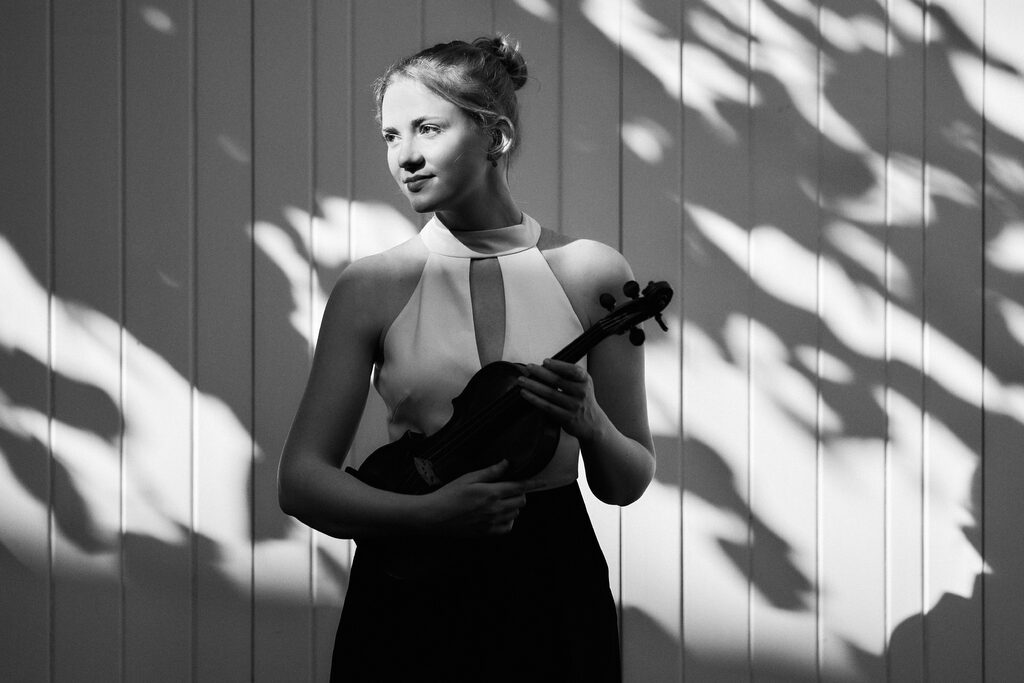
I didn’t ever think of doing it professionally. I just thought I will learn a lot from it and take it to the modern violin. I started playing more baroque violin when I started at the Royal Academy of Music, studying with Pavlo (who teaches there as well) and Rachel Podger. Pavlo said I should apply to the Bach Competition and I thought, no way, it was almost a ridiculous idea to apply to such a big competition with the baroque violin, but I did apply and somehow, I won first prize.

Passionate about early music and want to read this subscriber-only article?
If you are not a subscriber, join the international Total Baroque community. Subscribe here from 5.00€.
I subscribe
If you are already a subscriber, sign in.
I sign in 

You must be logged in to be able to post comments.
Sign in