


 Reinhard Goebel and Musica Antiqua Köln: these are names that still make every early music lover’s mouth water, synonymous with perfection in performance and exquisite repertoire choices. And even today, Reinhard Goebel never fails to bring something new to light…
  By
By 


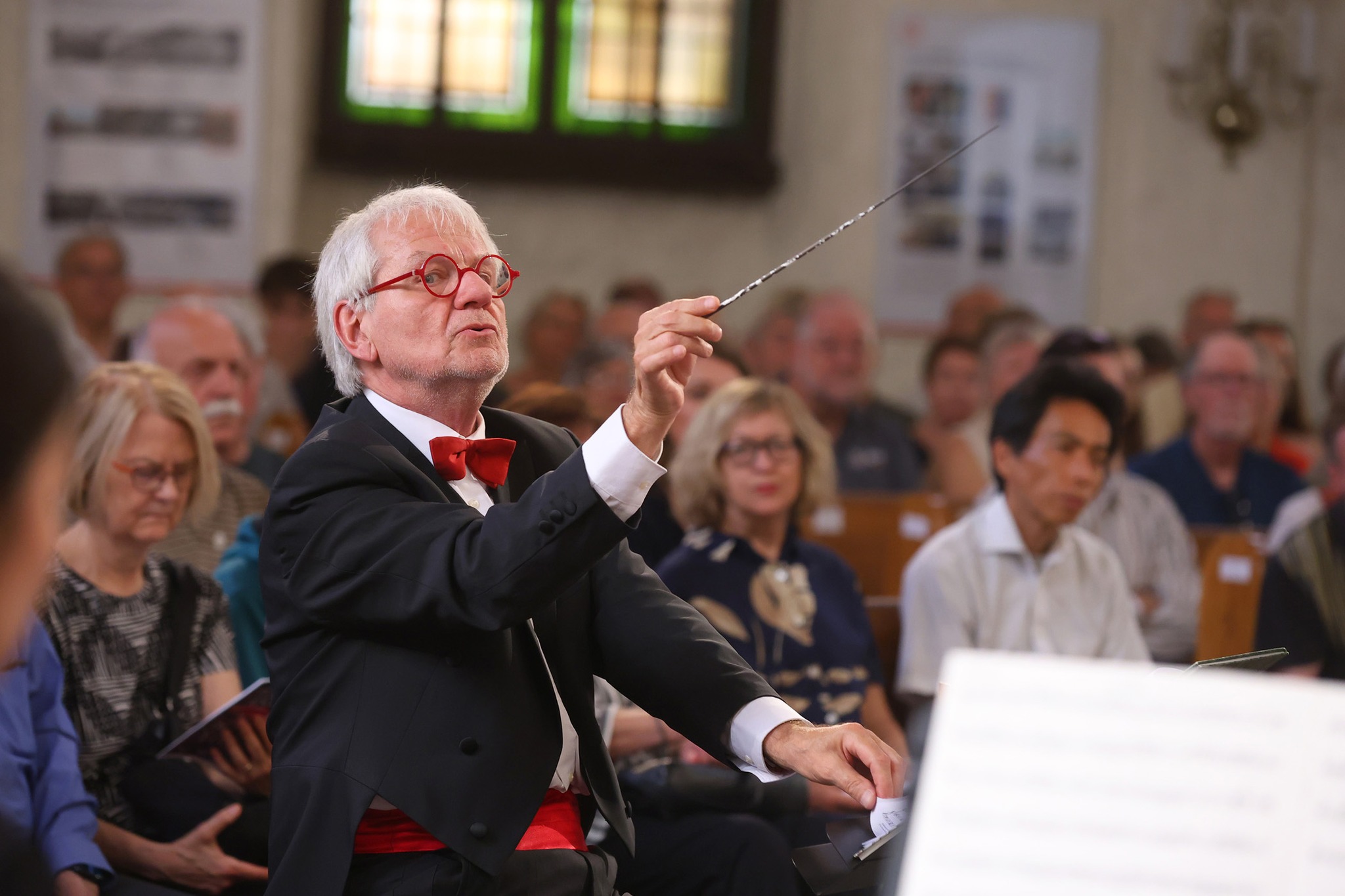
It was in 1973 that the young baroque violinist Reinhard Goebel founded his ensemble Musica Antiqua Köln with a few fellow students—a group that, only a few years later, would celebrate huge successes, tour across continents, and collect nearly every award the baroque scene had to offer, largely with repertoire that had been completely unknown until then. Founded as a chamber ensemble, Musica Antiqua Köln expanded from the early 1980s onward to orchestral proportions with increasing frequency. Goebel recorded countless LPs and CDs with the group, managing to sound just as electrifying in the studio as in live performance, just as flawless in performance as on disc: a feat achieved by few baroque orchestras. In 2006, after 33 years with Musica Antiqua, the violinist turned to new challenges as a conductor, working with (modern) symphony orchestras to introduce them to early repertoire. Here he recalls the golden years (and miles of microfilm over his bathtub), his boredom with convention, and his ongoing passion for the new.
Mr. Goebel, how long have you been active in music—especially in Early Music?
Reinhard Goebel: Well, in music… let’s say about 60 years. I started violin around the age of twelve, maybe eleven, but not earlier. I studied in Cologne with Franzjosef Maier, later with Sashko Gavrilov and Marie Leonhardt, and became independent at around 21 or 22. Of course, I continued learning when Musica Antiqua was founded in 1973, but from then on it was under my own direction. So, you could say I’ve been at home in Early Music for 52 years now.
Would you want to launch a career in Early Music today, or was everything better back then? What would you do differently today?
R.G.: That’s hard to say, because I simply don’t know how young people today relate to the role models I had back then.
(Laughs) Perhaps you’re the role model now?
R.G.: Well, yes, maybe for one or two people. But music was never just a job for me; it was a vocation, and then a calling. When I fell ill after 30 years of violin playing and couldn’t perform anymore, I didn’t give it up. I just learned to play all over again: bow in the left hand, violin in the right. So, in a nutshell: yes, I would like to become a musician again today, although of course I don’t know how the changes in the music market would affect me.
And of course, how you grow up plays a role too: I was in a Latin class at school (one Latin class alongside three English classes) where contradiction and independent creativity were the norm. If the conditions and environment today were similar, I could absolutely imagine doing it all over again. But that is, of course, a very hypothetical question.

Passionate about early music and want to read this subscriber-only article?
If you are not a subscriber, join the international Total Baroque community. Subscribe here from 5.00€.
I subscribe
If you are already a subscriber, sign in.
I sign in 

You must be logged in to be able to post comments.
Sign in