


 The 35th season of Les Talens Lyriques will be marked by the completion of the Lully cycle, a project led by Christophe Rousset and his ensemble for over 25 years. Here is an interview with the conductor and harpsichordist about Lully, social media, transmission, and his collaboration with other orchestras.
  By
By 


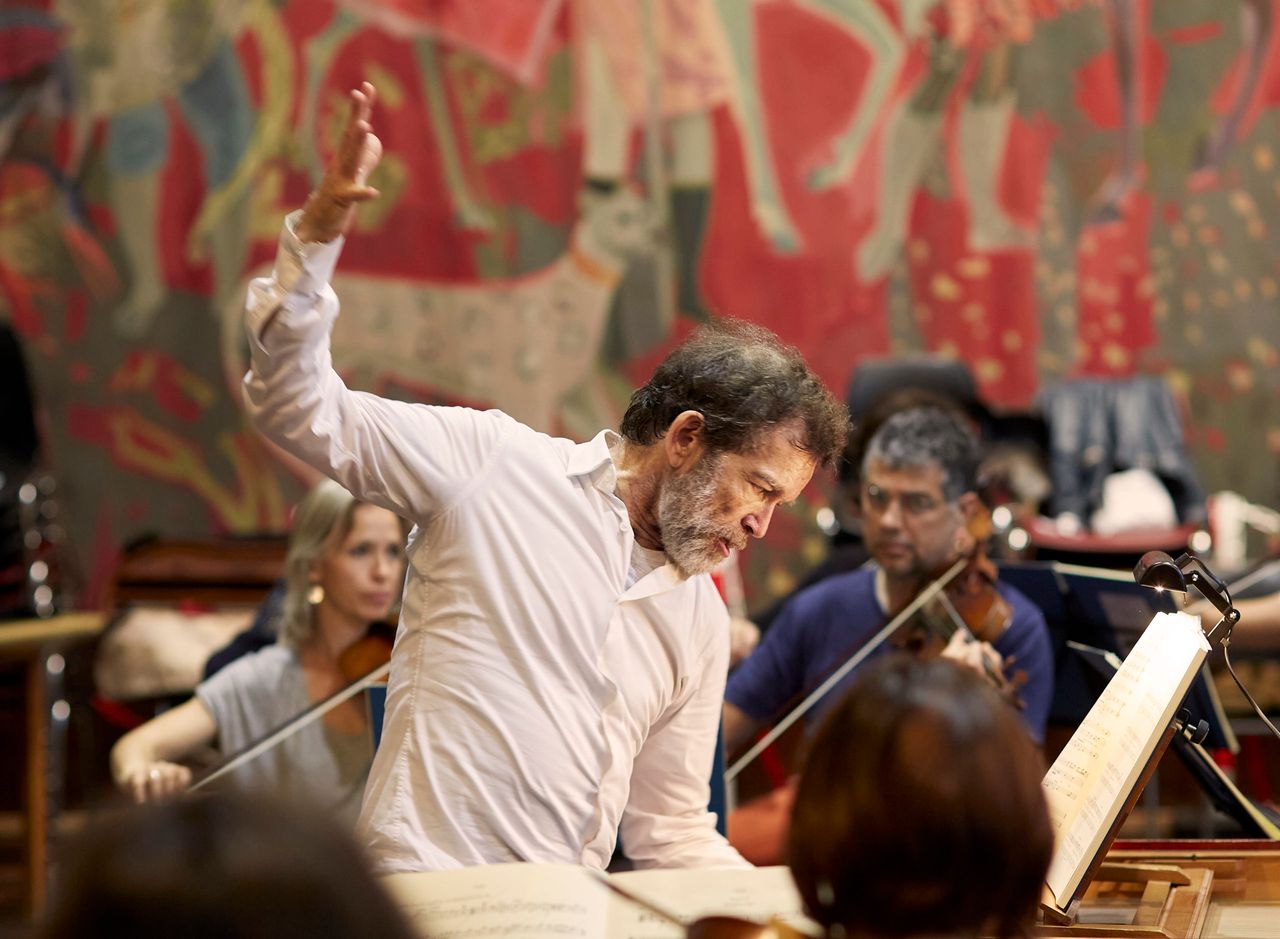
At the helm of Les Talens Lyriques for thirty-five years, Christophe Rousset continues a unique adventure that has profoundly shaped the interpretation of French and Italian baroque music in particular. As he completes the full cycle of Lully’s tragédies lyriques—a project that began in the late 1990s—the conductor and harpsichordist looks back on his career, his artistic choices, and his efforts to defend lesser-known repertoires. Between loyalty to the harpsichord, curiosity for other horizons (from Gounod to Wagner), pioneering educational initiatives, and reflections on the future of an independent ensemble, he delivers a testimony both lucid and passionate about the place of music in a changing world. Interview.
The 2025–2026 season marks the 35th anniversary of Les Talens Lyriques. You don’t mention it. Don’t you like anniversaries?
Christophe Rousset: No, it’s not that we don’t like anniversaries. It’s simply that we already celebrated the 30th quite a lot and, so… we’re saving ourselves for the 40th!
One of the highlights of this season will be the completion of the Lully cycle.
C. R.: Yes, we are going to perform Cadmus et Hermione at the Philharmonie de Paris, which is both the opus 1 of the tragédies lyriques and the final stage of our journey. It’s wonderful to have been able to carry this project through to the end. Obviously, this “complete cycle” wasn’t conceived as such from the start: we began by recording Persée in 2001, then Roland on stage in 2004, and things followed on somewhat by chance. I’ve always had a passion for Lully, but I never imagined completing a full cycle. I even thought it would be impossible. Today, it’s a real sense of accomplishment.
Over what period of time did this take place?
C. R.: We started at the end of the 1990s. Roland, it was around 2000 or 2001. So, more than 25 years in total. At the end of the last century, Lully was difficult to defend. Even after the success of Atys, it remained an oddity. Many thought he was a boring composer—I remember that even William Christie himself was not very favourable towards Atys, he didn’t find the work extraordinary. I wanted to prove the opposite. As with Monteverdi, the recitative is extremely difficult, but you have to stick to the dramaturgy and make something of it. That’s what’s so exciting: the space left to the performer, the diversity of possible interpretations. For a singer, too, it’s wonderful.
Passionate about early music and want to read this subscriber-only article?
If you are not a subscriber, join the international Total Baroque community. Subscribe here from 5.00€.
I subscribe
If you are already a subscriber, sign in.
I sign in 

You must be logged in to be able to post comments.
Sign in