


 In 1991, Christoph von Dohnányi told Jeannette Sorrell that Cleveland audiences “would never accept a woman as conductor.” Thirty-five years later, the founder of Apollo’s Fire conducts some of America’s greatest orchestras. We explore the place of women in early music from the 1990s to the present day. Women are reclaiming the score and shaping the early music world.
  By Kyle MacMillan


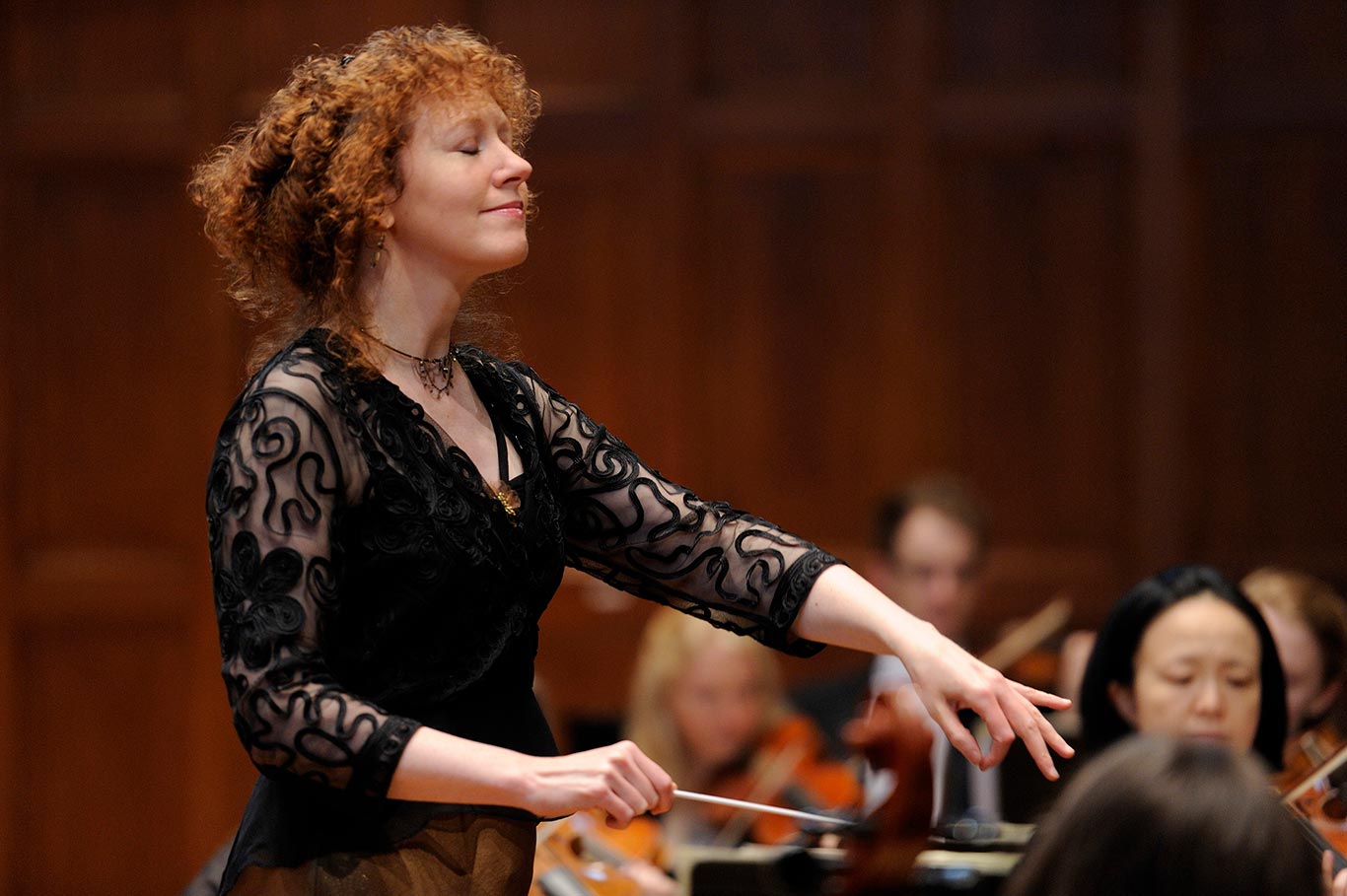
After the Cleveland Orchestra invited Jeannette Sorrell in 1991 to apply for its vacant position of assistant conductor, the 26-year-old budding podium talent was brought in for an interview with its then-music director Christoph von Dohnányi before a possible audition. In August that year, she drove from Oberlin, Ohio, to the famed German maestro’s home in Cleveland. The two chatted next to a swimming pool about his native country’s history and politics – nothing about music. After 20 minutes, Sorrell recalls von Dohnányi saying, “Well, my dear, I’m very sorry. There’s no point in trying to find time for you with the orchestra, because the orchestra is very busy and, unfortunately, the audience in Cleveland would never accept a woman as a conductor.” The young conductor, who had fallen in love with period-instrument recordings when she was teenager, had already been pondering a career in early music, and von Dohnányi’s rebuff only reinforced her resolve. Less than a year later, she led the first performances of Apollo’s Fire, a now internationally recognized ensemble with performance series in Cleveland and Chicago. “It became clear that I was going to need to forge my own path,” she said.
A few statistics
Sorrell is hardly alone. Indeed, it seems clear that American early-music ensembles have proportionally more female artistic leaders than their counterparts in the mainstream classical world.
According to research by the League of American Orchestras, just 14.2 percent of the music directors of American orchestras in 2025 were women. But one need only run a finger down a list of the top historical-performance groups to see how many are headed by women, including Alkemie, Apollo’s Fire, Boston Camerata, The Newberry Consort, and Piffaro.
“I don’t think it’s something that has been talked about much,” said Liza Malamut, a sackbut player who leads the Chicago-based Newberry Consort. “It would be cool if it were talked about more. I think it’s something that is special about our field.”
But she is also quick to caution that if even early music has made considerable strides in terms of gender parity, it continues to struggle with inclusivity in other ways, “You see a lot fewer people of colour in leadership positions still,” she said. “So, this is not like early music is inclusive and classical music is not. It’s not a binary thing like that.”

Passionate about early music and want to read this subscriber-only article?
If you are not a subscriber, join the international Total Baroque community. Subscribe here from 5.00€.
I subscribe
If you are already a subscriber, sign in.
I sign in 


You must be logged in to be able to post comments.
Sign in