


 What if Ireland echoed Vivaldi? In The Irish Seasons, Lynda O’Connor blends baroque and Celtic tradition with daring poetry.
  By
By 


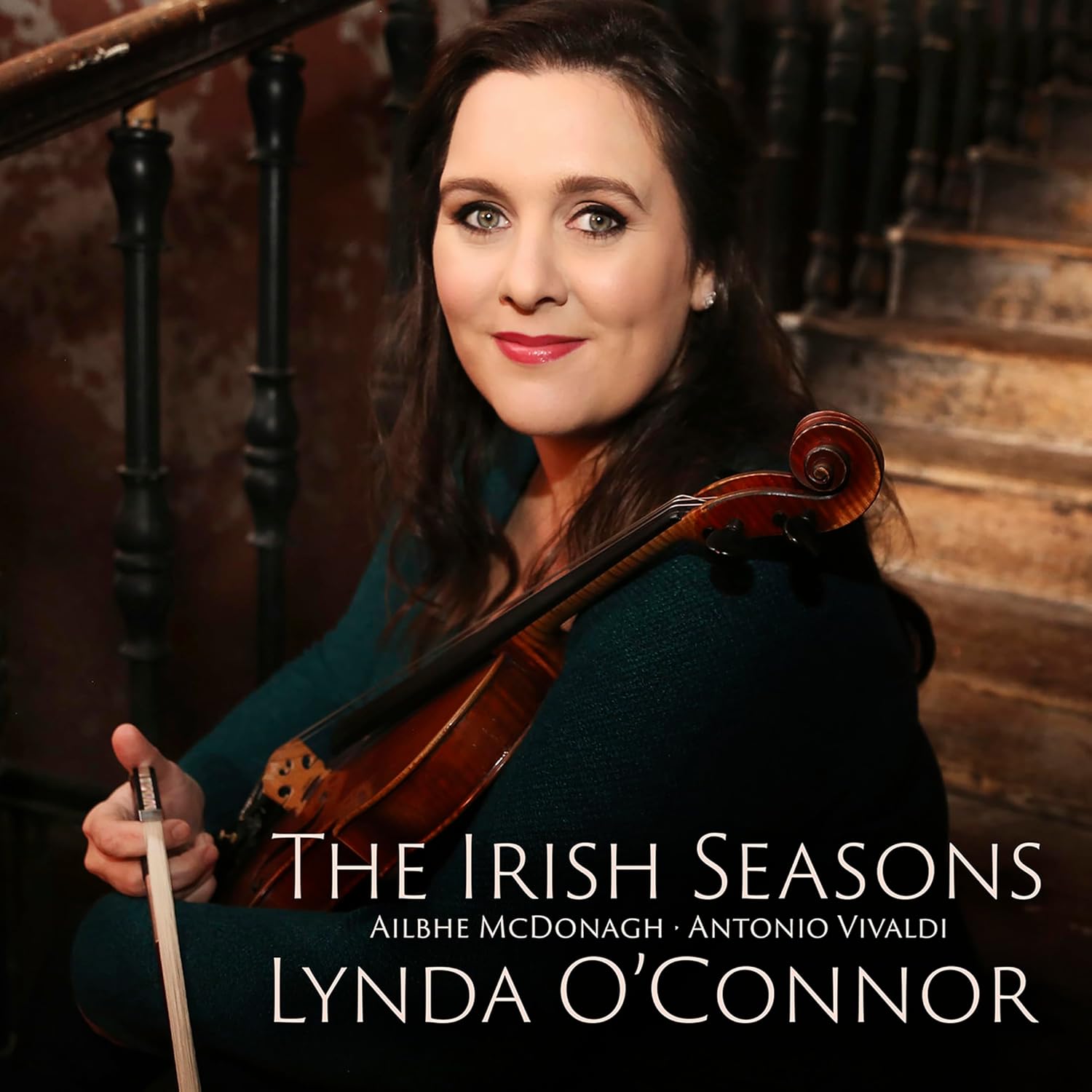
Released on Avie Records, The Irish Seasons pairs Vivaldi’s iconic Four Seasons with their Irish counterpart, specially composed for Lynda O’Connor by cellist and composer Ailbhe McDonagh. Through this double tribute, the violinist celebrates two vibrant musical traditions — Italian Baroque and Irish folk — while asserting a bold, expressive, and deeply personal artistic vision.
In this project, you perform both Vivaldi’s iconic Four Seasons and Ailbhe McDonagh’s contemporary creation The Irish Four Seasons. How did you approach this dual repertoire, and in what ways do these two works reflect with one another?
Lynda O’Connor: The Irish Four Seasons is a work which encompasses flavours of Irish traditional music and reflections of Vivaldi’s incredible Baroque masterpiece The Four Seasons. Irish and Baroque music are similar in many ways. The freedom to ornament, similarities in structure and prominence of reinterpretation are apparent in both styles. Ailbhe McDonagh succeeds in bringing these two worlds together in an incredible composition filled with the freedom to ornament as the performer wishes but also with a structural similarity to both genres. I approached both works with a similar vision of excitement, and an open mind to where the music might take me. Recording a brand new piece that’s never heard alongside a piece that has been played, recorded and heard millions of times is an interesting task. I focused on letting the music speak for itself and allowing the thrilling works to shine for exactly what they both are —masterpieces.
The Irish Four Seasons incorporates traditional Irish melodies. How do you perceive the distinct Irish character of the work? Have you, by contrast, perceived an “Italian” approach to the seasons in Vivaldi’s work?
L. O’C.: The Irish Four Seasons uses typical Irish melodies throughout. The opening of Earrach (Spring) is a slow air, a beautiful melodic line free to interpretation. It then goes into a fast dance like reel in 4/4 later in the movement. Autumn begins with a slip jig in 9/8— a slightly more relaxed dance tune with a feeling of 3 in a bar. These are all typical traditional Irish dance tunes which Ailbhe and I wanted to incorporate in this piece to reflect the incredibly rich heritage of our Irish music. I am lucky enough to have played and studied traditional Irish fiddle so am easily able to recognize these tunes and play them in a more typical Irish style (they don’t quite sound as they are written). One key thing in Irish weather is that we can often get four seasons in one day. Ailbhe very cleverly brings the melodies of all four seasons into the final season of Winter to reflect this.
By contrast, Baroque music is very much deeply rooted in Italy and is known for its grand, emotional and often virtuosic style. With huge Italian greats like Corelli, Vivaldi, Albinoni and Monteverdi inspiring the likes of Handel and Bach and far beyond, I think it is fair to say that my approach to all classical music is in many ways an “Italian” approach focusing specifically, in this case, on emotion and virtuosity. Vivaldi was ahead of his time writing programme music and it is amazing to imagine that 300 years later the ideas and images he perceived have stood the test of time.
You worked closely with cellist and composer Ailbhe McDonagh on this project. Could you tell us how this collaboration unfolded, and how it enriched your approach to the piece?
L. O’C.: Leaving your debut album until you are a little older than most brings its challenges. I wanted to record something that stood for who I was as a musician, and believed that I needed to go big or go home! I love the classical music repertoire for the violin—such a huge array of incredible music and I am a very proud Irish woman who loves our traditional music and heritage. I wanted to find a way to bring these two great loves to the one album in a cohesive way. I have loved performing Vivaldi’s Four Seasons for many years and have had this idea that like Piazzola’s Seasons and Max Richter’s Seasons, that Ireland too deserved to have a Seasons inspired by the wonderful Vivaldi masterpiece. Ailbhe and I have worked together for many years. We are often referred to as musical soul mates. She is a remarkable cellist and composer. She had heard me talk about this project years before I even asked her to compose the piece, so she had already been thinking about how it could work. Ailbhe knows my playing better than I do sometimes, she knows where my strengths lie and was able to write a piece that truly feels like it is my dream piece. It brings all my favourite aspects of playing the violin together; my love of beautiful high melodic violin lines (the opening of Winter), my love of playing gutsy like dance tunes in Spring and Autumn and to the stunning opening of Spring where she allows me the freedom to ornament this beautiful slow air like melody in whatever way I feel in the moment. It felt like a true collaboration from start to finish with Ailbhe and I am extremely proud of this stunning composition she has written for me.
 Press review
On O’Connor’s debut solo album, the world-premiere of The Irish Four Seasons synthesizes Baroque style and Irish culture in a riveting manner, and McDonagh has accomplished something quite remarkable in so deftly honouring Vivaldi (1678–1741) whilst at the same time weaving Ireland’s musical heritage into the writing.
Textura
[Vivaldi’s masterpiece] is an intimate, warm and upbeat performance, but it’s really the McDonagh work that drives the CD – and it’s a real gem.
TheWholeNote

You must be logged in to be able to post comments.
Sign in