


 The way La Belle Province revived the sounds of 17th- and 18th-century organs in the New World.
  By Emmanuel Bernier


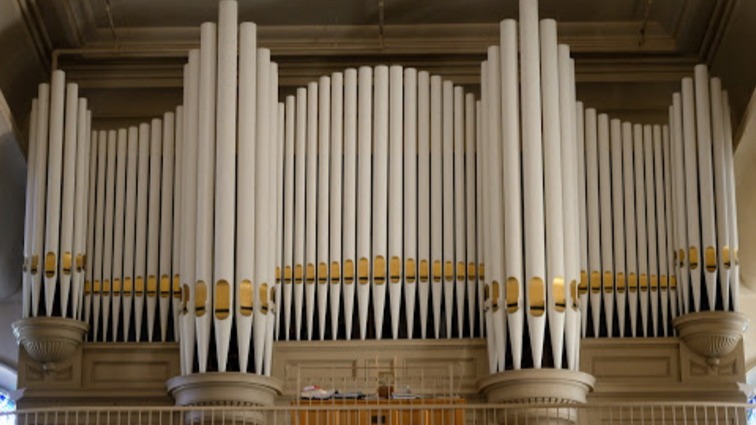
When one speaks of the baroque organ, what immediately comes to mind are famous European instruments such as those of Saint-Maximin-la-Sainte-Baume, Alkmaar, St. Jacobi in Hamburg, or Toledo Cathedral. But what if Quebec, without comparing itself to the “old” countries, also had something to offer for playing Bach, Couperin, and Frescobaldi?
Although the colonization of the St. Lawrence Valley began just a few months after Monteverdi’s Orfeo was first heard, no material trace remains of the few instruments built or imported there in the 17th and 18th centuries. In the 1940s and 1950s, an organist wanting to play Bach usually had at their disposal a Casavant with a sluggish attack, poor in high harmonics (the mixture stops), and lacking the idiomatic sonorities of the Baroque (stops such as the nazard, tierce, or cromorne come to mind).
Young organists in attack mode
It did not take long before young organ firebrands began to kick against the traces. Mostly trained in Europe, where they had the chance to play numerous historic instruments, Gaston and Lucienne Arel, Bernard and Mireille Lagacé, Kenneth Gilbert, and Raymond Daveluy joined forces in Ars Organi, a society devoted to bringing Baroque organ music back to the fore.
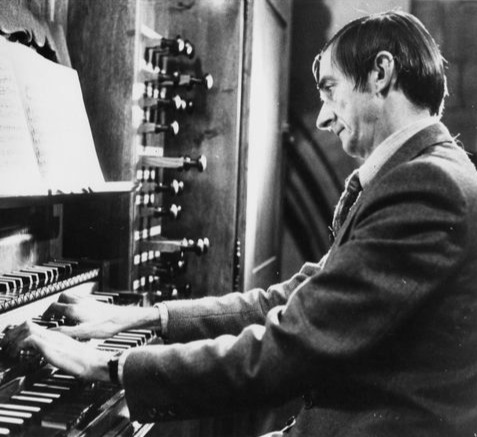
The near-simultaneous commissioning—not least thanks to their influence—of three instruments (including the famous one at Saint Joseph’s Oratory) from the avant-garde Austrian organ builder Rudolf von Beckerath dealt a heavy blow to Casavant, which at that time had more or less monopolized organ building in Quebec. But it would be wrong to say that the firm had turned a deaf ear to the organ-building revival that had been underway in Europe since the 1920s. “We’ve always been told that nothing happened at Casavant before 1958 and the arrival of tonal director Lawrence Phelps, but that’s not true. Credit must be given to Stephen Stoot for trying, as best he could, to respond to organists’ requests. One thinks, for example, of the organ at Saint-Roch Church in Quebec City in 1943,” explains Simon Couture, the company’s current tonal director, which will soon celebrate its 150th anniversary.

Passionate about early music and want to read this subscriber-only article?
If you are not a subscriber, join the international Total Baroque community. Subscribe here from 5.00€.
I subscribe
If you are already a subscriber, sign in.
I sign in 
You must be logged in to be able to post comments.
Sign in