


 With her latest album, soprano Sophie Junker invites listeners on a journey to the heart of La Serenissima—a voyage of dazzling virtuosity and long-forgotten gems.
  By
By 


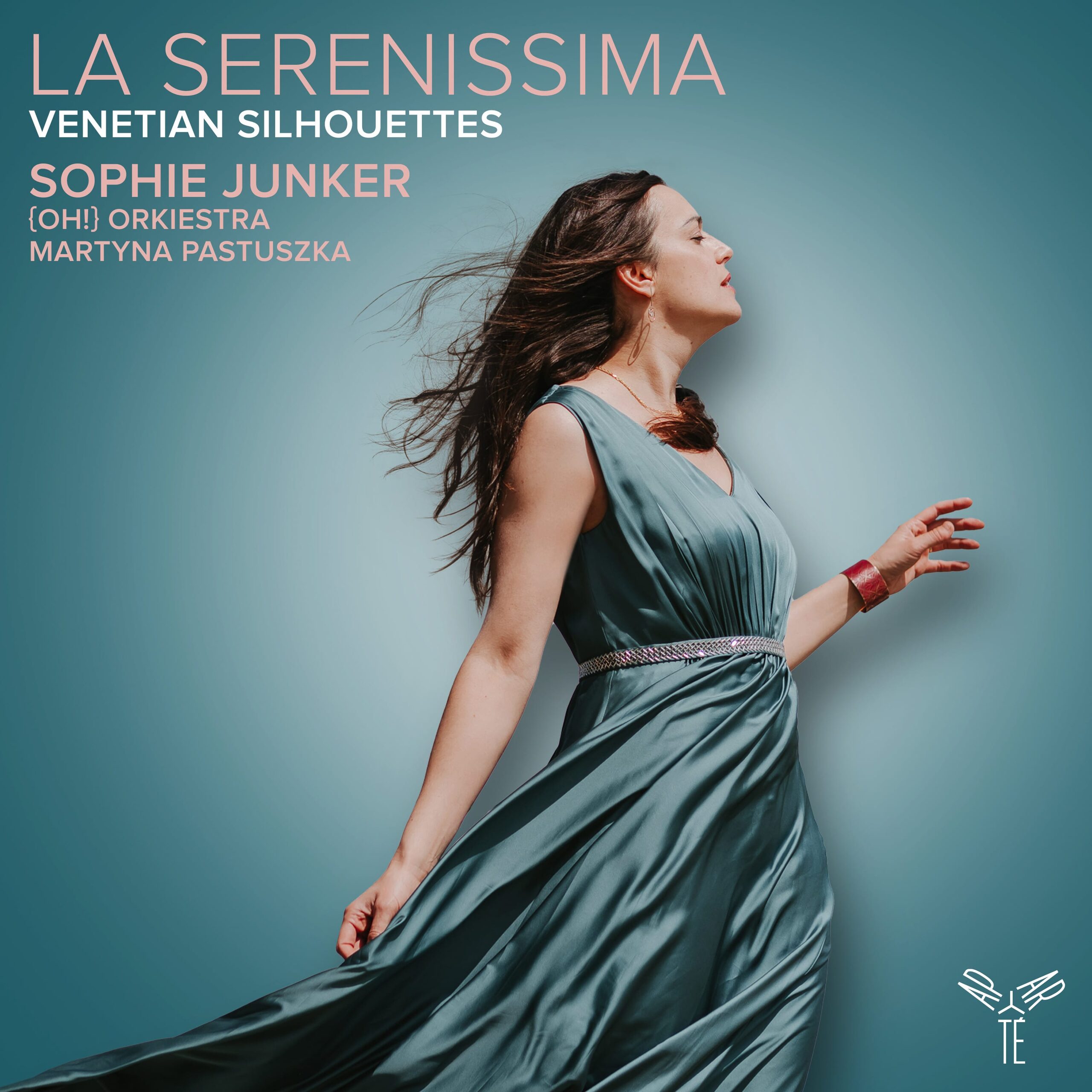
La Serenissima brings together soprano Sophie Junker, conductor Martyna Pastuszka, and the ensemble {OH!} in a programme dedicated to 18th-century Venetian opera. From bold bravura arias to more introspective moments, the album draws connections between Vivaldi and Caldara, and lesser-known figures of the Italian Baroque era. A vivid exploration of a repertoire rich in invention and theatrical flair.
Venice seems to run like a thread through this album–both in spirit and in repertoire. What drew you to that theme, and how does the city resonate with you personally?
Sophie Junker: The idea for the album really grew out of my collaboration with the wonderful violinist Martyna Pastuszka. Putting together a programme like this isn’t always straightforward; you have to take into account things like the size of the ensemble, the budget, the colour and range of the voice, and of course, finding music that’s both rich and instantly engaging… But ultimately, our priorities were clear: emotional expression and a prominent role for the violin were essential elements. With those parameters, Venice naturally rose to the top of the list! My friend, the musicologist Pedro Octavio Diaz, did a great deal of work to help shape a programme that’s both elegant and lively. Venetian style, at its heart, is about elegance–a refined music where virtuosity serves emotion and storytelling–never for the sake of showing off. Between 1700 and 1760, Venice relied on strings (whether bowed or plucked) and that gives the style its particular fluidity and sensuality. Naples, by contrast, often goes for excess–long-winded vocal fireworks, wind obbligatos, drama for drama’s sake. Many of the arias I sing come from works created outside the Venetian lagoon, but they still follow the Venetian idiom. That said, I won’t pretend that Vivaldi, Porta or Lotti didn’t sometimes take inspiration from Naples too–they definitely did!
The album booklet speaks of an intense and inspiring collaboration with Martyna Pastuszka and her orchestra. How did that musical chemistry come through in the recording process?
S. J.: It came quite naturally, really–Martyna is a deeply generous artist, both in her playing and in her presence. We recorded the album in just three days, which is quite crazy when you think about it. It all worked because of the kind of energy that flows so easily between us when we’re making music. I’m not particularly cerebral as a performer–I often sing by instinct, in a “rough around the edges” manner at times. Occasionally, that means I make stylistic mistakes. I think I have the syndrome of the “child-singer” who just wants to express themselves and have fun! But paradoxically, I also have a kind of reverence for this music that borders on the mystical–I sometimes feel awkward, even undeserving, to inhabit it. With Martyna, I often have the feeling that everything is set free… I feel completely welcomed, just by the way she responds to my musical intentions, introduces an atmosphere, or galvanizes her orchestra…. She has a strong and immediate instinct, but has a great knowledge of style, in addition to being a violin virtuoso. And the orchestra? They’re “monsters”–in the best sense. These Polish musicians are incredible, and on top of that, humble and utterly lovely. I feel genuinely lucky to work with them.
The album highlights major Venetian composers, but also includes rarely-recorded works by the likes of Benedetto Marcello and Giovanni Porta. How did you go about selecting the pieces? Was there a desire to shine a light on the less familiar corners of the Baroque repertoire?
S. J.: As I said earlier, I don’t like to overthink things. I’m mindful of our limitations, of course, but I also want to enjoy the repertoire, and I want that joy to be heard! So, I picked bits and pieces from here and there, always keeping the broader arc of the album in mind. I had to love, adore and worship this music, so that it immediately touched the child in me. That’s a very personal process… and it took days and days. It wasn’t easy, because even though this album isn’t about flaunting everything I can do vocally, I still wanted to avoid monotony and keep things varied and contrasting. The theme of Venice is, in some ways, too broad–there’s so much to choose from! This programme is really more of an evocation. It can’t fully capture the incredible richness of 18th-century Venetian musical life… You’d need a 30-CD box set for that! The pieces by Porta and Marcello are “hits” here, and I would have been remiss if I hadn’t chosen them, the former for its marvelous tragic force and the latter for its sad clarity, which particularly moved me.
 Press review
“With a voice full and well-rounded from low to high, Sophie Junker approaches every aria like a scene from the stage, making one forget the sheer technical brilliance beneath.”
Forum opéra
“The charismatic Sophie Junker goes far beyond flawless technique and pinpoint ornamentation, using her crystal-clear soprano to paint exquisitely detailed portraits.”
Online Merker
“Flames and battles are conjured with sparkling coloratura in the opening track–but Junker also offers something else: she paints with the full emotional palette, joining delicate and passionate moments into a compelling arc. And yes, in the end, Serenissima truly shines–even more beautifully, already lit from within.“
Rondo Magazine

You must be logged in to be able to post comments.
Sign in