


 The International Young Artist Presentation (IYAP), held each year during the Laus Polyphoniae Festival in Antwerp, gives six young ensembles the opportunity to benefit from artistic guidance. In 2026, the focus was on stage presence and communication with the audience. A brief look at the six ensembles selected for the IYAP in August 2026.
  By
By 


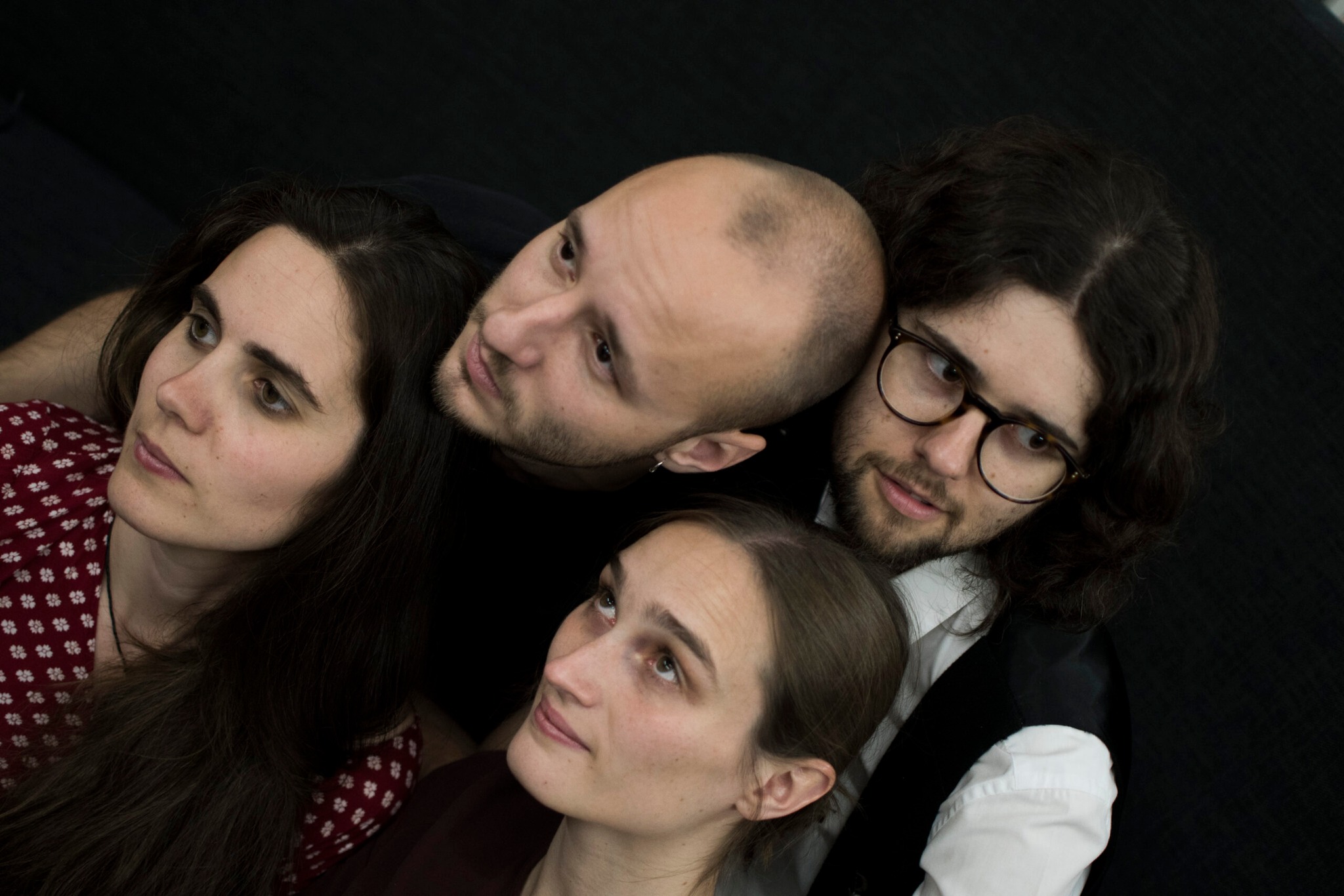
The International Young Artist Presentation (IYAP) takes place during the nine days of Antwerp’s Laus Polyphoniae festival in late August. Originally a competition, the IYAP has evolved into an artistic development programme for six ensembles over the course of the Festival. What distinguishes Laus Polyphoniae is the emphasis on vocal polyphony, from the Renaissance to the early Baroque, through 25 concerts and complementary events. This year’s theme was “Europe around 1600.” The programme highlighted an era in which Europe not only saw the creation of numerous masterpieces, but was also the scene of lively exchanges between countries and perspectives. Bart Demuyt heads both the festival and the Alamire Foundation Belgian research institute in Leuven which is dedicated to promoting the musical heritage of the current Benelux countries. This has resulted in an exceptionally close exchange between scholarly research and musical practice.
Spanish soprano Raquel Andueza once said that winning the International Young Artist Presentation (IYAP) in Antwerp in 2000 had given her career a boost. Among other things, it enabled her to record her first CD, which opened new doors for her. Today, IYAP is no longer a competition, but an artistic mentoring program. Raquel Andueza herself later frequently worked within IYAP as a mentor to young ensembles on the early music scene. This year, IYAP once again benefited from the guidance of recorder player and conductor Peter Van Heyghen, joined for the first time by singer, lutenist, and harpist Nicolas Achten. For three days, they worked with six young ensembles specialising in historically informed performance practice, selected from 32 applications. Unlike a masterclass, the emphasis was not on instrumental or vocal technique, but onstage presence and communication with the audience.
The fourth day was devoted to presentations at AMUZ in Antwerp, a concert hall housed in the former Augustinian church. Before a full house, each ensemble presented a short, half-hour programme, which the audience followed attentively. According to Peter Van Heyghen, the three days gave rise to an intense exchange. “Often, it is only small comments by way of feedback that make a performance more effective. Many ensembles wanted to enrich their presentations with playful and theatrical elements and tell a story beyond the concert performance itself. But no matter how solid their musical training may be, they sometimes lack the necessary stage presence.”
KIMA: A Distinct Flair for Theatre
This is not the case with Ensemble KIMA, a vocal quartet founded in Basel in 2023, whose members are all graduates of the Schola Cantorum Basiliensis (SCB). Baritone Arthur Baldensperger explains that he was already interested in theatre before turning to music. At the SCB, there is the “Opera Factory,” where students also receive stage training. KIMA also developed its programme of medieval music in collaboration with stage director Salome Imhof. What the ensemble presents and performs on stage is a kind of outlandish theatre. In the three-voice Ars Nova motet “Le mesnie fauveline,” three members sing three different texts. At its centre is the allegorical figure of Fauvel, a stallion who rises to power and desires Fortune as his wife, only to be rejected by her. As is customary in motets of this kind, the voices proceed largely independently of one another.
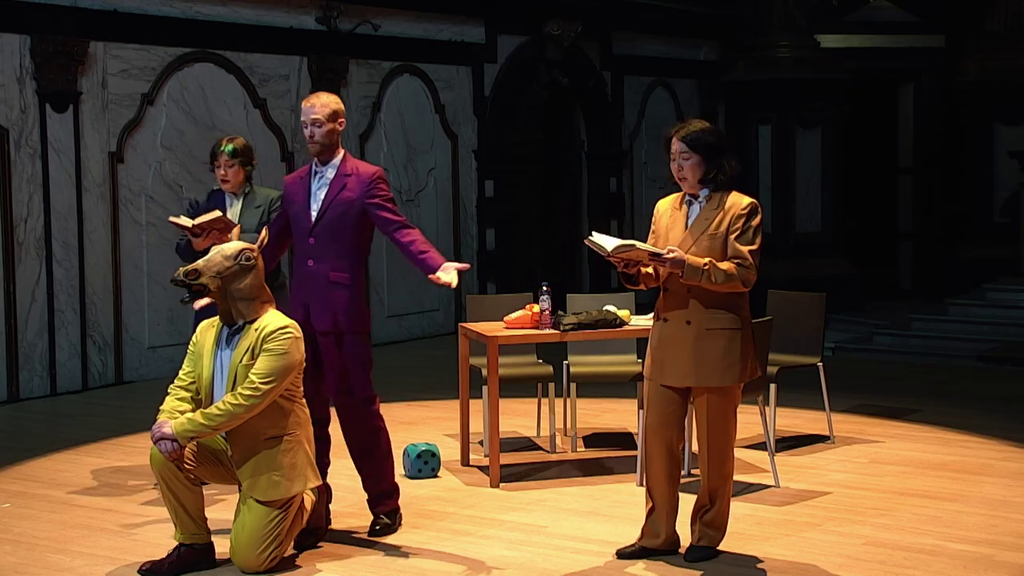
KIMA transposes this musical situation into a contemporary office setting, where everyone talks at once. At the same time, the performance recalls the medieval form of the “disputatio.” Fauvel makes his appearance at the edge of the stage: tenor Léon Roch wears a horse mask. The colourful costumes, in shades of purple, blue, orange, and yellow, combine situational humour with formalised theatre in the manner of Bob Wilson, whom the ensemble explicitly cites as a reference. The pieces are performed with precision and are by no means used solely as sound material for the show. This convincing performance, greeted with generous applause, encouraged the ensemble to continue along this path with a programme entitled “Madrigal Comedy,” intended to combine early Baroque music with forms drawn from the Commedia dell’arte.
Passionate about early music and want to read this subscriber-only article?
If you are not a subscriber, join the international Total Baroque community. Subscribe here from 5.00€.
I subscribe
If you are already a subscriber, sign in.
I sign in 

You must be logged in to be able to post comments.
Sign in