From Parma to Florence, from Cremona to Urbino, Italy remains one of the great historical stages of European early music. Between palaces and baroque basilicas, medieval and Renaissance cities, festivals bring the legacy of Monteverdi, Cavalli, Stradella, and Legrenzi back to life while cultivating remarkable artistic vitality.
The 10 festivals are presented in the order in which they open, from June to September. The contents below list them all and allow you to go directly to each entry, where you will find the dates, venues, artists and main highlights. Wishing you a wonderful summer of music!
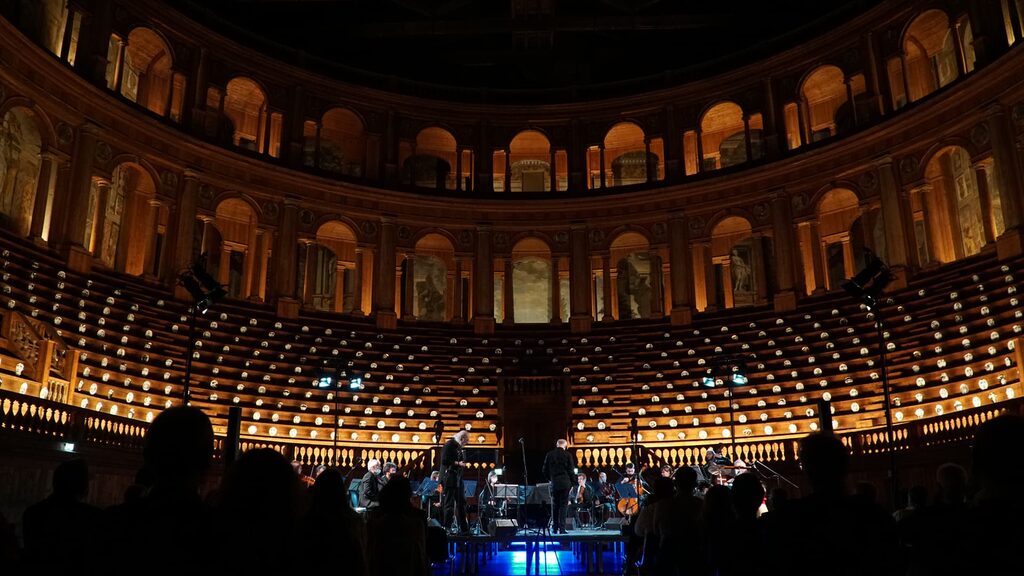
This is one of the youngest Italian festivals, now only in its fourth edition. It is directed by Fabio Biondi who, together with his ensemble Europa Galante, is one of the historic protagonists of the Italian and international early music scene. It takes place in Parma, in one of the most fascinating sites of this city renowned for its gastronomic culture: the monumental Pilotta complex, home to one of the masterpieces of early seventeenth-century theatrical architecture, the spectacular Farnese Theatre, as well as the splendid Palatine Library. The festival is concentrated into just a few days, from June 3 to 8, and will open with Europa Galante performing the modern premiere of Francesco Corselli’s oratorio Santa Clotilde, written for the Farnese court shortly before the composer’s transfer to Madrid. Most of the concerts are devoted to Spanish culture and music, including one dedicated to Parmese composers active on the Iberian Peninsula, presented by the Compagnia dei Violini under the direction of Alessandro Ciccolini, and finally the symphonies of Boccherini performed by Fabio Biondi’s resident ensemble.
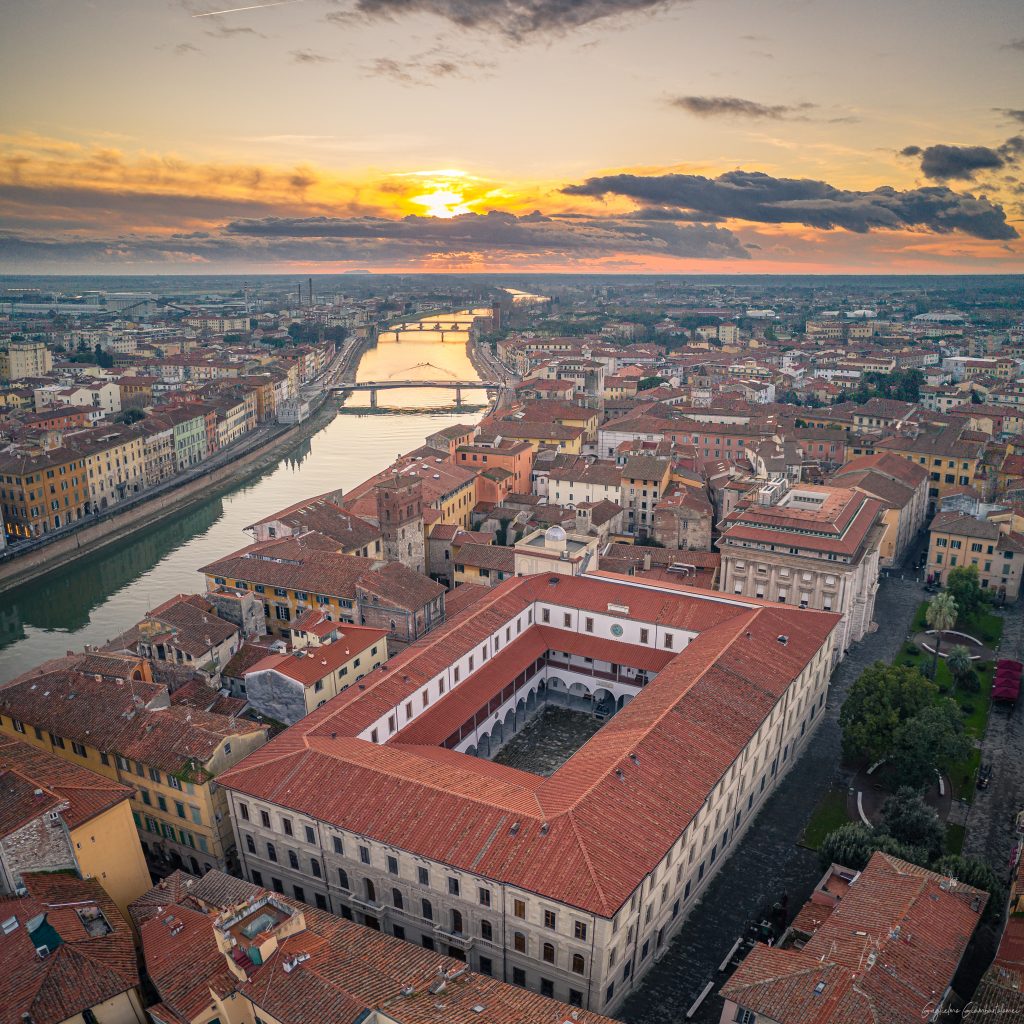
The 31st edition of the Festival Toscano di Musica Antica will take place from June 6 to July 10 in various sites of historical and artistic significance in Pisa, such as the Palazzo della Carovana, one of the city’s most famous buildings, the Palazzo della Sapienza, and the Teatro Nuovo. Part of the programme will also be presented at the Certosa di Calci, the Teatro dell’Olivo in Camaiore, and in the courtyard of the Rocca in Vicopisano. The programme is particularly eclectic and original, notably thanks to the presence of popular music from oral traditions, such as Sardinian polyphonic singing performed by the singers of Tenore de Orosei accompanied by cellist Ernst Reijseger, as well as the dialogue between Mediterranean traditional music and early music proposed by the ensembles Pentagonon and La Manticora. Among the other highlights are the new production by the ensemble PassiSparsi devoted to Renaissance moresca songs, the result of meticulous research and interpretation, as well as the concert by the resident ensemble Auser Musici led by Carlo Ipata, who is also the festival’s director. Between the three parts of the intermezzo Mirena e Floro, written for the Dresden court by Bononcini and Gasparini in 1718, instrumental music by Alessandro Scarlatti and Vivaldi will be performed.
After exploring the theme of male heroes last year, the 43rd edition of the Monteverdi Festival in Cremona, entitled “Cantami, o Diva!” and taking place from June 7 to 21, is devoted to the great female figures of Poppea, Thetis, Dido, and Theodora through four major operas. Monteverdi’s L’incoronazione di Poppea will be performed by Les Arts Florissants under the direction of Paul Agnew, while Francesco Cavalli’s Le nozze di Teti e Peleo, performed by the Cremona Antiqua ensemble under Antonio Greco, will be staged for the first time in the modern era in celebration of the 350th anniversary of the composer’s death. The two other operas are Purcell’s Dido and Æneas, presented by La Fonte Musica under Michele Pasotti, and Teodora imperatrice, a new work commissioned by the festival from Mauro Montalbetti and entrusted to the resident ensemble Cremona Antiqua. The programme of Italy’s most important early music festival, directed since this year by Andrea Nocerino, also includes numerous other concerts in various venues throughout the city renowned both for the art of violin making and for being Monteverdi’s birthplace.
The programme of the 20th edition of the Milan festival, which runs from June 30 to August 27, gives pride of place to Bach: he will be featured in the opening concert for two harpsichords, in the following concert by Accademia Bizantina devoted to the orchestral suites, and during an entire day dedicated to the German composer, during which lecturers and musicians will successively present and perform a selection of vocal and instrumental works. The programme also includes other concerts, among them one by the ensemble Cantissimo devoted to the music of Heinrich Isaac, one by Les Surprises presenting a selection from Rameau’s Pièces de clavecin en concert, and one by Stile Antico performing polyphony by William Byrd. The concerts will take place in the Basilica of Santa Maria della Passione, the Sanctuary of Santa Maria dei Miracoli, the churches of San Bernardino alle Monache and Santa Maria della Sanità, as well as in the modern spaces of the Auditorium Fondazione Cariplo and Mamu – Magazzino Musica.
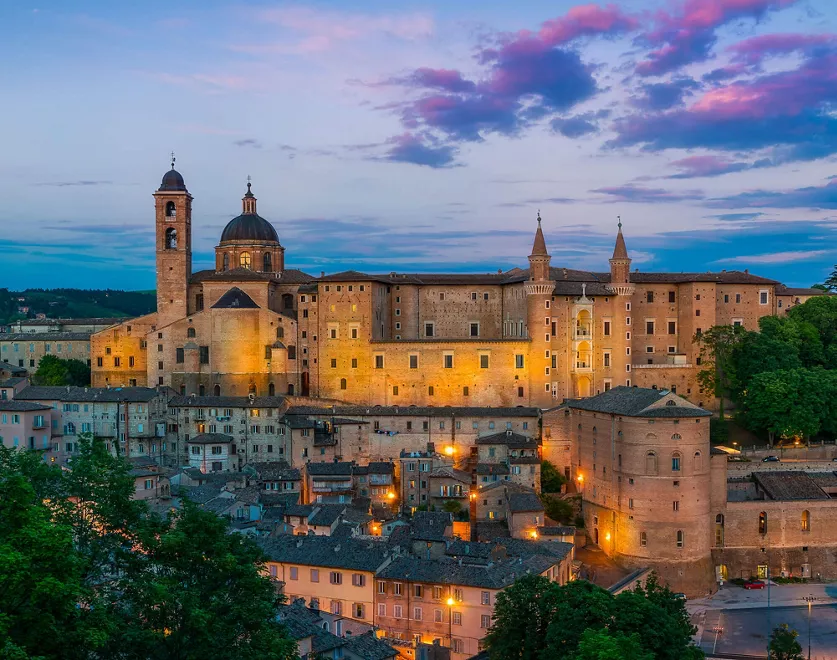
Within the Italian early music landscape, Urbino occupies a special place, not only because of its central role in Renaissance history and for its architecture and landscapes, but also because of its pioneering courses, which introduced several generations of professional and amateur musicians to historically informed instruments and musical practices. Urbino Musica Antica is therefore an immersive experience in which music resonates from morning until night. During these intense days, culminating in evening concerts featuring the teachers and often former students as well, a rich range of individual and collective courses is offered, devoted to numerous instruments, singing, and dance. The programme of the 58th edition, organised by the Italian Foundation for Early Music (FIMA) from July 18 to 27, includes a tribute to Dowland to mark the 400th anniversary of his death, a recital by Maite Beaumont devoted to arias from Handel’s principal operas, and a programme entitled “Dufay in Italy” performed by La Fonte Musica. Other highlights include concerts devoted to the flourishing musical life of seventeenth-century Rome, presented by the ensembles Anima&Corpo and Concerto Romano, as well as the workshop on the oratorio genre led by Alessandro Quarta, the festival’s director, concluding with the performance of unpublished works by composers active in the papal city.
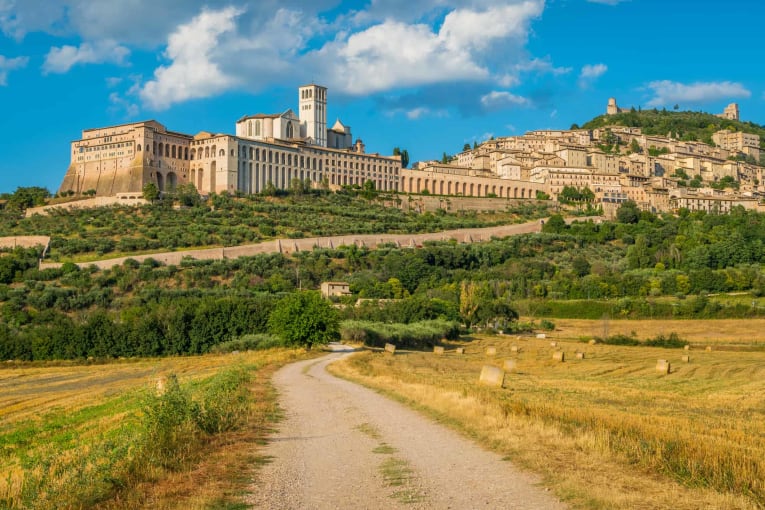
View of the Sacro Convento di San Francesco in Assisi, the Franciscan convent of Assisi
“Gloriosus Franciscus”
From August 4 to 9, 2026
In this year marking the 800th anniversary of the death of Saint Francis, the patron saint of Italy, the young festival organised by musicians who are also instrument makers and researchers will take place from August 4 to 9 under the title “Gloriosus Franciscus.” The medieval music programme includes concerts by the resident ensemble Anonima Frottolisti and the groups Lucidarium, Micrologus, Stella Nova, Exurge Domine, and Armoniosoincanto, alongside a series of workshops, lectures, and an exhibition of historical musical instruments. Behind the scenes of the festival lies a secret project complementing the series of Franciscan celebrations of recent years: improvised flash mobs with musicians wandering incognito, carrying loose sheets containing the words of certain laude, in order to surprise the public and tourists and encourage them to sing these songs together with them. The intention is to revive the original oral dimension of the ancient laudesi confraternities that sang devotional chants within the walls of the Franciscan city. To this end, the organisers are planning meetings with all the choirs of Umbria so as to gather, on September 20, as many singers as possible—some two or three hundred—to sing together in the streets before performing the laude in front of the church of San Francesco, as well as the responsory Fransciscus ut in publicum and the hymn Plaude turba paupercula inside the basilica.
This festival entirely devoted to the music of Giovanni Legrenzi, one of the most important and prolific composers active in Venice during the second half of the seventeenth century, was founded in 2023 in his native town of Clusone, in the province of Bergamo, where the 400th anniversary of his birth is being celebrated this year. Legrenzi remains a relatively overlooked composer, and the festival has helped bring to light an important part of his music that had never before been performed in the modern era, particularly in the vocal repertoire. From August 14 to October 24, concerts will take place in the Basilica of Santa Maria Assunta and in the churches of Beata Vergine del Paradiso and San Defendente, presented by the resident ensemble Collegium Vocale e Strumentale Nova Ars Cantandi led by Giovanni Acciai, who directs the festival alongside Ivana Valotti, as well as by the ensembles La Fenice and Arsenale Sonoro. The festival will open with the modern premiere of the solemn Vespers Assumpta est Maria in caelum, for which the Collegium will be joined by the wind ensemble La Pifarescha. During the festival audiences will also hear concerts by the winners of the two international competitions dedicated to Legrenzi and reserved for musicians under thirty-five: the first devoted to baroque singing and the second to instrumental ensembles, namely Valentina Ferrarese and Il Parrasio. An international symposium organised by the Italian Musicological Society on September 26 and 27 will further highlight the composer’s importance within the history of baroque music.
Although it is now established that Stradella was not born in Viterbo, as was long believed, the festival dedicated to him remains a landmark for the early music scene in central Italy. Its many concerts will take place from August 29 to September 27 at the Teatro Nuovo and in two important churches of Viterbo, Santa Maria Nuova and San Silvestro, where soloists and ensembles of all sizes will perform in succession. The festival will highlight a wide variety of instruments, from cello to archlute, from viola da gamba to double harp, from portable organ to double bass, not forgetting the baroque guitar, the colascione, or the nyckelharpa. Alongside Andrea De Carlo’s Ensemble Mare Nostrum, the festival’s resident ensemble, the programme will notably bring together La Nébuleuse, Le Concert de l’Hostel Dieu, I Talenti Vulcanici, La Chimera, and Cremona Antiqua. At the heart of this edition is also the production resulting from the educational work of the Stradella Y-Project, devoted this year to the serenata Vola, vola in altri petti. It will be performed in five different venues: the church of San Michele Arcangelo in San Michele in Teverina, the Palazzo Farnese in Caprarola, the Palazzo Altieri in Oriolo Romano, the church of San Pietro in Nepi, and the Teatro Torlonia in Rome.
The 10th edition of the International Renaissance Music Festival in Florence offers a precious opportunity to escape the crowds of tourists and enjoy the experience of listening to early music while reflecting on its relationship with the art, culture, and society of the past, in the places most closely associated with it. The festival, which will take place from September 6 to 27, is centred around a series of evening concerts accompanied by valuable outreach activities and listening guides, including visits to the city’s three principal libraries—the Medicea Laurenziana, the Marucelliana, and the Biblioteca Nazionale Centrale—which house a wealth of musical treasures. The afternoon series of “Concerts to Drink To,” featuring young musicians, also takes place in sites of great historical and artistic significance such as the Oratorio del Fuligno, the Auditorium of Santa Croce al Tempio, the Palazzo Medici Riccardi, and Andrea del Sarto’s Cenacle. In addition to the resident ensemble “L’Homme Armé”, directed by the festival’s artistic director Fabio Lombardo, which will present a programme devoted to exchanges between the courts of Florence and Mantua, the festival will welcome Capella de la Torre with a concert dedicated to Luther, and Capella de Ministrers with a musical portrait of Lucrezia Borgia.
September 12-November 1st – Grandezze & Meraviglie
Grandezze & Meraviglie – Musicale Estense Festival (Modena)
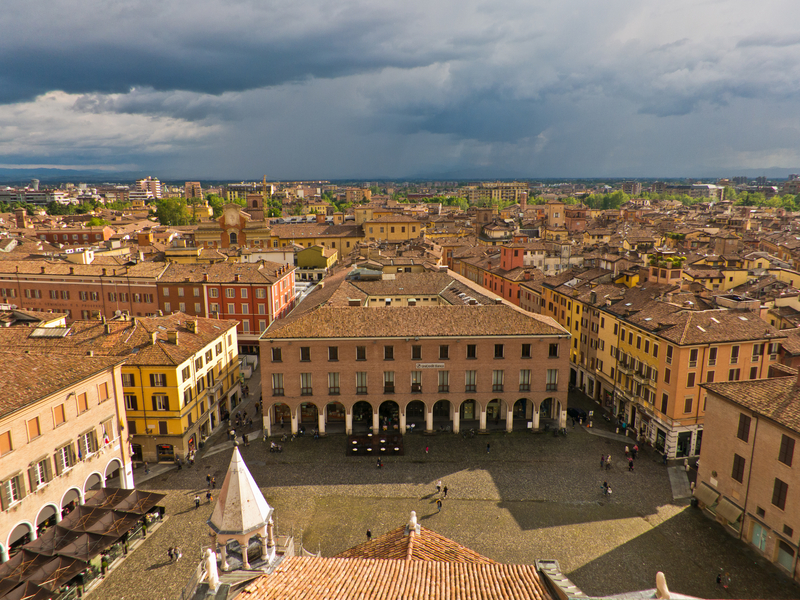
View of Piazza Grande in Modena
From September 12 to November 1st, 2026
The 29th edition of Emilia-Romagna’s most important early music festival will take place from September 12 to November 1, mainly in Modena, with several events also scheduled in Sassuolo, Vignola, and Bologna. Concerts in Modena will be held in the churches of San Carlo, Sant’Agostino, San Bartolomeo del Voto, and Saints Pietro and Paolo, as well as in the Palazzo Ducale and the Civic Art Museum. The programme highlights Michelangelo Falvetti’s 1682 oratorio Il diluvio universale; the pastiche drawn from Bononcini’s and Handel’s operas Xerse/Serse on a libretto by Silvio Stampiglia, dating respectively from 1695 and 1738, which demonstrates the famous German composer’s debt to his Italian colleague; and a special production devoted to Christina of Sweden, revealing little-known aspects of the queen’s biography during her stay at the Palazzo Ducale in Sassuolo. Among the many concerts is also the modern premiere of a composition by Caterina Benedetta Grazianini written in Vienna in 1705 and entitled Oratorio di San Geminiano, whose libretto recounts a miracle of Modena’s patron saint.


 From Parma to Florence, from Cremona to Urbino, Italy remains one of the great historical stages of European early music. Between palaces and baroque basilicas, medieval and Renaissance cities, festivals bring the legacy of Monteverdi, Cavalli, Stradella, and Legrenzi back to life while cultivating remarkable artistic vitality.
  By
By 





You must be logged in to be able to post comments.
Sign in