


 Hervé Niquet and Le Concert Spirituel bring Iphigénie en Tauride back to life — a tragédie lyrique co-written by Desmarest and Campra — in a version as scholarly as it is moving.
  By
By 


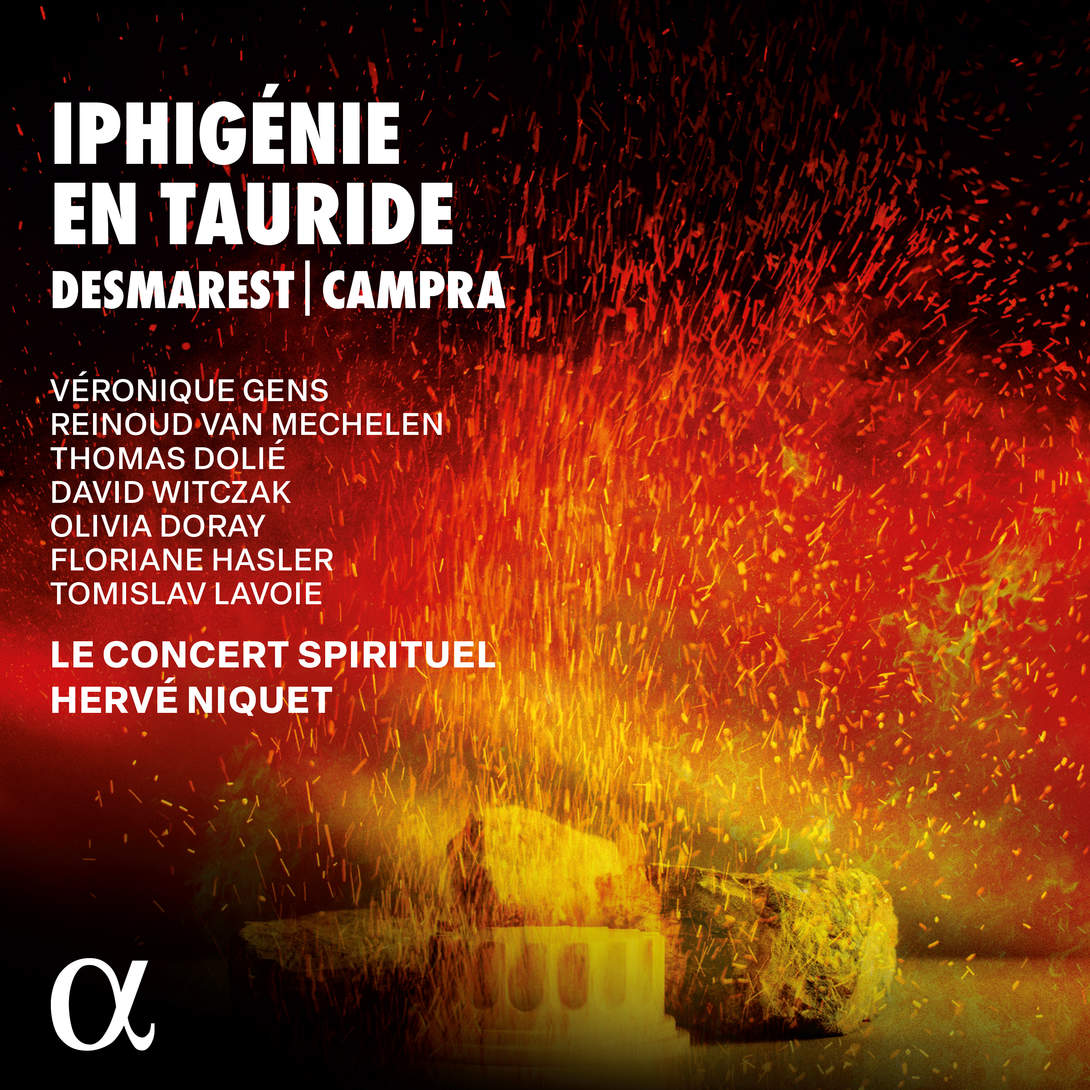
Begun by Henri Desmarest before his exile and completed by André Campra, Iphigénie en Tauride is revived here under the baton of Hervé Niquet, in close collaboration with Benoît Dratwicki [researcher at the CMBV]. The result of in-depth musicological work, this project offers a striking immersion into the world of French opera in the Grand Siècle, brought to life by a first-rate cast and a performance acclaimed by the critics.
Iphigénie en Tauride has a singular genesis, composed over nearly a decade by Desmarest and Campra. Are the stylistic breaks between the two contributions clearly audible?
Hervé Niquet: No — and that’s precisely the point. If we wanted the work to be universally praised, it was essential to avoid any audible difference in style between the two composers. Desmarest, the first, was a true genius. Unfortunately for him, he was forced to flee France after a scandal: having seduced and eloped with Marie-Marguerite de Saint-Gobert against her father’s will, he was sentenced to death in absentia in 1700 and forced into exile. When Campra took over the score, he rose to the challenge and had the intelligence to compose Campra with the colours of Desmarest. Today, we know exactly who wrote what and when, thanks to the copyists’ manuscripts at our disposal. But at the time, the goal was to blur the lines, to avoid stylistic criticism in performance. It was a clever move on Campra’s part, ensuring the work’s overall unity. For my part, I continued in the same spirit: I conducted it as if it had been composed by a single mind.
The booklet describes an effort to recreate the listening experience of a period audience. Why did you choose this specific opera for such an experimental approach?
H. N.: That was Benoît Dratwicki’s choice. We wanted a more or less untouched territory where we could apply, to the letter, everything described in the period technical treatises. This work actually sparked the idea of recording a Baroque tetralogy for the Alpha label [begun with Charpentier’s Médée, followed by Marais’s Ariane et Bacchus, and to conclude with Lully’s Persée]: four operas in which everything was reconsidered — all the received ideas, the pit layout, the continuo practice, and so on. A fresh perspective.
What sort of perspective?
H. N.: Forty-five years ago, a harpsichord maker named Claude Mercier-Ythier asked me to help him move a harpsichord. It was a beautiful object, painted “wagon green” — a shade he believed to be historically accurate. Back then, we didn’t have the chemical analysis tools we now use to date finishes. As we carried it through a doorway, the side caught on a metal latch, scraping the paint. Claude screamed. We set it down and looked — underneath the green, the harpsichord was pink and yellow. It has since been cleaned and now belongs to a museum collection. When history reveals itself so tangibly, like that, you can’t help but hear the music differently. And the same goes for this performance and recording of Iphigénie en Tauride. The audience was unsettled by the new orchestral layout — with, for example, the winds placed in the front row — just as Claude and I were by the discovery of that pink and yellow under the green wash of time. It’s a complete rediscovery, not to mention the dramatic impact such a layout brings to the opera.
 Press review
Véronique Gens is commanding in the title role, bringing authority and hauteur in her scenes as the high priestess of Diana, and touching sensibility during her encounters with her brother Oreste. […] Hervé Niquet directs the Concert Spirituel players and chorus with his distinctive precision and vigour.
BBC Music Magazine
Excellent cast, spirited performance, a vivid premiere recording all done with such care and scholarship by a team that bring the stories and the music to life. It’s a revelation, it’s new from the Alpha label, it’s on two CDs and it’s my Record of the Week.
BBC Radio 3
Hervé Niquet conducts his singers and players with his customary stylishness. All praise to Niquet, Alpha and their various sponsors for reviving this unknown oddity.
Gramophone
Hervé Niquet is on top form: theatrical, refined, vibrant and nuanced. His orchestra delivers an exquisite density and a dark-hued colour that fits the tragedy like a glove.
Scherzo
Hervé Niquet and his Concert Spirituel shift into a higher gear with a top-tier production that showcases both the orchestra and chorus at their finest.
Sophie Bourdais, télérama
The inspired score is brought to life by a first-class team — Véronique Gens, Thomas Dolié, Olivia Doray — all seasoned interpreters of this repertoire, conducted with brilliance by Hervé Niquet. A remarkable rediscovery.
Philippe Venturini, Les échos
With precision and incisiveness, Hervé Niquet’s direction energises the chorus and orchestra, giving power and credibility to a story well known to all — and now heard afresh in this new musical adaptation. A treat for both the ear and the mind.
pIERRE dEGOTT, Res Musica
Here is a work well worth resurrecting, and it’s served admirably by an outstanding team of musicians.
Claude Jottrand, forumopéra
Somewhere between Racine and Gluck, an opera begun by Desmarest and completed by Campra comes vividly back to life, thanks to Hervé Niquet, a superlative Concert Spirituel, and a flawless cast.
Loïc Chahine, diapason
You must be logged in to be able to post comments.
Sign in