


 Launched in a café twenty years ago by Alexandra Scheibler, the Festival International Bach Montréal has grown into a major event that brings together Quebec artists and international ensembles. From the lute to the accordion, from breakdance to Baroque … the journey began thanks to a serendipitous business-class flight!
  By Victor Jean


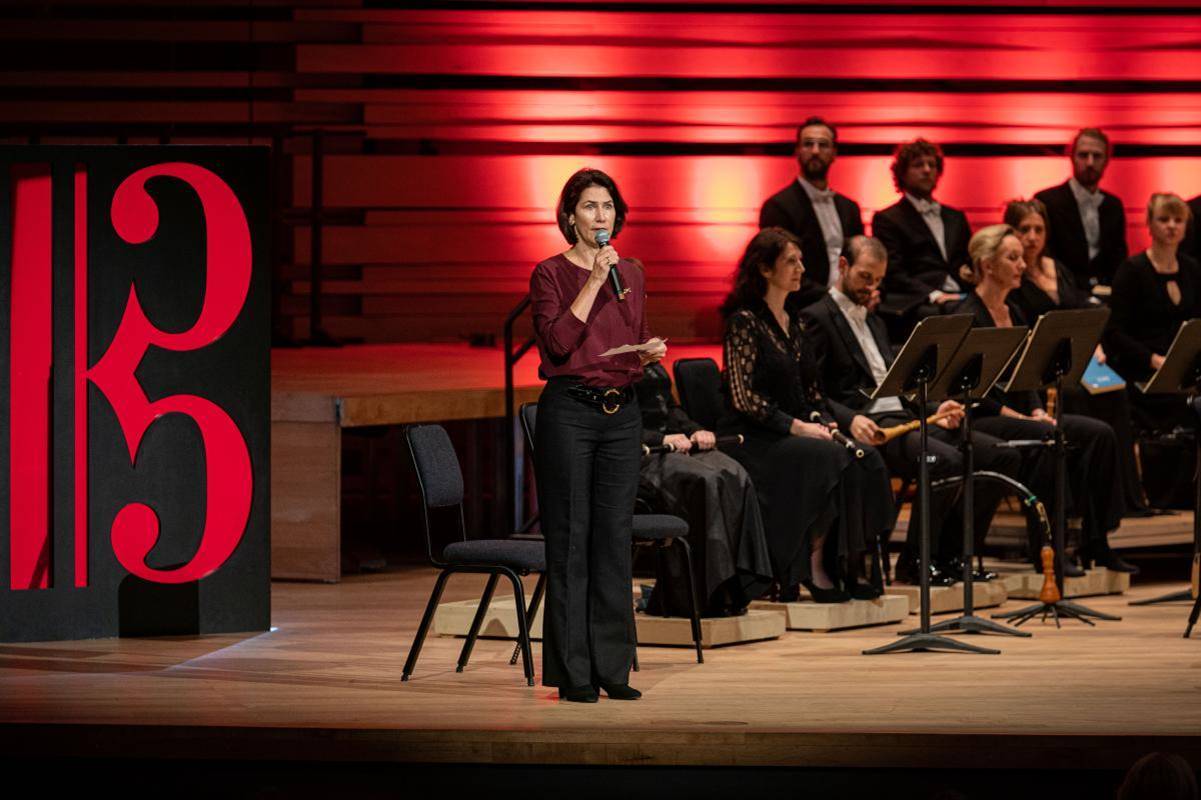
The Festival International Bach Montréal takes place from November 15 to December 7. On the program: a few big names, including Jakub Józef Orliński, Les Arts Florissants with Théotime Langlois de Swarte, and Luc Beauséjour, among others. Alexandra Scheibler, the festival’s founder and artistic director, talks about this year’s lineup and how the festival has evolved, built on risk-taking and an enduring sense of curiosity.
You founded the festival in 2005. Looking back, what would you say are the key lessons from that journey? And what perspective do you bring to the next ten or twenty years?
Alexandra Scheibler: I would say the first big lesson is that you have to be very naïve. It’s best not to know what you’re getting into! It’s like a startup: you need a lot of passion, a lot of enthusiasm, and then you just go for it. I moved to Montreal from Germany about two years before the very first festival. When I arrived, there weren’t many international artists or ensembles coming through. It was Christmastime, and there wasn’t even a single Christmas Oratorio performance taking place in the city. I really missed that. So, I thought: why not create something?
You make it sound easy when you put it like that.
A. S.: (Laughs) The idea was easy—the reality was not. We arrived with a little baby (my husband and I) and we didn’t know a single person in Montreal. He basically went straight into his job at the university, and I… didn’t. It took a couple of years. I visited music schools; I talked to people. Everyone probably thought, “Who is this crazy woman with her ‘let’s build a festival’ idea?” You have to be very persistent. It’s a difficult road because, at the beginning, people don’t really understand what you’re talking about, or they don’t take you seriously. But then, by chance, I met Sabine Pletat, who became my co-director for the next fifteen years. She left in 2020. She was also from Germany. We met by coincidence, and she had the same vision. That’s really how the festival came to life.

We organized the very first edition out of a coffee shop. We had nothing. In 2005, we convinced one ensemble—Musica Antiqua Köln, with Reinhard Goebel—to come. But these musicians only flew business class, and we had no money. Fortunately, Lufthansa generously provided business-class tickets, which was incredible for us. The ensemble’s presence gave the festival real weight. Then we partnered with many Montreal musicians and ensembles. Montreal is a city full of music, and people here truly love Bach. The audience loves this repertoire. So, it was actually a very good place to start a festival.
Can you describe what the festival has become today?
A. S.: From the very beginning, the idea was to bring together great local artists and ensembles with major international performers. I grew up in Germany surrounded by ensembles and soloists from everywhere. I wanted to bring that spirit to Québec because I find it deeply inspiring. So, the international dimension was essential from the start, and still is. In fact, last year we officially changed our name, adding the word International to reflect that. In the beginning, the festival lasted only four or five days. Now it’s about two and a half weeks. We also created the “Off-Bach” festival: daytime events in downtown Montreal. International artists drop in for 20-minute sets; then we have short talks, mini concerts, a glass of wine or coffee, people chatting together. Older people, younger people, kids—everyone comes. And the entire Off-Bach program is free, which is very important to us.
Today you collaborate with local ensembles such as Les Boréades, while also inviting major international names like Les Arts Florissants and Jakub Józef Orliński. How do you balance showcasing local talent with maintaining an international profile?
A. S.: That balance is always crucial. There are absolutely outstanding artists here, and it’s essential to include them. But when we invite them, we sit down together to produce something special, an event created specifically for the festival. I won’t invite someone from here just to repeat a program they already presented nearby. It has to be something unique, because every single concert in a festival should feel unique. For us, it’s not only about the program, the music, the artists. The atmosphere matters enormously: the lighting, the energy, the excitement. We work on every venue we use to create a real “festival feeling.”
Passionate about early music and want to read this subscriber-only article?
If you are not a subscriber, join the international Total Baroque community. Subscribe here from 5.00€.
I subscribe
If you are already a subscriber, sign in.
I sign in 


You must be logged in to be able to post comments.
Sign in