


 Elisabetta de Gambarini (1730–1765) found early success performing Handel’s music at just sixteen years old.
  By
By 


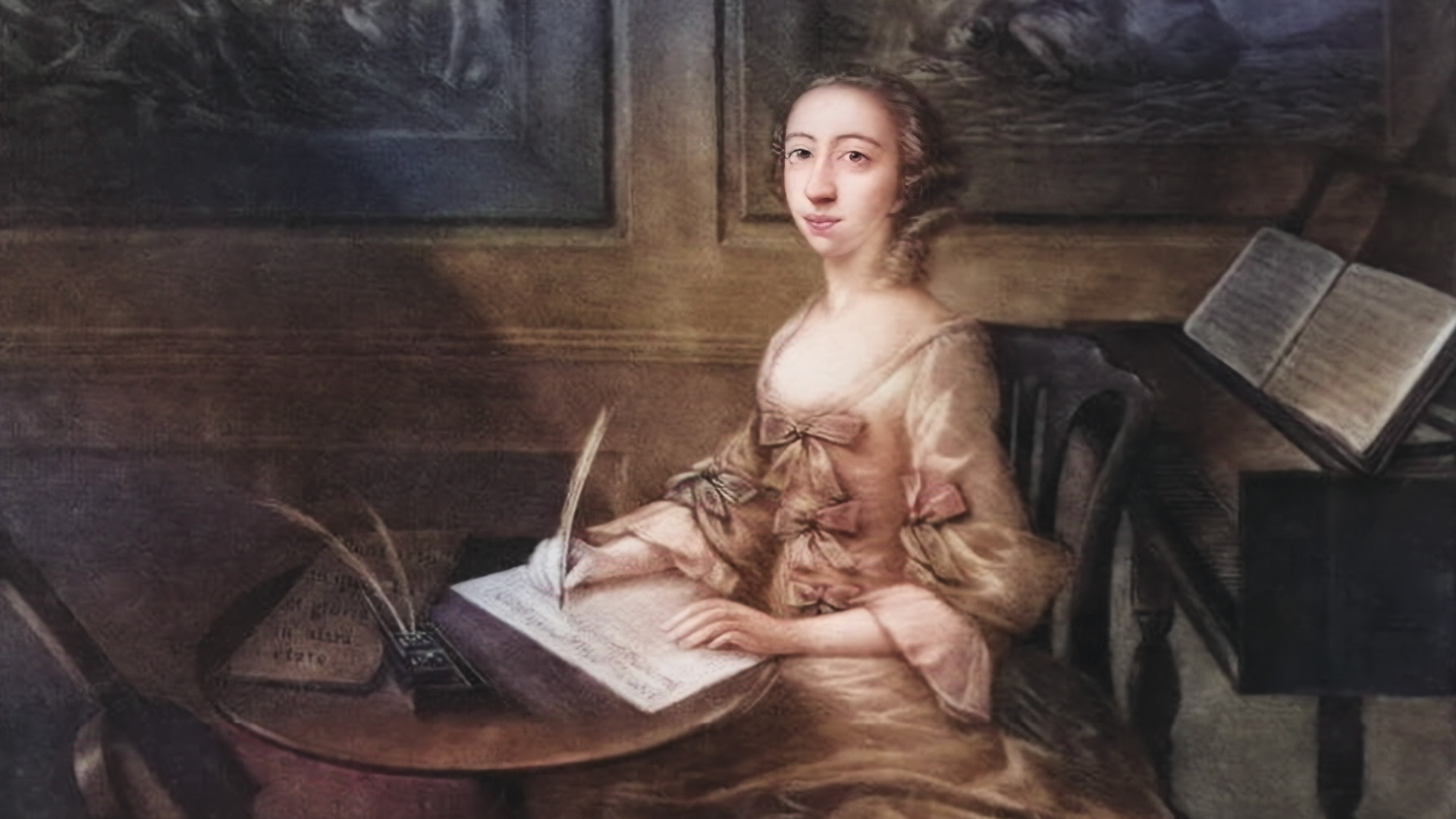
Singer, organist, harpsichordist, composer—Elisabetta de Gambarini had more than one string to her bow. She was the first English woman composer to have her works published.
Oratorio: a precocious performer
Elisabetta de Gambarini launched her career at just sixteen, performing in Handel’s Occasional Oratorio. The English composer quickly recognized her talent and selected her to premiere the role of the Israelite Woman in Judas Maccabaeus, in 1747. Her name also appears in two of his other works, Samson and Messiah. Her mezzo-soprano voice soon delighted the ears of London’s high society—from dukes and barons to lords and captains.
Listen here to the Overture of Handel’s Occasional Oratorio, performed by the Berlin Academy of Music under the baton of Howard Arman:
Glissando: from Italy to England
Despite what her name may suggest, Elisabetta de Gambarini was born in London. Her family came from the Italian nobility: her father, Charles Gambarini, was a diplomat, and her mother, Joanna Stradiotti, a singer.
Little is known about Elisabetta de Gambarini’s early training. It is believed she studied with the Italian composer Francesco Geminiani. She even borrowed his score of The Enchanted Forest for a concert.
One of her notebooks reveals that she spoke four languages: English, French, Italian, and German.
Her identity remains somewhat shrouded in mystery. Her name appears in several variations: Elizabeth Gambarini, Elisabetta Gambarini, and Elisabetta Gamberin. Between Italy and England, this remarkable musical figure retains an enigmatic aura.
She is believed to have died in childbirth at the age of thirty-four, one year after marrying French diplomat Etienne Chazal.
Finale: the first published works by a female English composer
Elisabetta de Gambarini was not only a prodigy as a performer: she was just eighteen when her first book of harpsichord pieces was published, in 1748. Between 1748 and 1750, she composed three collections of songs and harpsichord works. Her Opus 1 is a set of six sonatas. Opus 2 is a collection of dances and independent pieces. In this second volume, melodies 1 to 4 are English, the fifth is French, and 6 to 12 are Italian—hence the title Lessons for the Harpsichord Intermix’d with Italian and English. The title reflects the vocal writing style: short pieces with a textual foundation, a compact tessitura, and strophic structure.
Listen to the full Opus 2:
These collections had a pedagogical purpose: they develop Baroque ornamentation and adopt Scarlatti’s hand-crossing technique. But the composer was also responding to England’s publishing market at the time, aimed at wealthy amateur musicians. Elisabetta de Gambarini clearly had a keen business sense!
Staccato: impresario in her spare time
During her short career, Elisabetta de Gambarini performed at London’s Haymarket Theatre and in the large concert hall on Dean Street, Soho. But she also launched another venture by organizing a very particular kind of event: to part with her father’s heavy legacy, she held “concert-auctions” to sell his extensive art collection. Elisabetta de Gambarini truly shaped her career with the savvy of a real impresario!
Da capo: the first piano recording of Elisabetta de Gambarini’s work
In November 2024, Italian pianist Margherita Torretta released an album on Piano Classics featuring all of Elisabetta de Gambarini’s piano works. Aside from a thirty-year-old harpsichord recording, this is the first complete recording of the English composer’s oeuvre.
Margherita Torretta passionately advocates for this music on a modern piano: “When played on a modern piano, Gambarini’s stylistic traits can be highlighted through the instrument’s tonal and dynamic contrasts and its scale patterns, offering a nuanced balance between melody and accompaniment.”
Listen to the full CD here:

You must be logged in to be able to post comments.
Sign in