


 In an America where early music remains a scattered archipelago, the ensemble Blue Heron stands out like a beacon. Its founder, violinist and conductor Scott Metcalfe, has patiently woven a thread linking New England to old Europe. “We are isolated, yes—but free,” he says. For Total Baroque Magazine, he tells the story of how it all began… on a bus in Boston, in 1999!
  By
By 


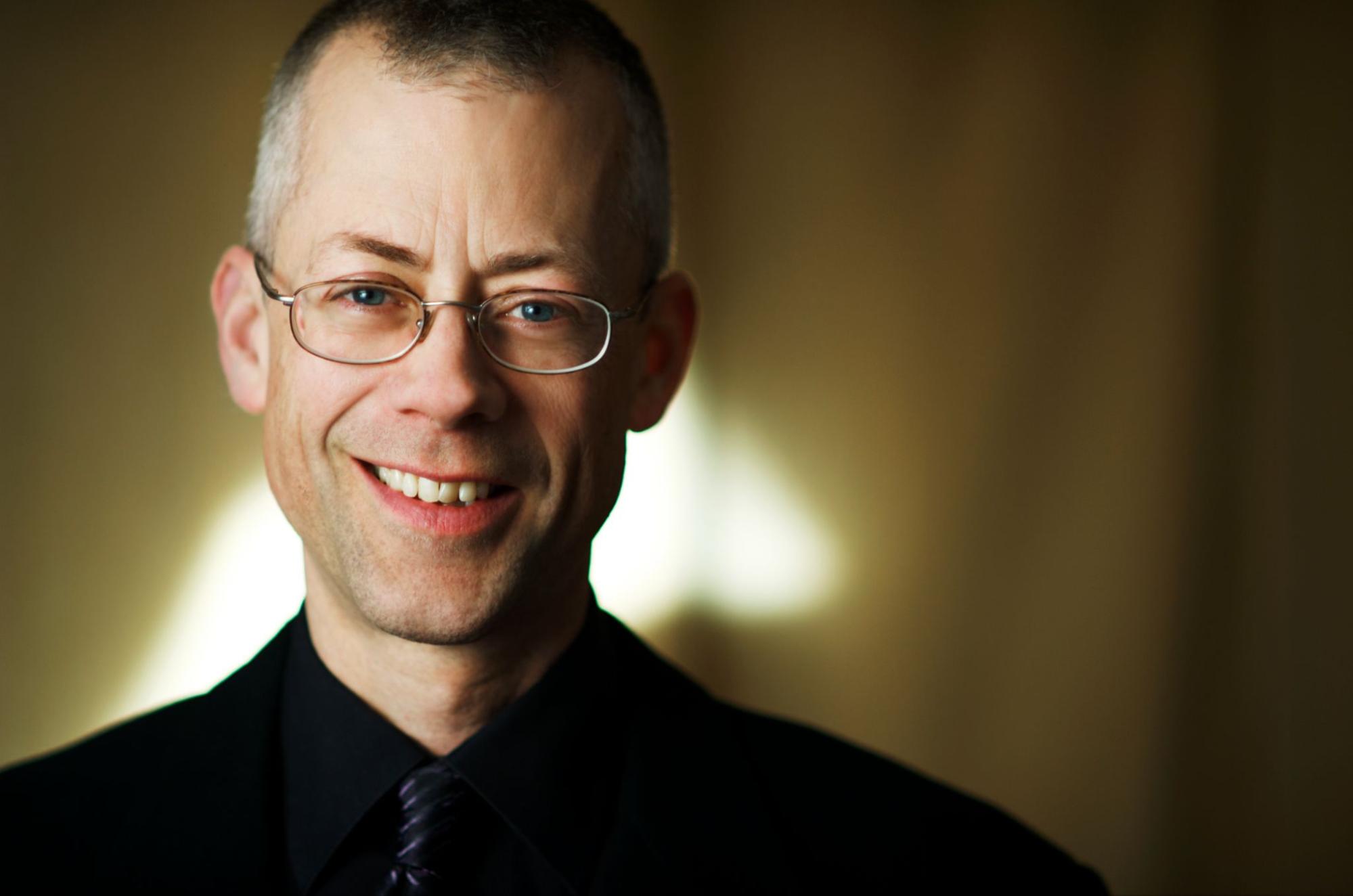
You have to cross the Atlantic to hear the complete works of Johannes Ockeghem (c. 1420–1497), regarded by his contemporaries as a musical genius, one of the leading composers of the Franco-Flemish school, between Guillaume Dufay and Josquin Desprez. Ockeghem introduced a new emotional dimension into music and exerted a profound influence on Renaissance musicians. In Boston, the vocal ensemble Blue Heron, founded in 1999 and directed by Scott Metcalfe, has established itself as one of the very few American strongholds devoted to Franco-Flemish polyphony and the repertoire of the early sixteenth century. For twenty-five years, this baroque violinist turned choral conductor has been bringing lost music by Canterbury, Ockeghem and their contemporaries back to life, in a country where early music remains marginal.
What inspired you to create Blue Heron?
Scott Metcalfe: The idea came from a chance encounter in 1999, on a bus. Two Boston singers wanted to relaunch a choir dedicated to Renaissance music and had heard that I was directing a small amateur ensemble. They asked me to become its musical director. We started modestly that fall, with the idea of building a fairly large vocal ensemble, somewhat in the spirit of English choirs. Our first repertoire was early 16th-century English music, and almost by chance we discovered the Peterhouse Part Books, a collection of music books copied around 1540 for Canterbury Cathedral, just before it was converted into a secular cathedral. These books had remained unused for centuries, because the tenor part—one of the five voices—had disappeared. While leafing through a modern edition of an antiphon by Hugh Aston, Ave Maria dive matris Anne, prepared by the musicologist Nick Sandon, I had a shock. The music was splendid: expansive, luminous, daring. Only afterwards did I realize that Nick himself had recomposed the missing part. His work was so natural that no break could be perceived; everything sounded like an intact sixteenth-century piece. That is how our long relationship with Peterhouse began.
These manuscripts truly are a rarity…
S. M.: Indeed, because many English sources from this period were destroyed during the Reformation. Peterhouse is therefore an exceptional archive. We devoted nearly fifteen years to this corpus. Five CDs resulted from it, almost entirely made up of works that had never been recorded (or even performed) since the sixteenth century. It was our laboratory. We felt like we were bringing voices back to life—voices that had been silenced for four hundred years. All this music was written for the Catholic liturgy of Canterbury; it was probably used for only seven years before being banned and then forgotten. The manuscripts were subsequently preserved in Cambridge, deprived of their tenor and one of the upper parts. That is the origin of Blue Heron: a group born out of the void left by a vanished voice.

Passionate about early music and want to read this subscriber-only article?
If you are not a subscriber, join the international Total Baroque community. Subscribe here from 5.00€.
I subscribe
If you are already a subscriber, sign in.
I sign in 

You must be logged in to be able to post comments.
Sign in