


 How can a forgotten Baroque opera be brought back to life? From sources that are sometimes incomplete to rehearsals, from cuts to the continuo part to the voices on stage, every revival requires a series of musicological and artistic decisions. Between the rediscovered score and the living performance, it is often necessary to reconstruct, adapt, transmit a style, and reinvent the very conditions of performance, without betraying the work’s dramatic balance or losing today’s audience.
  By
By 


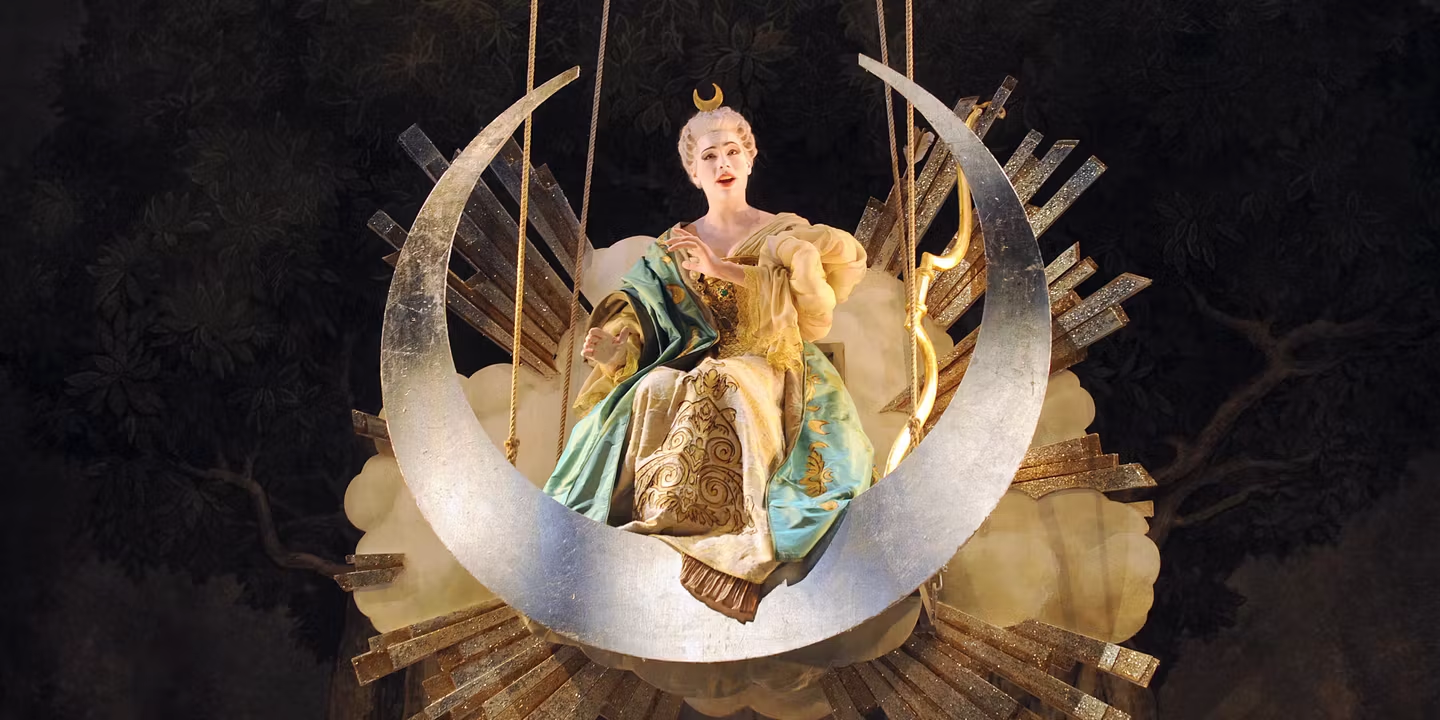
Whether in France or Germany, the rediscovery of Baroque opera today unfolds between two poles: the regular presence of a handful of now-famous works, particularly by Handel and Lully, and the exploration of works that have remained unknown, often championed by early music festivals across Europe. Yet unearthing an opera from the 17th or 18th century is not simply a matter of reopening a score that is ready to be performed. Dispersed sources, missing acts, lost sections, or uncertain attributions frequently require extensive reconstruction. For Il pomo d’oro by Antonio Cesti, for example, revived this summer in Innsbruck for the first time since its Viennese premiere in 1668, Ottavio Dantone had to reconstruct two of the opera’s five acts. More often than not, once the work has been recovered, everything still remains to be decided: what to cut, how the continuo should sound, how to train the singers, adapt the orchestra, cast the voices, conceptualize the staging, or choose the concert version. It is this transformation of the archive into a living performance that Total Baroque Magazine explores today.
Legitimate Cuts?
The first decision, once the work has been recovered, is rarely musical in the strict sense: it is dramaturgical. How can scores conceived for different running times, different rhythms, and different theatrical conventions be made to fit today’s stage? Cuts therefore become almost inevitable, but they cannot simply be made for the sake of convenience. I portentosi effetti della madre natura by Giuseppe Scarlatti, performed in Potsdam in 2022, was reduced from approximately four and a half hours to two and a half. That same year, at the Berlin State Opera, René Jacobs condensed Vivaldi’s three-act Il Giustino by presenting it with a single intermission: some arias were omitted, while others were shortened from within. Yet the conductor also points to the limits of such an approach: reducing the recitatives too drastically risks making the plot incomprehensible, especially when, as in Handel’s operas, they are already relatively concise in the original.
“Continuo Islands,” or the Conductor’s Signature
Yet adapting a Baroque score is not simply a matter of cutting. It also requires an understanding of what truly carries the drama within the work. When a Baroque opera does not immediately captivate through popular arias such as the famous “Ombra mai fu” (Serse) or “Lascia ch’io pianga” (Rinaldo), its appeal often lies in the instrumentation of the basso continuo in the recitatives and in the dramatic flow of the recitar cantando, particularly in 17th-century works, where the virtuosic or lyrical da capo aria was still in its infancy. Thus, for Adonis by Johann Sigismund Kusser, revived in Stuttgart in 2022, German conductor Jörg Halubek created three distinct “continuo islands,” in which instruments such as the cello, bassoon, lute, and harp were combined with the harpsichords, allowing the characters to be distinguished through their sound world. Thanks to such choices, today’s conductors partially assume a role that, during the Baroque period, belonged to the composer himself.
Critical Editions
The situation is different when critical editions, complete with performance materials and a critical report, are already available. Such editions nevertheless remain rare in the field of Baroque opera. Even for composers as central as Handel, Telemann, Monteverdi, Rameau, Lully, or Vivaldi, the entire operatic corpus is not yet available in critical editions accompanied by performance materials ready for use. In the case of Johann Adolph Hasse, arguably the most celebrated opera composer of his time, a scholarly edition of his works was launched in 1999, but it is limited to a selection; in the field of musical theatre, only two works have been published to date. Even when a work is famous and relatively well documented, source research therefore remains an active process. Recent research conducted by Benoît Dratwicki and the Centre de musique baroque de Versailles on Lully’s Atys has demonstrated this: the discovery of a manuscript dating from the time of the opera’s 1676 premiere led to a reassessment of the orchestra’s balance, drawing a clearer distinction between the strings, continuo, and winds, the latter appearing less as simple doubling instruments than as occasional colours, often closely tied to the action on stage.
Passionate about early music and want to read this subscriber-only article?
If you are not a subscriber, join the international Total Baroque community. Subscribe here from 5.00€.
I subscribe
If you are already a subscriber, sign in.
I sign in 

You must be logged in to be able to post comments.
Sign in