


 Liesl Odenweller is an American singer. She runs the “Venice Music Project” association to revive a forgotten part of Venice’s musical heritage.
  By
By 


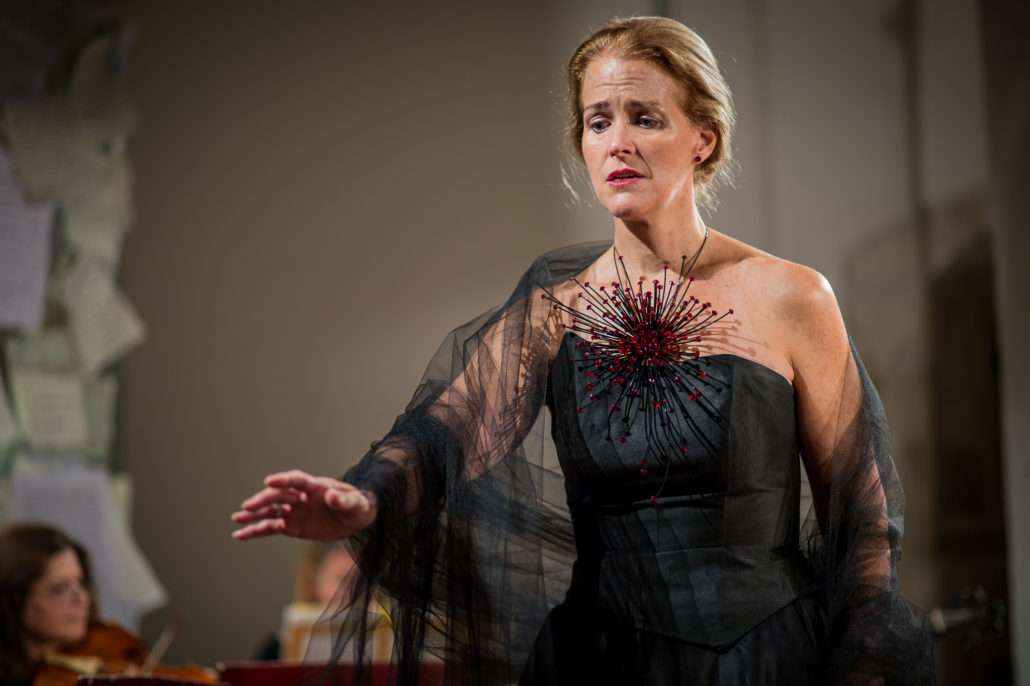
“Strangers in Venice”—the title of one of the Venice Music Project’s concerts could well apply to the entire ensemble. Since 2013, American soprano Liesl Odenweller and her friends have been practicing “musical archaeology” in the City of the Doges, breathing new life into forgotten music at the Scuola Grande dei Carmini.
Soprano, Tiepolo and Prosecco
It was fall, the tourist crowds were beginning to thin out, and the contemporary art biennale was set to close its doors a few weeks later. Yet, at the doors of many churches in Venice, one could still find the usual flood of concert posters aimed at tourists: “Vivaldi and The Four Seasons.” Near Campo Santa Margherita, at the entrance to the Scuola Grande dei Carmini, and on social media, one particular announcement stood out for its tone and content. The non-profit Venice Music Project was offering a concert titled: Strangers in Venice, with an enticing teaser: “Venice has always been a city open to visitors just passing through and to those who decide to settle. German composer Johann Rosenmüller, who took refuge in Venice in 1655 after being embroiled in a scandal in Leipzig, knew this well. Despite his foreign status, he secured a post at the music chapel of San Marco, taught music at the Pietà, and composed in the Italian style, inspired by the great Venetian masters, gradually integrating into the city’s vibrant musical scene.”
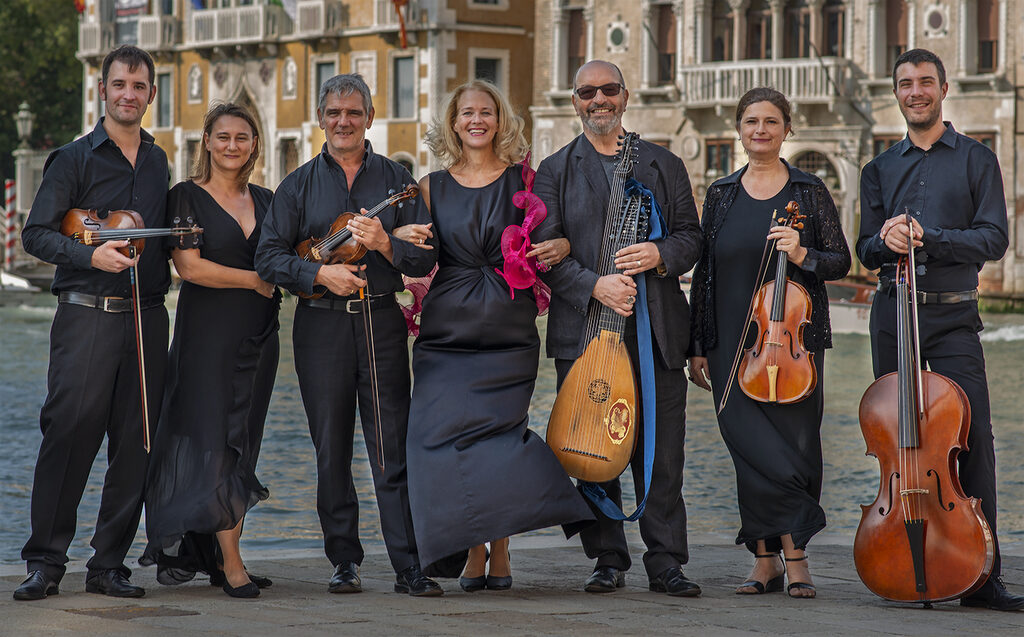
The programme, offering music by Johann Rosenmüller and Johann Adolf Hasse, featured sopranos Liesl Odenweller and Caterina Chiarcos with the Venice Music Project Ensemble. The concert was scheduled for Saturday at 7 p.m. On the night in question, about sixty people gathered at the Scuola Grande dei Carmini. After the public had a chance to admire the magnificent ceiling fresco by Giambattista Tiepolo on the upper floor, the concert began downstairs in the chapel. For an hour, the Venice Music Project Ensemble (in this case violin, cello, cornetto, and harpsichord), joined alternately by the two sopranos, offered a selection of arias by the composers as announced—Rosenmüller and Hasse, but also Schütz, Kapsberger, and Handel. After the concert, friends of the organization and donors were treated to a glass of prosecco.
The following Saturday, Venice Music Project announced another concert, Swan Song, again with a compelling title: “The spy, the libertine, and the soldier: three internationally renowned singers, leading men of the Venetian theatres in the 18th century, celebrated by the public and courted by Europe’s wealthiest patrons to perform in their opulent courts. Atto Melani, the French king’s spy; Alessandro Stradella, lover to a noblewoman; and Kaspar Förster, the soldier of the Venetian Republic against the Turks, tell us with their own music what a singer’s life was like once the stage lights faded.”

Passionate about early music and want to read this subscriber-only article?
If you are not a subscriber, join the international Total Baroque community. Subscribe here from 5.00€.
I subscribe
If you are already a subscriber, sign in.
I sign in 

You must be logged in to be able to post comments.
Sign in