


 The conductor walks us through the new production of Cavalli’s opera, which he will lead this summer in the courtyard of the Archevêché in Aix-en-Provence.
  By
By 


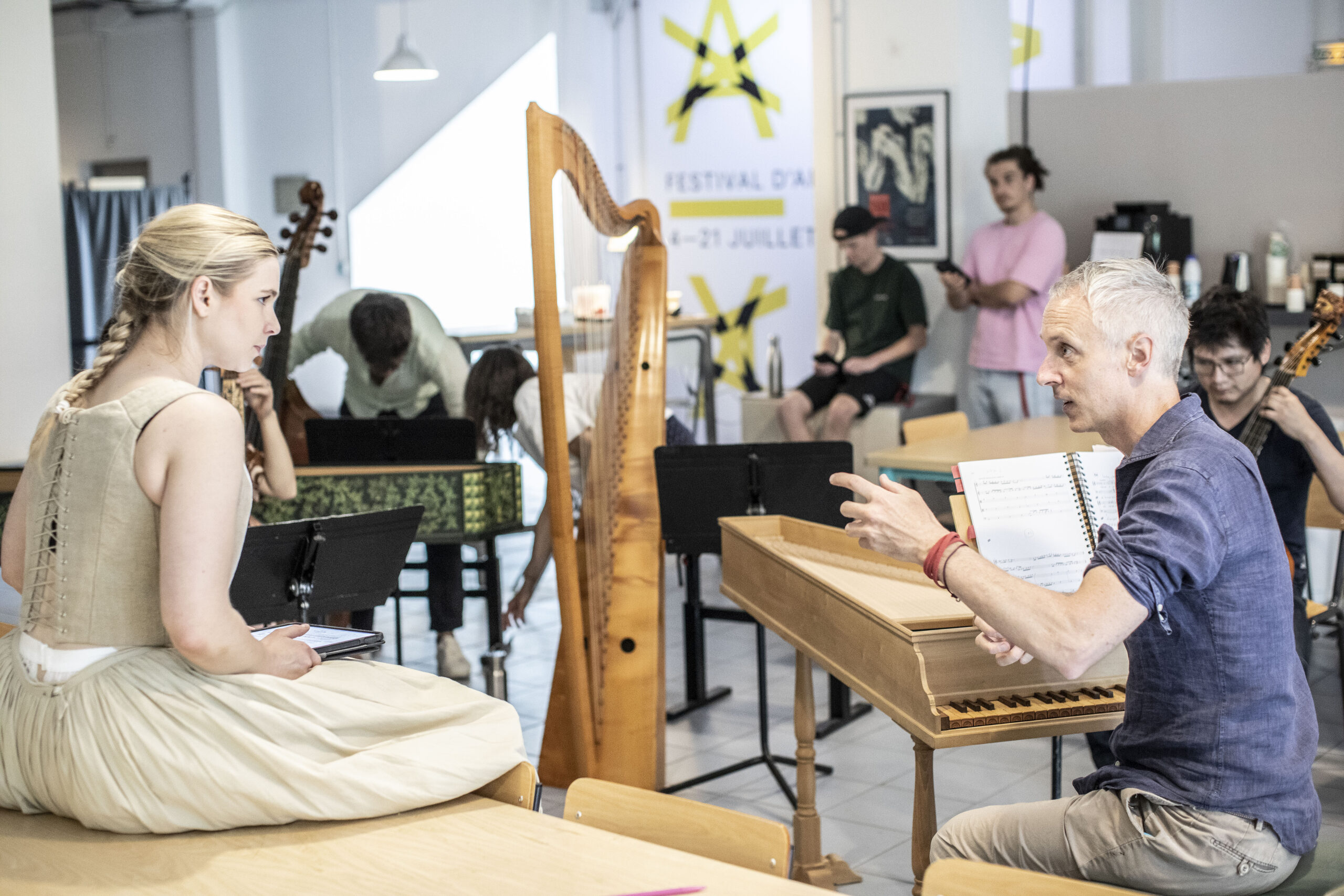
He is the musical director of La Calisto by Francesco Cavalli, a new production at the Festival d’Aix-en-Provence these days. Harpsichordist and conductor Sébastien Daucé explains the work he has done over the past two years on a piece that touches him deeply. How, with the musicians of Ensemble Correspondances and ten singers, can one “reimagine and then shape a sound that has evaporated forever” from the 17th century?
What was the starting point for this adventure, La Calisto by Francesco Cavalli at the Théâtre de l’Archevêché?
Sébastien Daucé: At the 2021 Festival d’Aix-en-Provence, we performed Combattimento, la théorie du cygne noir—Monteverdi, Rossi, Cavalli—at the Théâtre du Jeu de Paume. Pierre Audi liked it and wanted to launch a second project with us. I immediately proposed Cavalli’s La Calisto. I imagined it in that small jewel box of the Jeu de Paume, which resembles the Venetian theatre where it premiered, with the same audience capacity. A few months ago, Pierre made a major decision: this work deserves the Archevêché.
What brings us back to Pierre Audi, who died suddenly in early May this year…
S.D.: Pierre Audi was a person of great intensity. He had this quality of trusting people very intuitively, very viscerally. Our first project came out of our meeting in 2019. I was incredibly impressed to be in front of him. We only did two projects together, but each one was a huge gamble. He was a challenger, capable of being extremely loyal in his choices. When he told me La Calisto would be staged at the Théâtre de l’Archevêché, I was not convinced. Now, I’m completely confident and thrilled that he made this bold choice. So yes, I thank him through the clouds for bringing me into this.
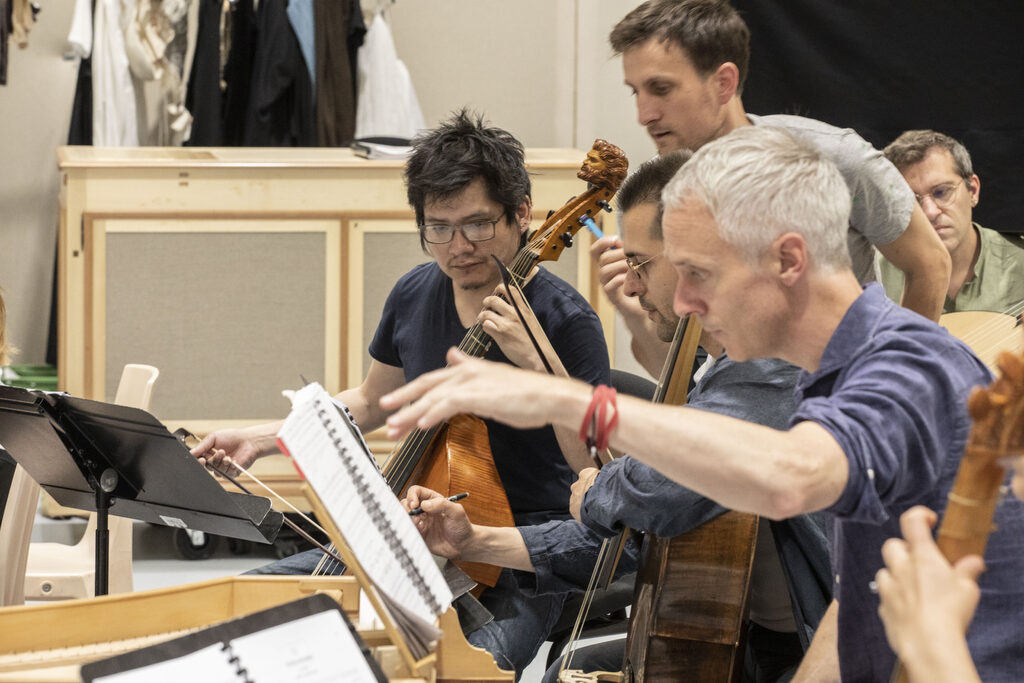
What does La Calisto represent to you?
S.D.: It’s the title I’ve listened to the most, and one I love with my whole being. I wanted to go back to the edition from A to Z: there is only one musical source. I worked for a long time on my computer with the digitized score. Finally, three months ago, I travelled to Venice to see the physical object. The score is in magnificent condition at the Marciana Library on St. Mark’s Square. You can see the handwriting of Cavalli’s wife, his assistant, and his own. The different hands overlap. You can see all the layers: red pencil marks for last-minute changes, slight text modifications, a figured bass correction… You learn a lot about how it was probably performed in 1651.
Passionate about early music and want to read this subscriber-only article?
If you are not a subscriber, join the international Total Baroque community. Subscribe here from 5.00€.
I subscribe
If you are already a subscriber, sign in.
I sign in 
You must be logged in to be able to post comments.
Sign in