


 By transforming a chamber drama into a sumptuous fresco, Sébastien Daucé and his forces restore to Cavalli’s “La Calisto” the breadth of a larger canvas. A generous reinterpretation captured at the Festival d’Aix-en-Provence in France.
  By
By 


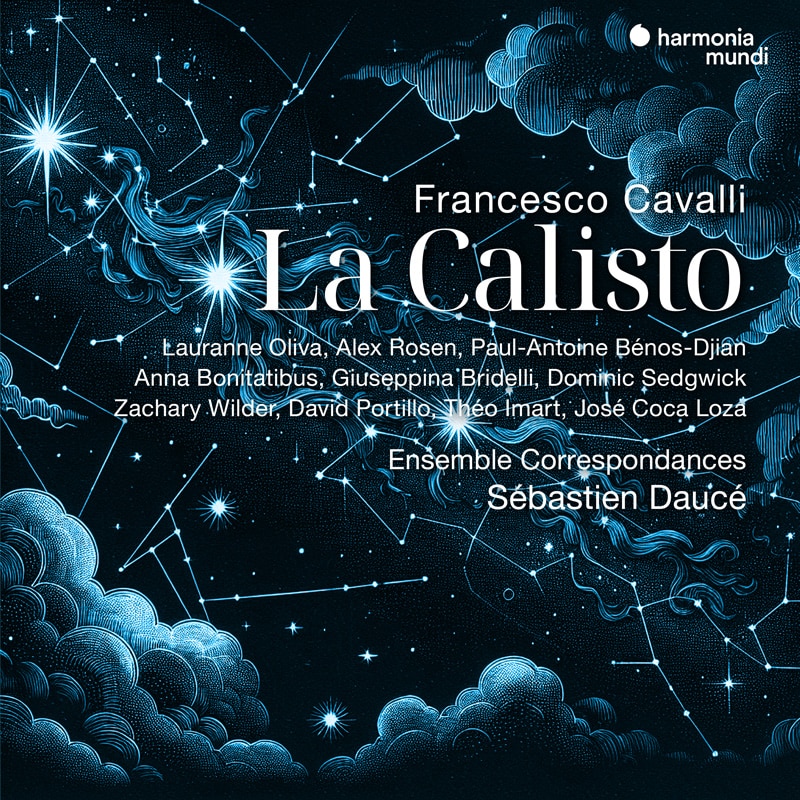
Recorded live during the 2025 edition of the Festival d’Aix-en-Provence, this three-disc set released by harmonia mundi captures Francesco Cavalli’s emblematic opera La Calisto in a new orchestral configuration. Far removed from the modest forces of the work’s Venetian première in 1651, Sébastien Daucé and his Ensemble Correspondances opt for an expanded orchestration suited to the monumental setting of the Provençal festival. Carried by a well-balanced vocal cast and a richly textured continuo, this live account fully embraces the density of this mythological tale of metamorphosis.
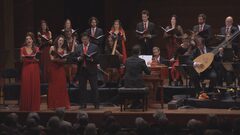
Created in the intimate setting of the Teatro Sant’Apollinare with only a handful of instrumentalists – five or six musicians at most – La Calisto is here reframed through an ambitious orchestral reinvention. In his introductory note, Sébastien Daucé puts forward an appealing hypothesis: what might the score have sounded like had Cavalli enjoyed the unlimited resources of a great operatic court? To answer that question, the conductor inserts symphonic pieces from the period by Merula, Rossi, Arrigoni, Valentini and Marini, adds two viola parts and brings together more than thirty instrumentalists. The booklet sheds light on this process of contextual adaptation and also contains the complete libretto, in the original Italian and in English translation, though not in French. While this sonic opulence contrasts with the chamber-like transparency once favoured by René Jacobs, it provides an enveloping framework, despite occasional heaviness in the massed forces and symphonic insertions that can at times feel detached from the pure musical flow. The recording preserves the immediacy of the stage: the movement of bodies, strongly defined spatial effects and slight vocal imperfections inherent in live performance constantly remind us of the life of the theatre.
Much of the project’s success rests on the singers’ embodiment of their characters, beginning with the title role: Lauranne Olivia delivers a Calisto of great elegance. Her upper register is delicate, her phrasing sustained, conveying the innocence of the nymph caught in the gods’ intrigues. Opposite her, Alex Rosen brings considerable flexibility to Jupiter, moving from the commanding low register of the sovereign god to a controlled falsetto when he assumes Diana’s appearance in order to seduce his target.
The rest of the cast is equally vivid:
- Anna Bonitatibus (Juno / Eternity): moves from the vengeful brilliance of Act II to poignant introspection in the aria on the female condition, “Moglie mie sconsolate”, supported by piani of considerable expressive refinement.
- Paul-Antoine Bénos-Djian (Endymion): embodies the character’s vulnerability both through his timbre and through the nuances of his singing, in which ornamentation enriches the melodic line with discernment.
- Giuseppina Bridelli (Diana): uses rhythmic precision and taut phrasing to establish the goddess’s coldness. Her singing unfolds with incisive high notes, despite articulation that occasionally recedes into the background.
- Dominic Sedgwick (Mercury): brings out the god’s mischievousness through fine vocal agility and a high register tending towards that of a light baritone.
- Zachary Wilder (Linfea): lends his slender voice to the travesti role of the nymph, emphasising her femininity while maintaining the narrative effectiveness of “Costrette da la sete”.
- David Portillo (Pan / Nature): offers airy high notes, even if some effects might benefit from greater finesse.
Special mention should go to the consoling duet between Théo Imart and José Coca Loza, respectively the Little Satyr and Sylvan, at the end of Act I, which offers a moving demonstration of empathy.
While Sébastien Daucé’s direction sometimes favours momentum and collective energy over rhythmic precision and polyphonic clarity, this recording makes its mark through its generosity of sound. An intensely inhabited reading that demonstrates the formal modernity of Venetian Baroque theatre.
Technical details
Title: La Calisto
Composer: Francesco Cavalli (1602–1676)
Libretto: Giovanni Faustini (1615–1651), after Book II of Ovid’s Metamorphoses
Performers: Lauranne Oliva, Alex Rosen, Paul-Antoine Bénos-Djian, Anna Bonitatibus, Giuseppina Bridelli, Dominic Sedgwick, Zachary Wilder, David Portillo, Théo Imart, José Coca Loza; Ensemble Correspondances, Sébastien Daucé (conductor)
Label: harmonia mundi
Format: digital, 3 CDs
Duration: 2h48
Release date: 15 May 2026

You must be logged in to be able to post comments.
Sign in