


 She has sung with some of the figures who have shaped the recent history of early music – Philippe Herreweghe, Reinhard Goebel, René Jacobs and Christophe Rousset – and learnt the Baroque repertoire at first hand alongside them, rather than through specialist training. In fact, Céline Scheen has never tried to build a ‘career’ in the conventional sense: she prefers to speak of encounters, instinct and human affinity, and approaches both opera and the profession with striking freedom. Still very active on stage while also teaching at the Royal Conservatoire of Liège, the Belgian soprano speaks with refreshing candour and reveals an unexpected second life that has become essential to her balance…
  By
By  10 minutes


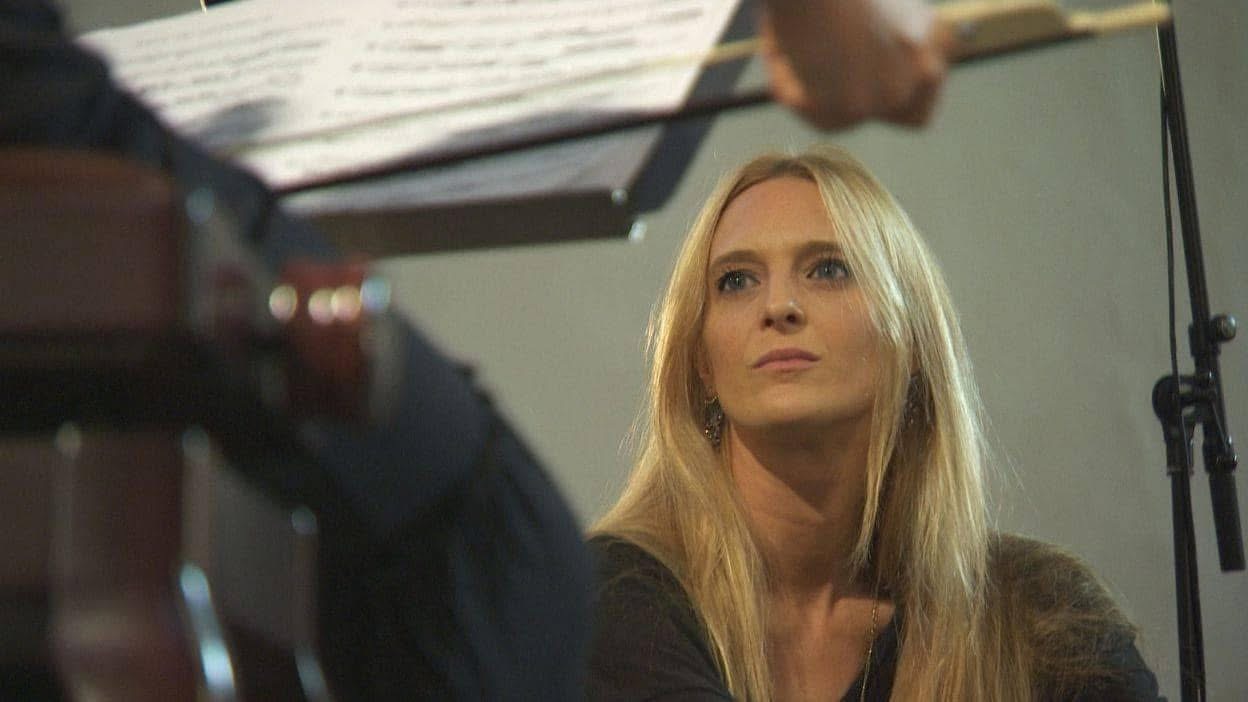
For nearly thirty years, Belgian soprano Céline Scheen has carved out a path through Europe’s early-music landscape that is uniquely her own. Yet nothing initially pointed her towards Baroque music, when an audition for the film Le Roi danse and her meeting with Reinhard Goebel led her to discover, almost simultaneously, the harpsichord, period instruments, and a whole new world of sound. Christophe Rousset, Philippe Herreweghe, René Jacobs, Philippe Pierlot, Leonardo García-Alarcón, and, later, Christina Pluhar would go on to mark the stages of this journey. Now passing on her own experience at the Royal Conservatory of Liège, the soprano takes a remarkably free-spirited view of her profession, the passage of time, and her relationship with opera. She also explains how Zumba transformed her relationship with her body, rhythm, and even the way she sings. She looks back without nostalgia, continuing to nurture what has inspired her from the very beginning: curiosity, freedom, and the joy of making music with the people she loves.
At the beginning of your career, you started working with Philippe Herreweghe, Reinhard Goebel, René Jacobs, Christophe Rousset… What did you learn from such masters?
Céline Scheen: In a way, they educated me. I was incredibly lucky because I came from a background in which I hadn’t studied early music. I had studied in Belgium, then in London, but always without really exploring this repertoire. It all began with an audition for the music for Gérard Corbiau’s film Le Roi danse. That was where I met Reinhard Goebel. And at that audition, I sang with a harpsichord for the first time! I was very young, and I fell head over heels in love with this music, with these instruments. I felt as though I had found a kind of truth in them. The sound of the strings, the instrumental colours: all of it overwhelmed me. At the time, I was still singing Frasquita in Carmen! So I wasn’t at all specialised in Baroque music. Then everything happened very quickly: Reinhard Goebel, Christophe Rousset, Philippe Herreweghe… I also met Leonardo García-Alarcón, who is the same age as me and who, even then, was already unearthing scores. He wasn’t yet the well-known musician he would become, but he was already a brilliant musician. In the end, I learned the different styles directly from those who wrote—and continue to write—the history of the early-music revival. I was incredibly fortunate.
So you didn’t really “learn” Baroque music at the conservatory?
C. S.: No, and perhaps that is precisely what helped me. In the opera world, some people would say to me: “You want to do early music? But you can’t just improvise that!” Yet this music corresponded exactly to my sensibility. I could open myself up to it very easily, simply by listening to others. I absorbed everything because it touched me so deeply. I didn’t learn from a textbook or by taking exams: I was on stage with these musicians, listening to the instruments, the phrasing, the colours. I also worked a great deal with the viol player and conductor Philippe Pierlot, and we still work together today: we’ve been “battling it out” together for almost thirty years! That is also why I love teaching so much today. I have been teaching at the Royal Conservatory of Liège for six years. In turn, I try to give students a “taste” of things, because that is how I myself learned.
Among those early years, which memories were particularly formative?
C. S.: Christophe Rousset, certainly. He hired me almost without having heard me, simply because he knew I had taken part in Le Roi danse. Very quickly, I sang chamber music with him, with very small forces, including Couperin’s Leçons de ténèbres. It was an extraordinary experience for me. Above all, he gave me confidence. He very quickly made me understand that my instinct was speaking, and that it spoke rather well. That shaped me enormously. And then Reinhard Goebel… He was a monster, in every sense of the word! But I loved working with him. German music is also somewhat part of my roots: my father conducted a choir, I grew up near the German border, and we sang a lot of Bach. To be hired at a very young age to sing this music in Germany, in its own context, was extraordinary. What I also learned from these personalities was their freedom. Goebel could be extremely wild. Seeing that psychological and artistic freedom left a profound impression on me. When you’re young, you think there are an enormous number of rules. They blew them apart. In a way, they gave me permission to be free in turn.

Passionate about early music and want to read this subscriber-only article?
If you are not a subscriber, join the international Total Baroque community. Subscribe here from 5.00€.
I subscribe
If you are already a subscriber, sign in.
I sign in 

You must be logged in to be able to post comments.
Sign in