


 From a ruined abbey on the Franco-Belgian border, in northern France, Jean-Michel Verneiges decided to create a festival. And with good reason: the abbey houses a precious treasure, a historic organ three hundred years old. Today, the Baroque festival of Saint-Michel-en-Thiérache celebrates its 40th anniversary, from 7 June to 5 July, with a special anniversary edition featuring 12 concerts and bringing together leading figures in the field, including Jordi Savall and Hespèrion XXI, Julien Chauvin and Le Concert de la Loge, Christina Pluhar and L’Arpeggiata, and the French viol player Lucile Boulanger.
  By
By 


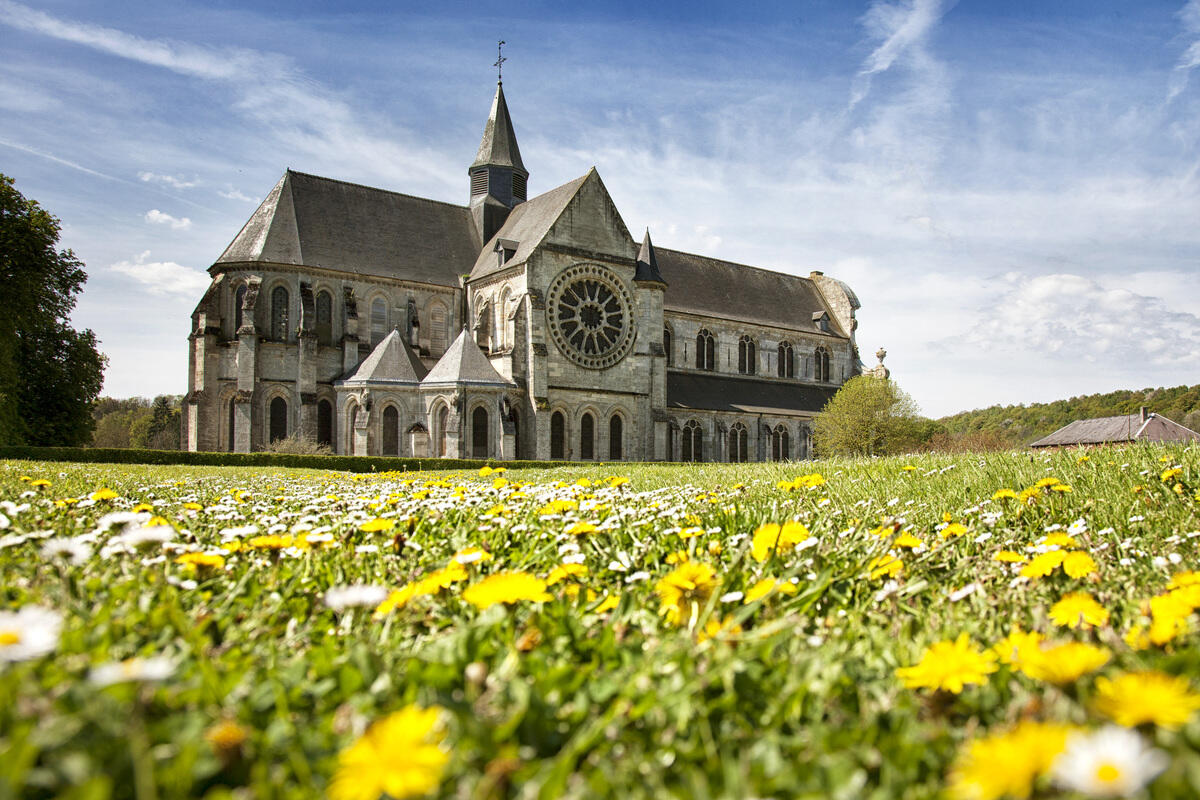
In the heart of the Aisne region, in northern France, the Abbey of Saint-Michel-en-Thiérache is something of a heritage exception. Weakened by a devastating fire in 1971, traces of which remain visible today, it houses an invaluable musical treasure: a historic organ built in 1714, whose restoration gave rise, in the 1980s, to one of the most celebrated Baroque festivals in the region. Since its first edition in 1987, the festival has grown around this instrument, but also around a broader vision: to make the abbey a vibrant hub for music, cultural transmission, and community gatherings. From June 7 to July 5, 2026, the Saint-Michel-en-Thiérache Festival will celebrate its fortieth anniversary with two symbolic pillars of the Baroque repertoire: Monteverdi’s L’Orfeo as its opening performance and Bach’s Mass in B Minor as its closing event. Organist, festival director since its inception, and president of ADAMA (the organization created by the Departmental Council of Aisne to develop a comprehensive musical project across the department), Jean-Michel Verneiges works to promote this unique site. In this interview, he looks back on the festival’s origins, the famous “France Musique train,” its many ties to the local area, its educational partnerships, and the future of an event seeking to extend its roots beyond its emblematic abbey.
Where did the idea come from to create a festival in this ruined abbey?
Jean-Michel Verneiges: In June 1987, there was nothing here except this abbey, which was then in a precarious state. The monastic buildings were open to the sky! There had been a very serious fire in 1971, from which the church had miraculously survived, along with its organ. It was the restoration of this organ in the 1980s—a precious historic French instrument—that inspired me to bring early music to this place. In my work with the Departmental Council through ADAMA, whose mission is to develop a comprehensive musical project across the department, the issue was not at all to find a venue for an early music festival. The original idea was to promote this historic organ, this deserted place where, as early as 1985-86, we had begun presenting small organ concerts. I remember audiences of 25 or 30 people who had simply wandered in because they found the door open. Then came the founding moment: a day organized with the public radio station France Musique…
Yes, the famous “France Musique train”!
J.-M. V.: Exactly. I went to see Gilles Cantagrel, who was then the station’s director, to propose a project: “I have this venue, with this absolutely fabulous instrument, and I imagine a full day of music. We would feature the organ in the morning and a more vocal and instrumental concert in the afternoon. We would hire a caterer to provide lunch on site and charter a special train departing from Paris-Nord to Hirson, the small town five kilometres from Saint-Michel. If you are interested, I will produce the day, we will call it the ‘France Musique Train.’ You handle the publicity and broadcast both concerts live.” They were interested—amused, even!
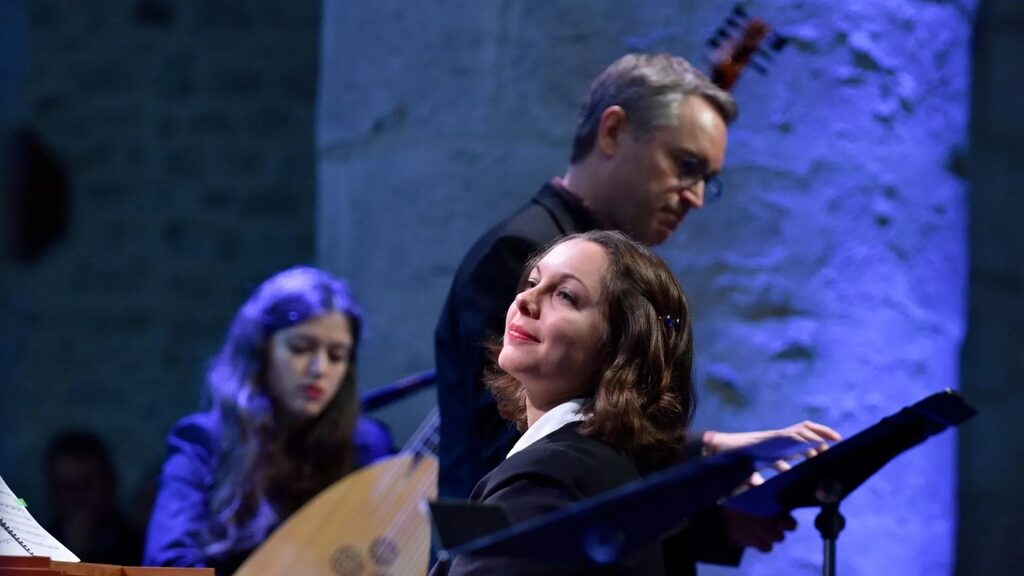
We welcomed 500 people, who arrived aboard Trans Europe Express carriages, those metallic train cars with a red stripe along the side. It was a tremendous success. If one wished to compare it with astronomy, and keeping all proportions in mind, that event was the festival’s Big Bang.
Passionate about early music and want to read this subscriber-only article?
If you are not a subscriber, join the international Total Baroque community. Subscribe here from 5.00€.
I subscribe
If you are already a subscriber, sign in.
I sign in 

You must be logged in to be able to post comments.
Sign in