


 Having fled to Paris, the Venetian composer and singer Antonia Bembo (1643–1715) led a truly romantic life, marked by a marital escape, royal patronage, and the creation of a musical language that blended Italian and French styles. A pupil of Cavalli, her only opera, “Ercole amante”, is on the bill at the Paris Opera from 28 May.
  By
By 


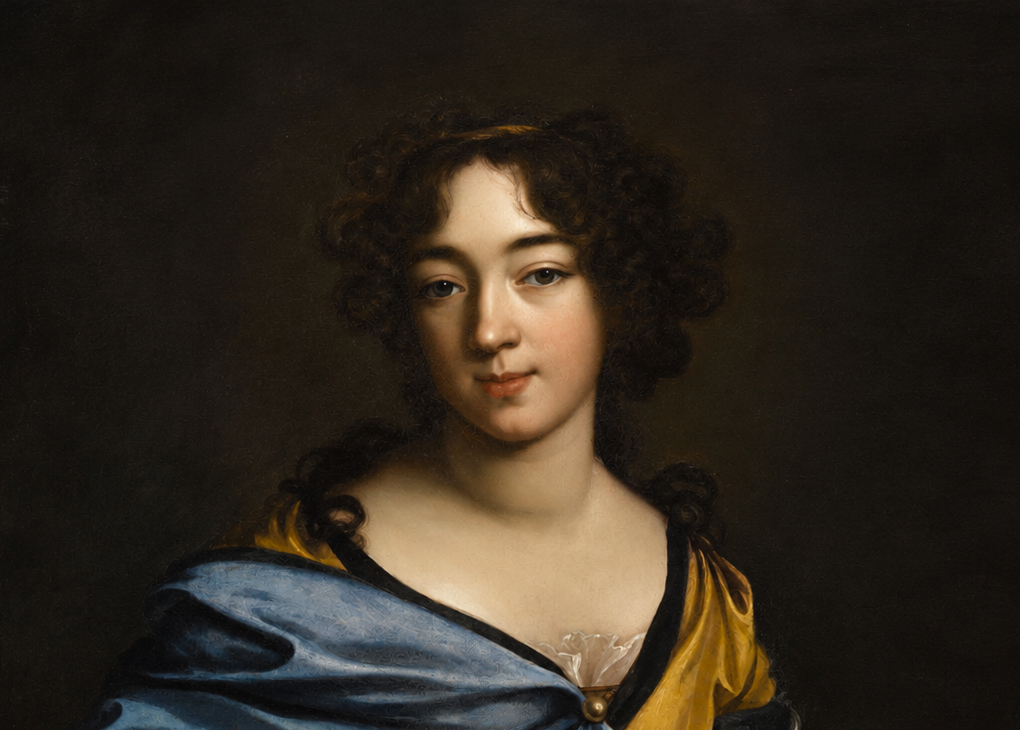
The destiny of Antonia Bembo (1643–1715) is extraordinary. Though her voice resonated from Venice to Paris, it was under the protection of Louis XIV that she composed some of her most ambitious works, including the opera Ercole amante, currently on the bill at the Paris Opera under the direction of Argentine conductor Leonardo García-Alarcón. A pupil of Cavalli, an unhappy wife, a mother forced into exile, and a musician granted a royal pension by the Sun King, Antonia Bembo moved through the Grand Siècle like a character from a novel. Let’s discover the romantic destiny of an Italian woman in Paris!
Piano: Antonia in Paris
Unlike the Emily of the TV series, Antonia did not come from the United States. She was born around 1640 in Venice under the name Antonia Padoani. Though of modest background, her family provided her with an early musical education, having recognized her remarkable potential: young Antonia possessed an extraordinary voice. Her father, a physician, is said to have done everything possible to cultivate this talent, at a time when a daughter’s musical education could also become a form of social capital, even an immaterial “dowry.”
In 1654, at only fourteen years old, she therefore began studying with the famous Lombard composer Francesco Cavalli, then aged fifty-two, who, incidentally, was also the teacher of composer Barbara Strozzi (1619–1677). From then on, she was presented as “the girl who sings.”
This training placed Antonia Bembo at the heart of one of the most fertile musical environments in Baroque Europe. Venice was then a capital of public opera, vocal virtuosity, and exceptional female careers, but also a socially restrictive world where a woman’s talent was not always enough to guarantee her independence…
Masques et bergamasques: Paris, a city of refuge
After her divorce proceedings against her violent and unfaithful husband, Lorenzo Bembo, failed, Antonia Bembo fled to Paris fled to Paris in 1677, leaving behind her three children. She is believed to have taken advantage of Carnival season to escape in disguise, probably with the help of guitarist Francesco Corbetta, a cosmopolitan musician familiar with Europe’s courts. It was he, former guitar teacher to the young Louis XIV, who introduced Antonia Bembo to Versailles.
In Paris, her voice captivated Louis XIV: the Sun King took her under his protection and granted her a pension. Antonia Bembo, then thirty-seven years old, settled in the convent of the Filles de Saint-Chamond, where she would live until her death. For her, the convent became at once a refuge, a place of retreat, and a paradoxical space of freedom, where she could compose far from Venice while never entirely severing ties with her Italian language and memories.
The composer’s work has a somewhat autobiographical quality to it. In any case, it is hard not to draw a connection between her flight and the evocative title of this piece Mi basta così (“I’ve had enough”), here performed by the ensemble Armonia delle Sfere:

Passionate about early music and want to read this subscriber-only article?
If you are not a subscriber, join the international Total Baroque community. Subscribe here from 5.00€.
I subscribe
If you are already a subscriber, sign in.
I sign in 

You must be logged in to be able to post comments.
Sign in