


 Do you know about the “trunk arias” that opera singers carried with them in their luggage in the seventeenth and eighteenth centuries? In this third instalment, we set off across Europe, in search of Italian opera. After the journey of church chant in the early Christian centuries and the travels of Franco-Flemish music during the Renaissance, this episode invites us to discover a genre newly born in Florence which, in less than a century, conquered all of Europe.
  By
By 


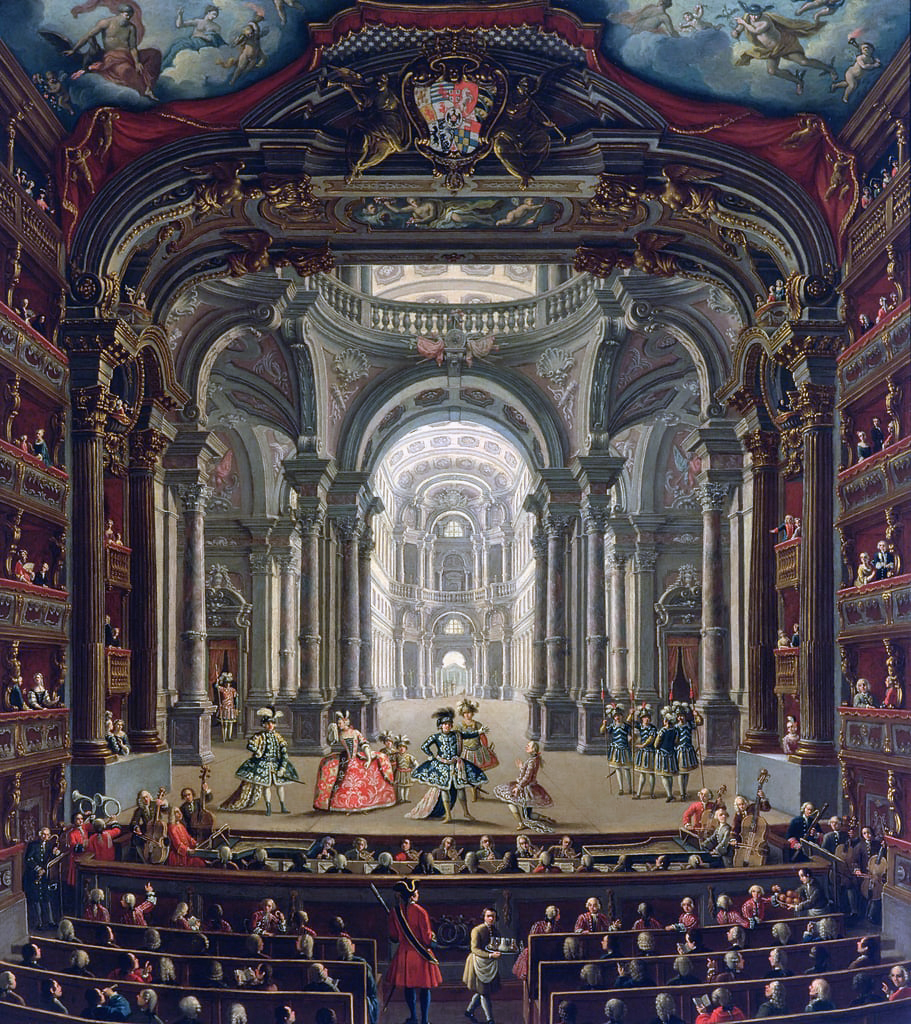
The first half of the seventeenth century profoundly reshaped Europe. Economic crisis (1620), the plague of 1630 in northern Italy, the Thirty Years’ War (1618–1648): societies faltered, while cities grew and absolutist monarchies asserted themselves. In this shifting context, music too was transformed: the polyphony of the Franco-Flemish composers, long the continent’s common language, gave way to new, more contrasting styles. Among these developments, the birth of Baroque opera marked a decisive turning point. Born in Florence around 1600 with Jacopo Peri (La Dafne, Euridice), this new genre sought to revive the ancient ideal of a theatre uniting music and drama. Claudio Monteverdi soon gave it a fully realized form with L’Orfeo, created in Mantua in 1607. Within a few decades, Italian opera established itself and began to radiate far beyond the peninsula.
From Florence to Venice
This luxury entertainment, initially accessible only to a very small group of privileged spectators gathered in a very small venue, quickly spread across Europe. It soon appeared in other settings, in courts of varying power that had the means to finance performances in their theatres, with local musicians or others specially invited for the occasion. Very soon, operas could be heard in other cities of northern Italy, then in Salzburg in 1614, Vienna in 1626, Prague in 1627, Warsaw in 1628. Here too, the audience consisted of a prince’s court and his foreign guests, and is therefore extremely limited.
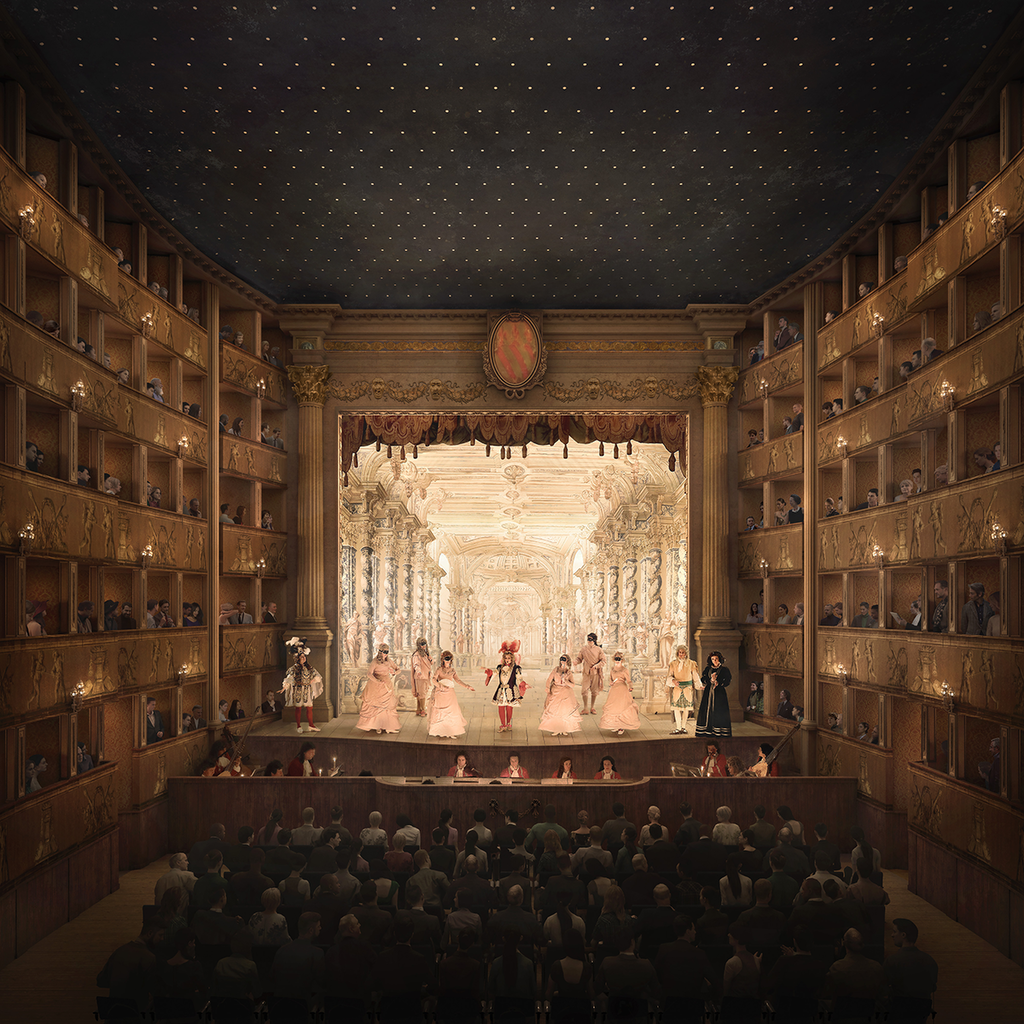
Everything changed in 1637 in Venice: a troupe from Rome settled in the Teatro San Cassiano, owned by the noble Tron family, which had obtained permission to stage a dramma per musica, a fully sung theatrical spectacle, during Carnival. There had not yet been public concerts at that date; it was the first time that people—at least those who could afford it—would be able to pay to listen to music, with a spectacle included. This innovation of charging admission to an opera would prove enormously successful: within a few Carnivals, opera performances had multiplied in Venice, across numerous venues. For theatre owners, the prospect of making a fortune drove them and encouraged them to call upon a wide range of talents. A librettist, a composer, singers, instrumentalists, carpenters for the sets, seamstresses for the costumes, stagehands, ushers—and above all, an impresario—were required. In fact, it was with the impresario that everything began. In the seventeenth century, the impresario was responsible for engaging all the figures needed to mount a production. Sometimes he held several roles, as in the case of Francesco Cavalli (1602–1676): he might be the librettist or the composer, and/or one of the singers. Sometimes he already led a travelling troupe that he brought with him. Generally, the financial burden of the enterprise rested on his shoulders. For this was indeed an enterprise!
In this third instalment of the journeys of music, the business of music emerges!
It had not been a question in the journey of early Christian church chant, nor really in the spread of the Franco-Flemish style across Europe. Even if, already at that time, singing and music were a way of dazzling audiences and demonstrating wealth and power!
From 1637 onwards, Italian opera would be performed both in court theatres, where expense was no object (taxes would provide!), and in public, paying theatres, where fortunes might be made—but where finances required careful attention…
Passionate about early music and want to read this subscriber-only article?
If you are not a subscriber, join the international Total Baroque community. Subscribe here from 5.00€.
I subscribe
If you are already a subscriber, sign in.
I sign in 

You must be logged in to be able to post comments.
Sign in