


 In Cleveland as in London, Apollo’s Fire defies the narratives of classical music’s decline. Founded in 1992 by harpsichordist and conductor Jeannette Sorrell, the ensemble has, in just a few decades, established itself as one of the most dynamic forces in the American Baroque landscape. Balancing fidelity to Affekt with bold programming, it continues to attract ever-growing audiences, driven by a vibrant stage presence and an undiminished artistic vision.
  By Kyle MacMillan


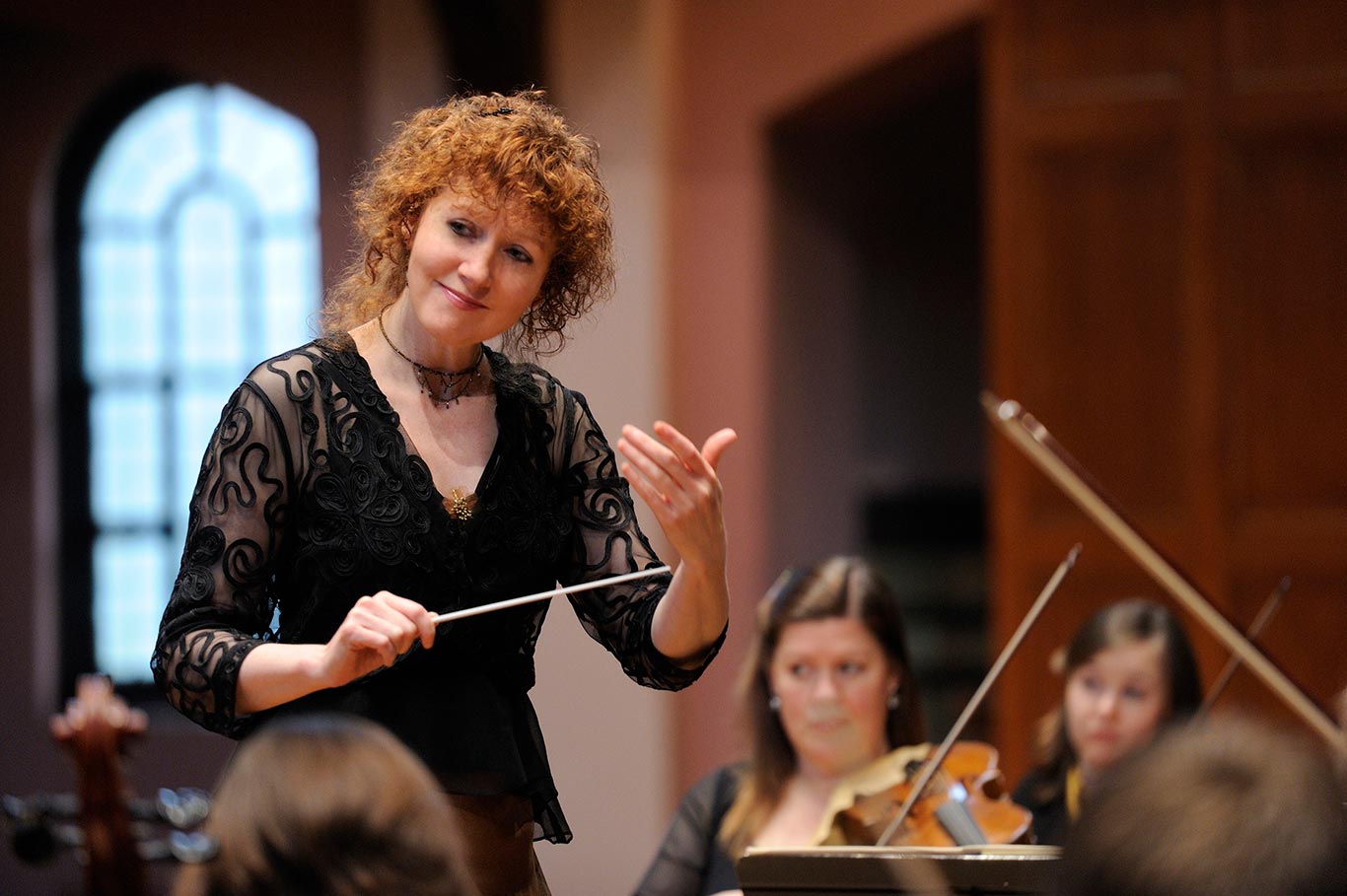
Just 26 years old with no job prospects in sight, Jeanette Sorrell did what many others have done in the entrepreneurial world of early music—the harpsichordist and conductor founded her own Cleveland-based baroque ensemble, Apollo’s Fire in 1992. It has gone on to gain international acclaim for its passionate, dynamic playing, its imaginative, well-researched programming and its professionalism on and off the stage. The group, which started with one part-time employee and Sorrell, now has staff of 10 full-time and nine part-time people, and it presents 35 concerts in and around Cleveland and its second home, Chicago, in addition to regular tours across the United States and overseas.
English tour
“We always hear these laments about classical music: It’s dying. It’s a dying art form. Nobody’s coming, nobody’s showing up,” said New York soprano Sonya Headlam, who been a regular soloist with the group since 2021. “But if you do an Apollo’s Fire concert, those spaces are packed to the gills and people are just thrilled to be there.”
The ensemble is set April 24-26 to make its sixth visit to Great Britain, where it will take part in a two-day residency at London’s famed St.-Martin-in-the-Fields, and then travel to Suffolk for a concert under the auspices of Britten Pears Arts in Snape, near Aldeburgh.
In London, it will present a chamber recital and late-night bistro concert in addition to its two main offerings – dueling double concertos April 24, featuring members of Apollo’s Fire and the English Baroque Soloists, and an April 25 program titled, O Jerusalem! Crossroads of Three Faiths.
The latter, which will feature 26 musicians, is one of the group’s most popular programs. It emerged in part from a 2016 recording, Sephardic Journey, which debuted at No. 2 on Billboard’s world music chart and No. 7 on Billboard’s classical chart.
A star is born
Sorrell, who was born in San Francisco and later moved to Virginia with her family, began studying piano at age 9 and was leading vocal and instrumental ensembles from the keyboard in her church just six years later.
By the time she was 17, she was enraptured by the startlingly fresh sounds of the period-instrument ensembles that were emerging in Europe like the Academy of Ancient Music and Leonhardt Ensemble, and she began to dream of founding her own group, not really believing it would ever happen. “I just fell in the love with the sound of the instruments on these recordings,” she said.
There were no degree programs in historically informed music at that time, so Sorrell got an artist diploma on the harpsichord and studied conducting at the Oberlin (Ohio) Conservatory, where she graduated in 1990. She did further conducting training at the Tanglewood Music Festival in Lenox (Massachusetts), and Aspen Music Festival (Colorado).
In 1990-91, she traveled to Amsterdam to study with Dutch conductor and harpsichordist Gustav Leonhardt (1928-2012), one of the most revered pioneers of the early-music movement in what was a transformative experience for her.

Passionate about early music and want to read this subscriber-only article?
If you are not a subscriber, join the international Total Baroque community. Subscribe here from 5.00€.
I subscribe
If you are already a subscriber, sign in.
I sign in 
You must be logged in to be able to post comments.
Sign in