


 With his Concerto 1700, violinist Daniel Pinteño continues his exploration of 18th-century Spanish musical heritage. His latest recording of Gaetano Brunetti’s “String Quartets, Op. 3” reveals a court composer whose writing is both refined and full of wit.
  By
By 


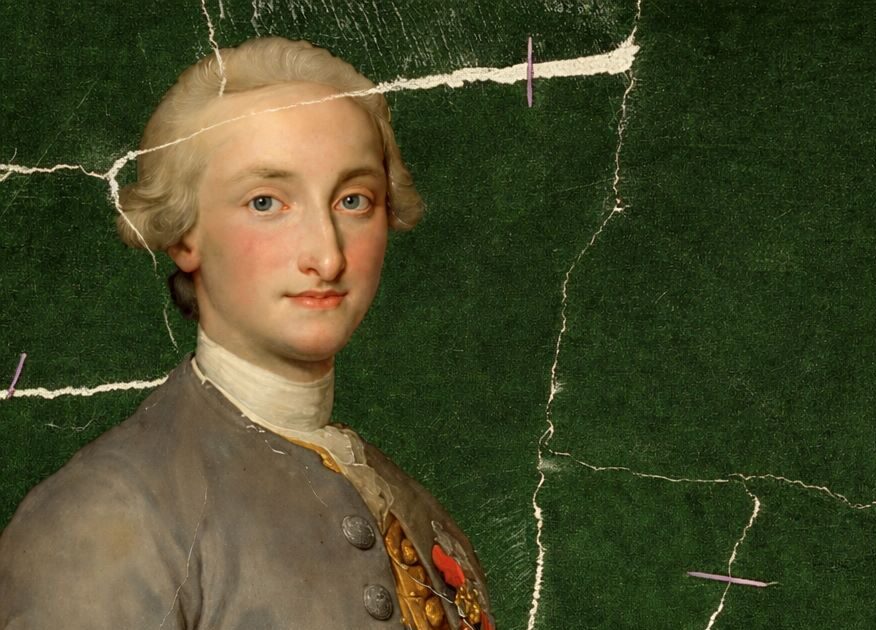
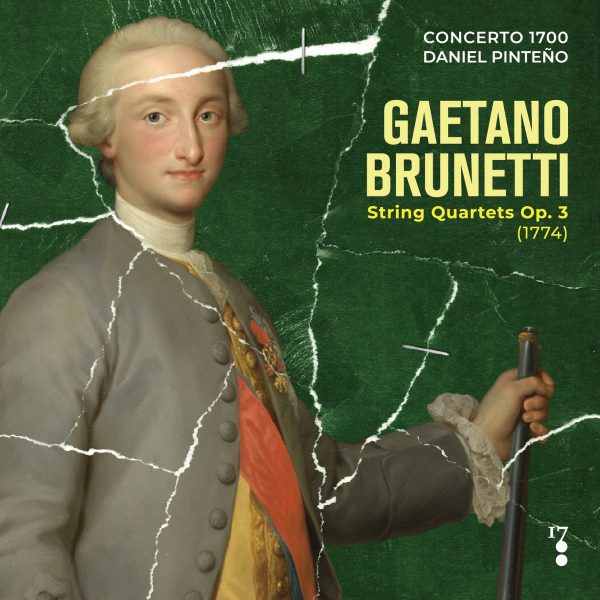
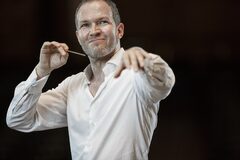
At the helm of the ensemble Concerto 1700, which he founded in 2015, violinist and conductor Daniel Pinteño is committed to bringing back to life a still little-known strand of Spain’s musical heritage from the seventeenth and eighteenth centuries. With the recording of Gaetano Brunetti’s Op. 3 String Quartets, a musician at the court of Charles IV, the ensemble continues this work of rediscovery. Between musicological research, period instruments, and expressive freedom, Daniel Pinteño opens the doors to this singular world, where classical elegance, humour, and invention combine to form a language both personal and surprising. The album was released in 2025 on the ensemble’s own label, 1700 Classics.
Gaetano Brunetti remains, even today, a relatively little-known composer to the general public. What drew you to his Op. 3 String Quartets, and why did you choose to record this repertoire now?
Daniel Pinteño: At 1700 Classics, we believe that a recording is much more than the music it contains: it is a complete project that deserves attention and care in every detail. From the graphic design and visuals to the texts and editorial work, we strive to create an object that is attractive and carefully crafted on the outside, rich and substantial within. Every aspect—both form and content—is conceived with the same passion with which we perform the music, in order to offer the listener a complete experience. That is why I always recommend listening to the music with the physical CD in hand! When it comes to choosing what we record, the repertoire we ourselves discover also plays a role. Our work within Concerto 1700 consists in learning every day. Brunetti is a fairly unknown composer, even in Spain, yet he played a fundamental role in eighteenth-century Spanish music. He was chamber musician to King Charles IV, a great music lover, and in the field of the string quartet alone… he composed more than sixty!
We had already explored other ensemble formats in his music, such as the trio, and it was after our concert in 2024—featuring the collection of decorated Stradivarius instruments from the Royal Palace of Madrid—that we first tackled his quartets. It was then that we decided the moment had perhaps come to take on the musical challenge of recording a complete opus of quartets on historical instruments. His music is very personal, and as you play it, you discover Brunetti’s unique musical language. It is music full of elegance and freshness, in which classical clarity is combined with moments of great expressiveness and subtle humour. Although he remains little known, his language is surprisingly close to today’s listener. We feel that audiences deserve to rediscover these jewels, and that the time has come to bring Spanish repertoires—long confined to very specialized circles—back into the spotlight. We wanted to give them a new life, by showing their artistic value and their importance in the history of European music. As I often say when I am asked: Spain has much to say about the string quartet!
As a violinist and director of Concerto 1700, how do you approach the balance between historical fidelity and expressive freedom in these quartets, particularly in the context of performance on period instruments?
D. P.: We start from a principle that is personal to me: I like recordings to sound alive. I like it when you can feel the musician’s breathing, or when you hear the natural sounds of playing an instrument. Sterile, anonymous recordings bore me a little, and they also create a distorted listening perception of what performance really is. Working with period instruments also allows us to come closer to the sound that Brunetti knew, with its original colours, articulations, and nuances. But historical fidelity does not mean rigidity: our priority, as I said, is the music itself, the way it communicates and moves us today. If the listener pays attention, they will notice that we often feel the need to introduce variations when we repeat certain sections. We understand this as a natural response to the music. Our baroque training encourages us to let ourselves be carried along a little. We seek a balance in which musicological research illuminates our interpretative decisions, while each phrase breathes and possesses its own life. Expressive freedom arises from a deep knowledge of the style and resources of the period, while allowing the music to speak with naturalness and emotion.
These quartets long circulated within a very restricted framework, linked to the court. What did you hope to reveal, or bring out, through this recording, about Brunetti’s writing and musical personality?
D. P.: Brunetti’s music offers an alternative perspective, sometimes deliberately removed from the musical canon. He was aware of what was being composed in other parts of Europe, but he chose to develop his own style—ultimately, his own identity. This music was composed in the autumn of 1774 at San Lorenzo de El Escorial for Prince Carlos, the future Charles IV. The court moved between what we call the Royal Sites depending on the time of year, and the musicians moved with it. In the manuscript that served as our reference for this recording, preserved at the Bibliothèque nationale de France, we find two consecutive opus numbers: Op. 2, composed during the summer stay at La Granja de San Ildefonso, near Segovia, and Op. 3, which we recorded, composed (as I mentioned) between October and December 1774 at San Lorenzo de El Escorial. As you rightly point out, their destination, unlike that of other composers who also developed their careers in Spain, such as Boccherini, was above all performance for the pleasure of the court. This is why Brunetti did not achieve wider posterity. With this recording, we want to show the inner richness of his music: its sense of humour, its refinement, and its ability to combine elegance with emotional depth.
For a listener discovering Brunetti through this recording, which quartet, or which movement, would you recommend hearing first? And, more personally, which is—or which are—your favourite(s), the one(s) you return to with the greatest pleasure or emotion?
D. P.: It is difficult to select just one movement… because all of them are interesting and reveal a great deal about Brunetti’s way of composing. More than one movement, I think I would recommend two. To begin with, simply out of curiosity, I would choose the Largo Cantabile con sordini, track 5, from quartet L160. It is a serene movement in which we all play with mutes. This velvety sonority, together with Brunetti’s writing, allows the entire musical discourse to unfold naturally. There is drama, but also hope. Then, for the boldness of its writing, I would highlight the Andantino con variazioni, track 7, from quartet L161. Here we have a movement in which each instrument develops its personality through a series of variations built on a theme. One successively encounters the solemnity of the viola, the fantasy of the second violin, the cantabile of the cello, and finally the vibrant energy of the first violin. To return to your initial question, I think the best way to approach this recording is to allow yourself to be surprised, without prejudice or prior expectations. Brunetti offers music full of nuance, humour, and beauty, and each listening reveals new details. Opening yourself to his world is, without any doubt, the most authentic way to savour these quartets.

Upcoming
- April 10 – El camino de Simón de Cirene, with Carlos Mena, San Lorenzo de El Escorial (Spain)
- April 15 – Bello pastor, with Carlos Mena, León (Spain)
- April 26 – El fin del continuo, Avilés (Spain)
- April 29 – Scarlatti :Il Giardino di Amore, with Carlotta Colombo et Filippo Mineccia, Valencia (Spain)
You must be logged in to be able to post comments.
Sign in