


 From church music (chant) in the time of the first Christians to the composers of Italian opera in the 18th century, by way of the Franco-Flemish musicians of the Renaissance, musicologist Anne-Charlotte Rémond takes us through the journeys of music from the 4th to the 18th century, in a fascinating series of three articles. How, in the past, did music actually travel? Today, follow Egeria’s adventure from Europe to Jerusalem, around the year 380.
  By
By 


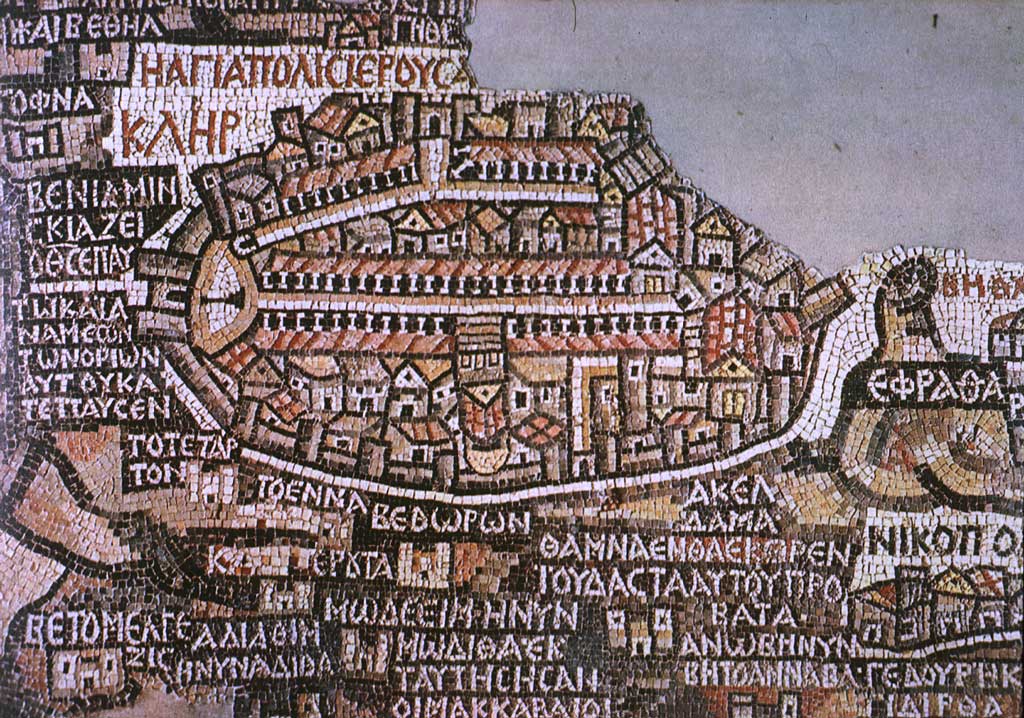
Imagine this: you are a young woman, in the prime of life, around 380 CE. You live in western Europe, in Galicia or Aquitaine. You are steeped in the spirituality of the religion of the first Christians. You read the Bible, you know the liturgy, you sing with the congregation. One fine day, you decide to set out on pilgrimage all the way to Jerusalem… Now, I can hear you saying: surely not! A journey of… how far? 4,700 km perhaps? There AND back again (9,400, then!)? With the means of transport of the time? A woman? No, impossible. And yet yes! Her name was Egeria, and she did it! There and back again! And she kept a travel journal.
Making Egeria’s acquaintance
I chose to introduce our topic—the journey of music—with Egeria in order to capture your imagination. A subject that has always fascinated me: how is it that a melody, a song, a hymn, born somewhere, turns up thousands of kilometres away, still recognizable? What today seems natural to us, utterly simple (to make the same tune heard from one end of the continents to the other in a matter of fractions of a second) was therefore already happening before AI, before the internet, before trains, before printing, before musical notation? How is that possible? How did music actually travel? That is what I would like to explore here, by focusing on three moments in the history of music: church chant in the early days of the Christian religion, the era of the Franco-Flemish composers, and the spread of Italian opera in the Baroque period.
For this first journey, we will try to trace the history of church music in the early centuries of Christianity. Why church music? Quite simply because it is the only one about which history can enlighten us: neither popular song nor secular instrumental music is really known to us. And in fact, even with regard to religious music, before the first notations, we know very little: a brief internet search will show you that the subject is almost never mentioned!
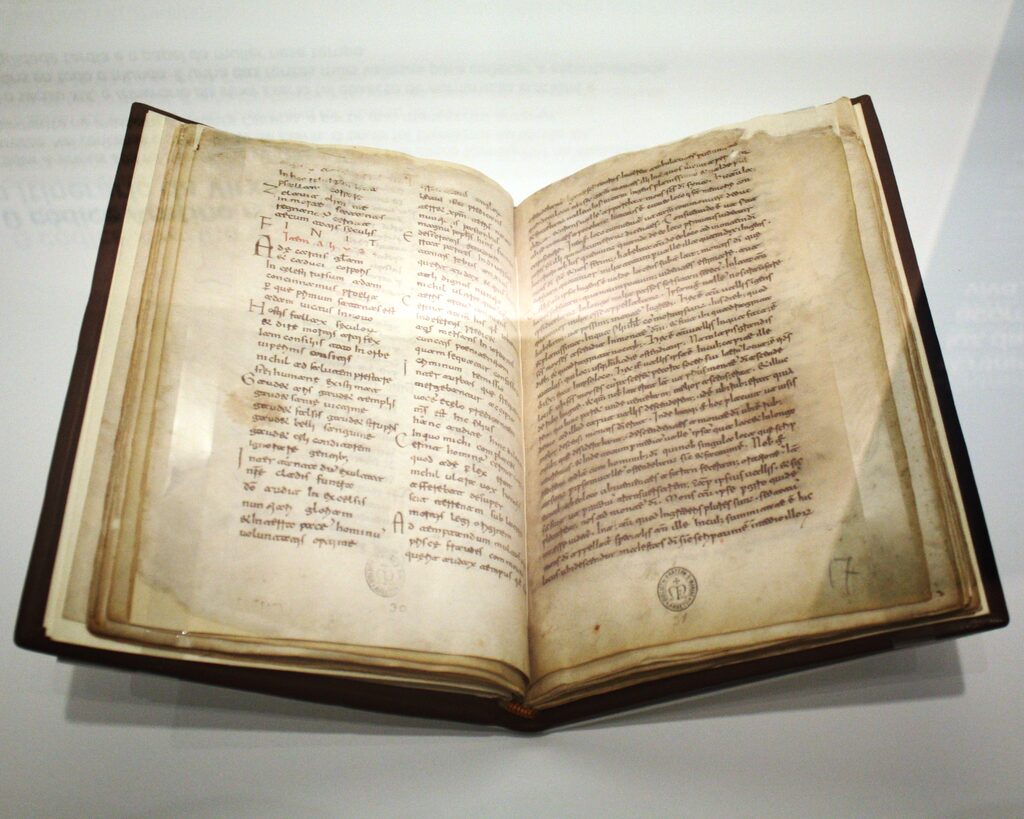
So, I return to Egeria, because her account gives us a great deal of information about the journey itself, with all its practical details.
Who is Egeria?
As one might expect, the original 4th-century sources have not come down to us in their original state, and it is thanks to much later and unfortunately fragmentary copies that we know of Egeria. The beginning and the end of her account are missing, and we do not know exactly where she came from. From western Europe, certainly—perhaps Galicia, perhaps Aquitaine. We do not know her age or her social status either, and even the name Egeria was given to her by historians through learned deductions and the cross-checking of information.
She probably came from a town or city, since the countryside, at the end of the 4th century, was still only lightly Christianized. She could read, and many indications in her text suggest that she carried a Bible with her, Latin translations of which were numerous in the 4th century. She was certainly not a woman of the common people.
She was evidently of high social standing, since, on the one hand, she was able to undertake this pilgrimage lasting several years and, on the other, no doubt furnished with letters of recommendation from an important person, she was always well received, along with her travelling companions, with great regard and consideration, even by bishops or imperial officials…

Passionate about early music and want to read this subscriber-only article?
If you are not a subscriber, join the international Total Baroque community. Subscribe here from 5.00€.
I subscribe
If you are already a subscriber, sign in.
I sign in 

You must be logged in to be able to post comments.
Sign in