


 A pioneering figure in polyphony in the German-speaking world, the ‘Monk of Salzburg’ remains an enigma to this day. Behind this pseudonym lies an author whose identity has never been established with certainty, despite the importance and uniqueness of his work. Active at the turn of the 14th and 15th centuries, he nevertheless occupies a central place in medieval musical history, at the crossroads of scholarly traditions and vernacular forms.
  By Stefanie Bilmayer-Frank


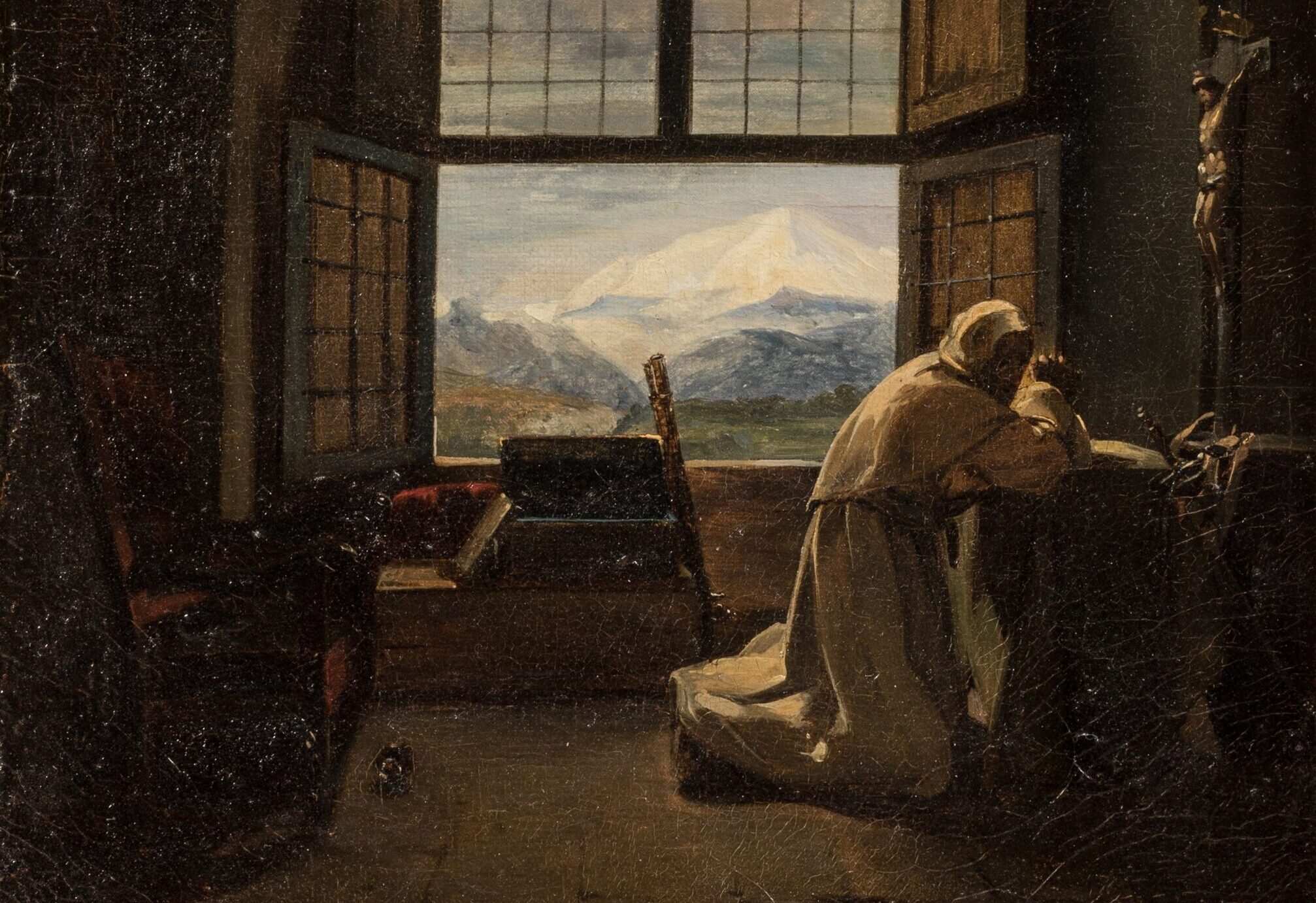
Anyone making a pilgrimage to Salzburg as a music lover does not usually go in search of medieval sounds. In the narrow streets of the baroque old town, Mozart appears on every corner: in shop windows, on commemorative plaques, in museums and souvenir stores. Mozart as a key ring, a Lego figurine or a pencil topper—without even mentioning the famous chocolate balls (Mozartkugeln, Salzburg’s emblematic sweet specialty). Yet long before the birth of its most illustrious son, the city on the Salzach had already been, for a very long time, a profoundly musical place… thanks in particular to a poet and highly enigmatic composer of songs from the fourteenth century.
The fate of remaining in Mozart’s shadow is one the Monk of Salzburg shares with composers of every era, such as Paul Hofhaimer (1459–1537) or Heinrich Ignaz Franz Biber (1644–1704). In his own lifetime, however, his songs were genuine hits, widely sung in the streets of the city, as attested by the richness of their transmission: more than one hundred songs have come down to us, preserved in a great many manuscript copies. The fact that many of his works are written in the vernacular undoubtedly contributed greatly to their appeal among his contemporaries. He is thus credited, for example, with the oldest surviving canon in the German language. It is a St Martin’s Day song whose text, as is often the case in repertoire associated with this feast, abounds in culinary allusions:
“May you multiply our geese
and the fresh wine,
boiled and roasted,
may they all arrive at the table.”
Passionate about early music and want to read this subscriber-only article?
If you are not a subscriber, join the international Total Baroque community. Subscribe here from 5.00€.
I subscribe
If you are already a subscriber, sign in.
I sign in 
You must be logged in to be able to post comments.
Sign in