


 Françoise-Charlotte de Saint-Nectaire (1679–1745) is the youngest French composer to have had her scores published in France. It must be said that this young prodigy was well surrounded, playing her talent as deftly as her instruments—or her connections.
  By
By 


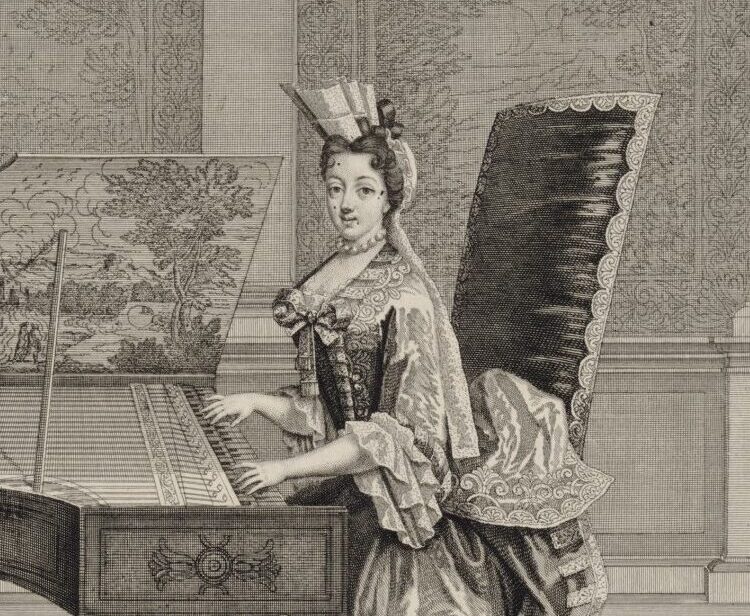
Born into a noble family, Françoise-Charlotte de Saint-Nectaire (1679–1745), known as Mademoiselle de Ménétou, stands out as a child prodigy and bequeaths to posterity—when she is only 11 years old—the collection of the youngest French composer. Long relegated to the margins of the repertoire, her music has only recently been rediscovered, as part of research devoted to women composers of the Ancien Régime. Total Baroque Magazine recounts, through selected fragments, the destiny of this woman who inherited music as both legacy and calling, playing at once the flute, the harpsichord, and her network of relationships.
Incipit: A pedigree with a label of origin
One must take a deep breath before stating the full name and details of Françoise-Charlotte de Saint-Nectaire, daughter of Henri-François de Saint-Nectaire, Duke of La Ferté-Senneterre, and of Marie Isabelle Angélique de la Mothe-Houdancourt. This noble family enjoyed access to Versailles, and her mother was godmother to the future Louis XV. It was therefore only natural that little Françoise-Charlotte, lulled by the nursery songs of Lully, gave her first concert at the court of the Sun King at just nine years old.
Performance: the record book
Mademoiselle de Ménétou unquestionably deserves a place in the record books. She played the harpsichord before Louis XIV at a concert hosted by the Dauphine at only ten years of age and, at eleven, became the youngest composer to have her works published by the royal printer, Christophe Ballard. The collection, Airs sérieux à deux, published in 1691, brings together exclusively secular airs with basso continuo—a remarkable choice for a child of that age, already attesting to a perfect command of the musical and social codes of the court. We are clearly dealing with a serious rival to Mozart!
Passionate about early music and want to read this subscriber-only article?
If you are not a subscriber, join the international Total Baroque community. Subscribe here from 5.00€.
I subscribe
If you are already a subscriber, sign in.
I sign in 

You must be logged in to be able to post comments.
Sign in