


 Federico Maria Sardelli—a conductor, flautist, composer, and painter, among other things—is today’s leading Vivaldi specialist and, following in the footsteps of Peter Ryom (from Denmark), continues the work of cataloguing the Red Priest’s compositions. He is also the author of two books on the subject, including one retracing the discovery of the composer’s manuscripts at the beginning of the twentieth century. For Sardelli, Vivaldi is the work of a lifetime!
  By
By 


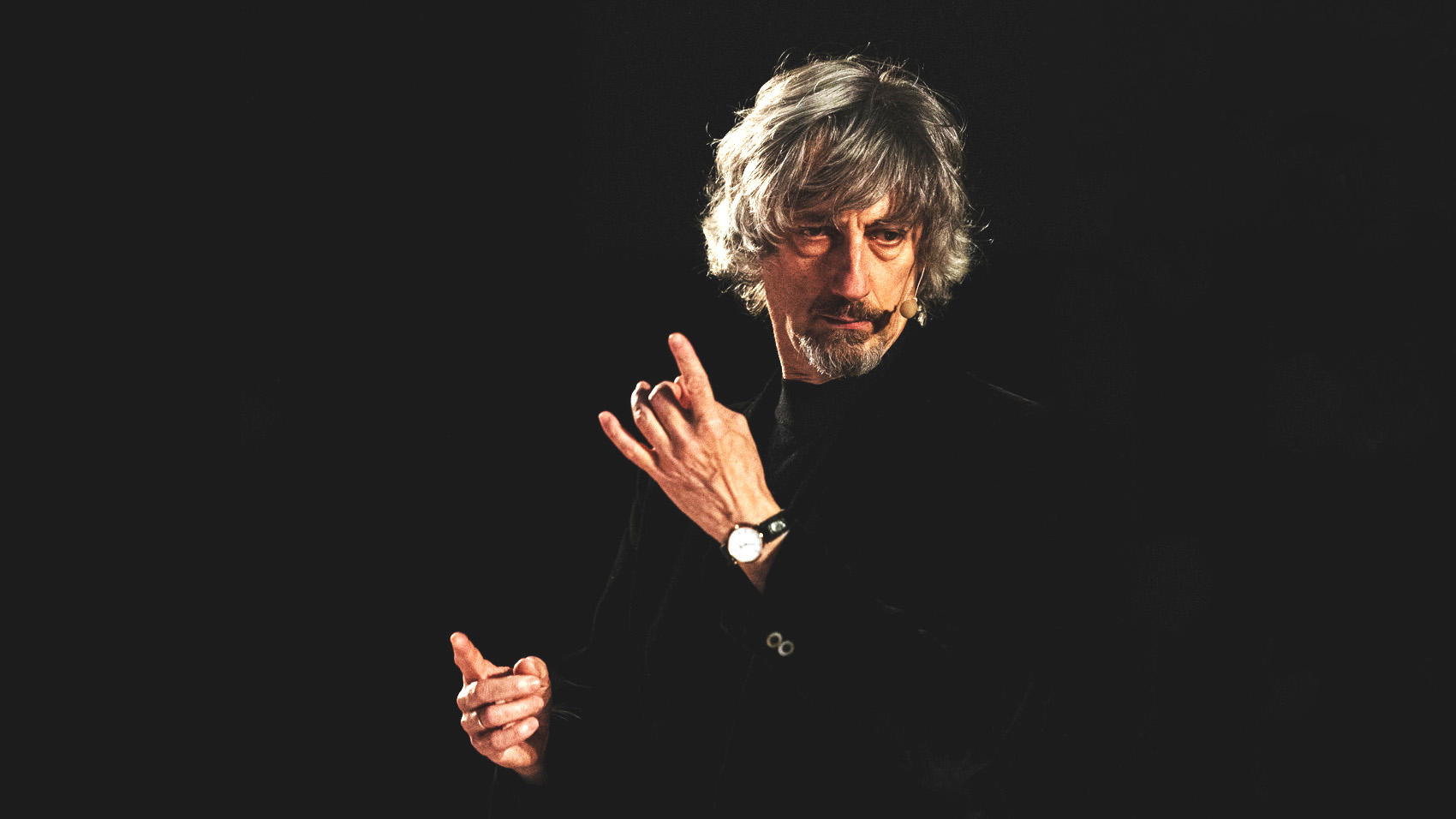
It is rare to meet a musician who knows Vivaldi with such depth, intimacy, and consistency as Federico Maria Sardelli. In 2007, the Danish musicologist Peter Ryom chose him to continue his monumental work of cataloguing the music of Antonio Vivaldi; since then, Sardelli has been the director of the Vivaldi-Werkverzeichnis (RV). Over the years, he has thus become not only a specialist, but one of the most vigilant guardians of Vivaldi’s legacy. With him, speaking of Vivaldi means opening the doors to a workshop filled with worn manuscripts, Venetian archives, and forgotten scores—nourished by a life devoted to the Red Priest. In this interview, he returns to the misunderstandings surrounding the composer, modern interpretations, the little-known richness of the operatic corpus, and the odyssey of the autograph manuscripts recounted in L’Affare Vivaldi. He also reveals the hidden side of the catalogue work, its accidental discoveries, and what the future may still unveil.
People often talk about the “inflation” of The Four Seasons and of Vivaldi, now so popularised. Has this overexposure distorted his image?
Federico Maria Sardelli: Absolutely. The worldwide popularity of The Four Seasons, as positive as it may seem, exposes Vivaldi to all kinds of injustices. What outrages me is not that his music is widely broadcast, but the way certain baroque musicians—sometimes presented as specialists—use Vivaldi as a playground for all their eccentricities. These distortions create a false image: they take his picturesque titles (L’Estro armonico, La Stravaganza) as permission to try anything. But the extravagance lies in his writing, not in our interpretation. I find that many modern versions are either naïve or deliberately provocative, as if the only point were to stand out.
The idea of a repetitive, even “serial” Vivaldi still persists…
F. M. S.: It is a cliché inherited from a romantic view of artistic creation. At first glance, everything can seem identical—Dallapiccola said so, and Stravinsky repeated it. People reproach Vivaldi for something that was perfectly normal in the eighteenth century: using models, templates, recurring procedures. Handel does it, Bach does it, Telemann even more so! It would be like saying that Canaletto painted so many views of Venice that they all look the same. That would be an unfair and superficial judgement: it is a language that, starting from the same subject, analyses nuances, raking light, backlighting, adds a figure in the foreground, another time paints a shimmering coldness, and thus gives a completely different image of the same place. Vivaldi works in the same way: he explores infinite nuances behind an apparent matrix. If I line up all of Handel’s motets, they all seem identical; one could say the same of Bach’s cantatas, and so on. These were musicians with extremely solid craftsmanship, who used their own templates. In Vivaldi’s workshop, there were all the moulds of his recurring inventions, just as in Handel’s…
Passionate about early music and want to read this subscriber-only article?
If you are not a subscriber, join the international Total Baroque community. Subscribe here from 5.00€.
I subscribe
If you are already a subscriber, sign in.
I sign in 

You must be logged in to be able to post comments.
Sign in