


 When collectors and musicians buy unknown historical harpsichords, it is sometimes a risky bet: is it really a valuable instrument—or just expensive firewood?
  By Michael Günther


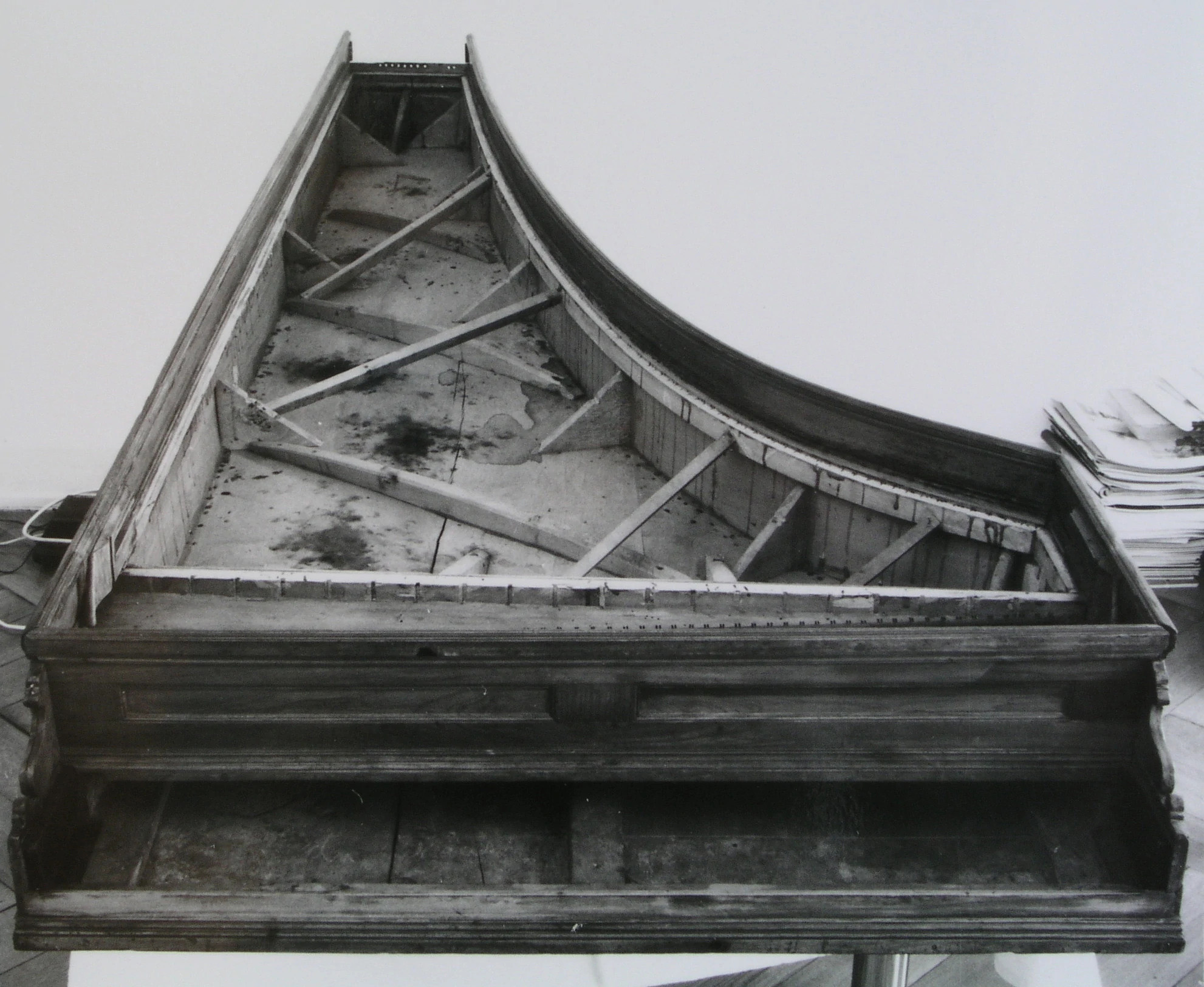
These were exciting times (and not just fleeting moments!) for Michael Günther—harpsichordist, fortepianist and passionate collector of historical instruments—after he bought an old harpsichord relatively spontaneously at an auction in Belgium: was it really a valuable instrument, or an expensive mistake, at best suited as a decorative piece? Here he recounts the fascinating story of his years-long search for the roots of this instrument, a journey that led him across half of Europe, brought him into contact with many interesting people, generated a few concerts—and ultimately led to a very surprising realization…
1994: A tempting Offer
It all started with a game of chess in December 1994: an antiques dealer friend from Würzburg, who had just returned from a sightseeing trip, called: “You have to go to Liège tomorrow! A harpsichord is being auctioned there, it looks interesting. If you want to know more, look at my catalog.” Less than ten minutes later, I was at his place. He told me that he had seen the instrument at an auction preview, and even though he wasn’t an expert on keyboard instruments, it had made a strong impression on him and could be something special. The catalog spoke of a “Clavecin, Italie du Nord, Louis XVI era”, accompanied by an illustration. This resulted in more questions than information. I lost the chess game with a bang; my mind was already in Liège, Belgium.
As often happens on the last day of a preview, the room was crowded and chaotic, making concentration difficult. The harpsichord was on one side, the jewellery cases on the other, which meant people were constantly bumping into each other with appropriate and mutual “Excusez-moi, s’il vous plaît.” The lighting was poor, and I had forgotten to bring a flashlight: hardly ideal for a proper assessment. What I saw was a thin-walled harpsichord in a storage case decorated with paintings, workmanship leading back to the 17th century, the range from G1 to f3 with two 8-foot registers, which on the other hand points well into the 18th century, as do the fluted turned legs from the “Louis seize”. A still-life painting adorned the inside of the lid, the sidewalls were painted with flowers, and all outer surfaces were covered (indeed buried) beneath a thick, brown varnish. Modern tuning pins, but very old jacks—53 of them in each row, the rest somewhat newer. And then the ultimate red herring: a dummy bass key for F1 that ended behind the nameboard. The keyboard looked old but not original, its construction style dated to the 19th century at the earliest—or had the builder been a prophetic inventor of the 17th century? And what was that cryptic repair note supposed to mean?
Clearly the instrument had been altered, which was hardly surprising given its possible age. But what was original, what was a repair, what an addition—or was it an eclectic fabrication from the late 19th century? Naturally, I also thought of the notorious Leopoldo Franciolini, who around 1900 in Florence had fooled collectors and museums with such creations (more on him below). But none of that helped: I had only a few hours to make a decision and come up with a “very, very, very final” maximum bid. And I couldn’t ignore the buyer’s premium.

Passionate about early music and want to read this subscriber-only article?
If you are not a subscriber, join the international Total Baroque community. Subscribe here from 5.00€.
I subscribe
If you are already a subscriber, sign in.
I sign in 
You must be logged in to be able to post comments.
Sign in