


 By
By 


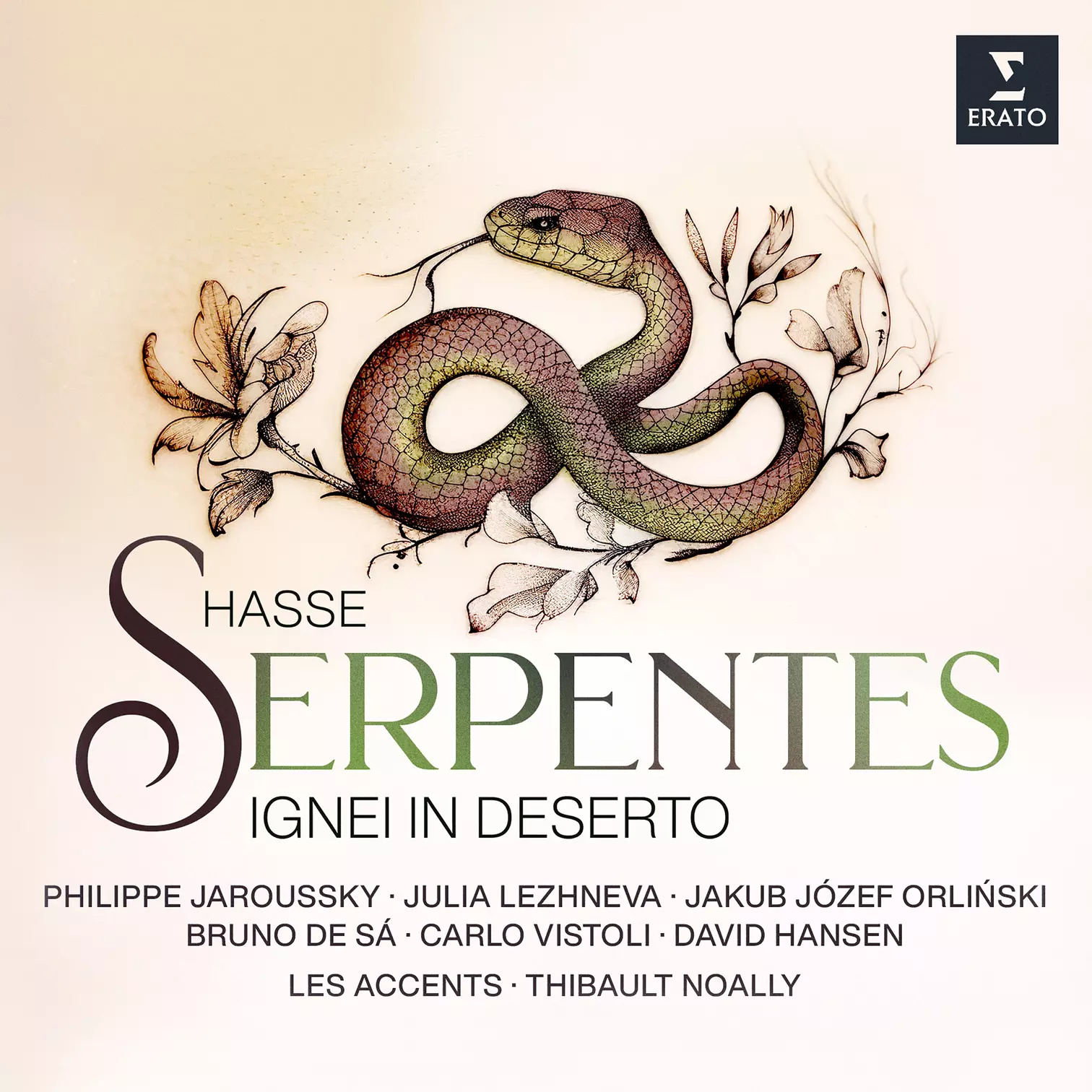
Commissioned by the Ospedale degli Incurabili around 1738, this oratorio, based on a striking biblical subject, was composed by Johann Adolf Hasse for the female voices of the hospice. In contrast to this original conception, Thibault Noally and his ensemble Les Accents present a version sung (almost) exclusively by countertenors. Philippe Jaroussky, Jakub Józef Orliński, and Bruno de Sá, among others, respond to one another in a performance that blends dramatic intensity with vocal exuberance. We sat down with Noally to discuss the project.
This is the first time your ensemble, Les Accents, has ventured into Hasse’s musical world on record. Why did you choose this work?
Thibault Noally: That’s right—although I’ve had the chance to perform Hasse’s music with other ensembles, this is the only recording Les Accents have dedicated to him so far. I first discovered Serpentes Ignei in Deserto when Jérôme Correas revived it in 2007. That production left a lasting impression on me, and I remember thinking that one day, I would love to perform it myself. Now, I finally have that opportunity. That being said, we won’t necessarily explore Hasse’s entire oeuvre—his body of work is vast, with stunning operas and numerous oratorios, some of which I’d love to focus on in the future. If Les Accents take on another Hasse piece, it will likely be another sacred work.
Hasse composed this work for female performers. Why did you decide, with the exception of the angel sung by Julia Lezhneva, to cast an all-male ensemble?
T.N.: Yes, the piece was originally performed by women, but it was also incredibly popular across Europe in the years following its premiere. Manuscript sources place it in nearly all the major libraries of the time, from Italy to Germany, France, and even the Czech Republic. It was clearly performed multiple times in different contexts, likely featuring castrati or other types of voices. For our project, I felt the piece’s inherently theatrical nature had to take precedence over any attempt at historical reconstruction. To bring these male roles to life, I couldn’t pass up the opportunity to work with today’s extraordinary generation of countertenors, each with their own unique timbre and personality. They all seemed like a perfect match for the dramatic intensity of the libretto, and the casting came together naturally. Philippe Jaroussky’s charismatic and musical authority made him an ideal Moyses, while the more bel canto-influenced role of Josue found its perfect interpreter in Bruno de Sá. Similarly, Carlo Vistoli’s warm timbre suited Eleazar’s pathos, while Nathanael’s fervor was a natural fit for Jakub Józef Orliński. When a project feels this obvious, you have to go for it!
Does Hasse’s score present any particular challenges?
T.N.: The first challenge was to support its inherent theatricality, striking a balance among the many climactic moments throughout the work. The second was to stay as faithful as possible to Hasse’s distinctive musical language. He may not have been the most erudite composer of his time, but his style is unmistakable—just as we instantly recognize Handel or Bach. His melodic universe is unique, and one must truly inhabit it, especially if it’s unfamiliar territory. Another fascinating aspect of his writing is his ability to dramatize recitatives between arias. In his era, this wasn’t a given, yet for him, it was a gift—he had an astonishing capacity to harmonize a phrase, a line of text, or a single sound with strikingly inventive modulations. We had to do justice to the power of his craftsmanship!
 Press review
“The performances are dazzling; Les Accents’ string section immediately captures the extroverted brilliance and lyrical exuberance of the work, while the soloists never miss an opportunity to bring Hasse’s score to life.”
The Guardian
“Thibault Noally finds the perfect balance between the warmth and Italianate lyricism that so captivated Hasse’s patrons and audiences.”
Early music review
“[…] Blazing accompanied recitatives, a meticulous approach to dynamics, layering of sound, and pulse, restoring all the density of Hasse’s writing.”
Avant-scène opéra
“This luminous performance of a work at the crossroads of virtuosity, spirituality, and emotion does full justice to Hasse […]”
Olyrix
“A recording that is both sensitive and brilliant, an excellent addition to the pioneering work of Jérôme Correas.”
Forum opéra
“Amidst this high-level vocal joust, Les Accents […] once again demonstrate their remarkable expressiveness in a work […] where virtuosity never overshadows musicality.”
RES Musica


You must be logged in to be able to post comments.
Sign in